 Save
Save I'll never forget the first time I saw a cornucopia arrangement at my grandmother's Thanksgiving table—it wasn't just food, it was art. The way golden dried apricots tumbled alongside deep purple figs, with walnuts and pecans creating natural shadows and depth, made me realize that the most memorable dishes aren't always the ones you cook. Sometimes they're the ones you compose, arrange, and present with intention. That moment inspired me to create my own Horn of Plenty, a showstopping edible centerpiece that celebrates everything beautiful about autumn harvest season.
I remember arranging my first cornucopia the morning of Thanksgiving, and my niece wandered into the kitchen just as I was positioning the last handful of almonds. She watched silently for a moment, then said, 'It looks like fall just fell onto our table.' That's exactly the feeling I chase now every time I build one of these.
Ingredients
- Dried apricots (1 cup): These sunny orange gems are the star of the show—their brightness cuts through the earthiness of nuts and adds a natural sweetness. They're also sturdy enough to handle handling without falling apart, which matters when you're building something architectural.
- Dried figs (1 cup): Deep purple-brown with a subtle sophistication, figs anchor the color palette. Their dense texture means they nestle beautifully between other elements and create visual depth.
- Dried cranberries (1 cup): These tiny rubies provide pops of color contrast and a tart brightness that keeps the overall arrangement from feeling too heavy or sweet.
- Dried apple rings (1 cup): Pale gold and practically transparent at their edges, these add textural variety and a nostalgic, farmhouse quality that says 'autumn.'
- Seedless grapes (1 cup, optional): Fresh grapes offer a moment of juicy surprise among all the dried fruits and add a touch of green freshness if you want to include it.
- Walnuts (1 cup): Their brain-like texture and earthy flavor are the foundation that makes everything else taste better. They're also visually interesting with their natural ridges and darker color.
- Pecans (1 cup): Slightly sweeter and more buttery than walnuts, pecans round out the nut selection and add warmth to the overall flavor profile.
- Almonds (1 cup): These pale, elongated nuts provide visual lightness and a delicate crunch. They slip between other ingredients like little jewels.
- Aged cheddar (6 oz, cubed): Sharp and satisfying, cheddar is familiar comfort. Cut it into rough chunks rather than uniform cubes—imperfection looks more abundant.
- Creamy goat cheese (6 oz): Soft and tangy, goat cheese creates a textural and flavor contrast that makes people slow down and appreciate the complexity you've created.
- Rustic blue cheese (6 oz, crumbled): Bold and earthy, blue cheese connects the savory cheeses to the sweet fruits in an unexpected way. Don't skip it even if you think you're not a blue cheese person.
- Aged gouda or similar hard cheese (6 oz, cubed): Rich, slightly sweet, and deeply satisfying, this is the cheese that makes people keep coming back for another bite.
- Rustic crackers (2 cups): These are the edible vessels for everything else. Choose varieties with character and texture—their imperfection matters more than uniformity here.
- Baguette (1 small, sliced): Toast these lightly or serve them fresh; they're both the supporting actor and the stage for the stars above.
- Fresh rosemary sprigs: These woody herbs bring alive the 'harvest' in the cornucopia, adding a whisper of pine and earth to the visual composition.
- Fresh thyme sprigs: Delicate and herbaceous, thyme fills visual gaps and adds a touched of old-world elegance.
- Edible flowers or seasonal leaves (optional): Nasturtiums, pansies, or seasonal leaves add the final flourish of 'special occasion' without saying a word.
- Large wicker cornucopia basket or homemade bread horn: This is your stage. The basket cradles everything and tells the story of abundance at a glance.
Tired of Takeout? 🥡
Get 10 meals you can make faster than delivery arrives. Seriously.
One email. No spam. Unsubscribe anytime.
Instructions
- Set your stage:
- Place your cornucopia basket on a large serving platter or board that's big enough to catch the spillover. This isn't about containment—it's about abundance. Position the basket so guests can approach from all angles and the opening faces toward where people will gather.
- Anchor with cheese:
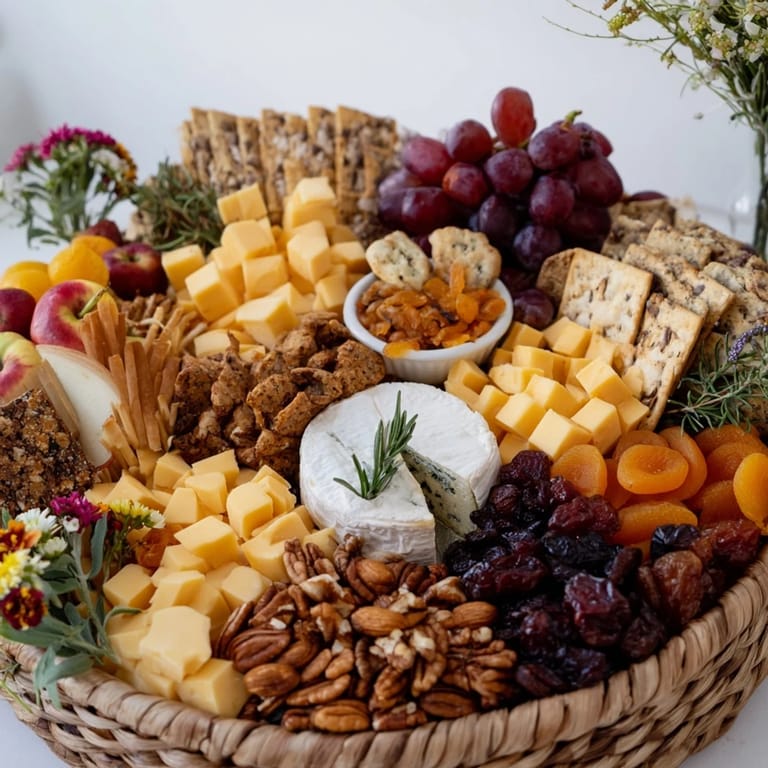
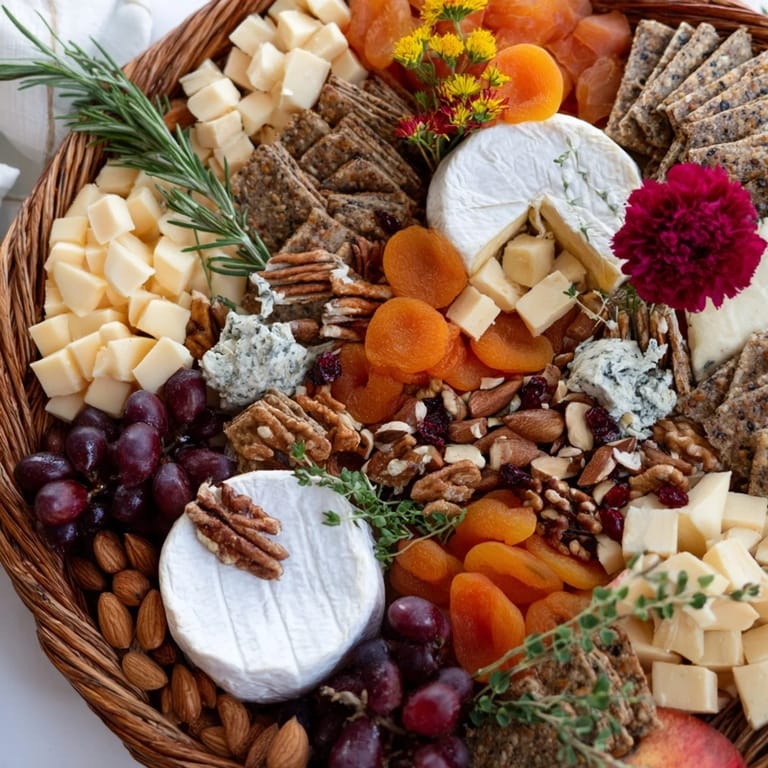
- Arrange your cheeses inside the opening of the horn, letting them tumble outward as if they're cascading from a horn of plenty. Place the creamier cheeses like goat cheese toward the opening where they're visible and accessible, and let harder cheeses create a foundation inside. Mix the colors and textures—you want cheddar gold, blue cheese darkness, and pale gouda all visible at once.
- Build with dried fruits and nuts:
- This is where patience and intuition matter equally. Start by scattering larger pieces—apple rings and figs—into and around the horn in loose clusters. Fill gaps with walnuts and pecans, then use almonds and cranberries as your fine adjustment, the way you'd use small stones to fill spaces in a garden. The goal is abundant chaos that still feels intentional, with colors and textures mixing so you never see the same two elements twice in a row.
- Tuck in crackers and bread:
- Slip crackers and baguette slices among the fruits and nuts, standing some upright like little signs of welcome, laying others flat so they integrate seamlessly. They should look like they found their way into the arrangement naturally, not placed deliberately.
- Crown with herbs and flowers:
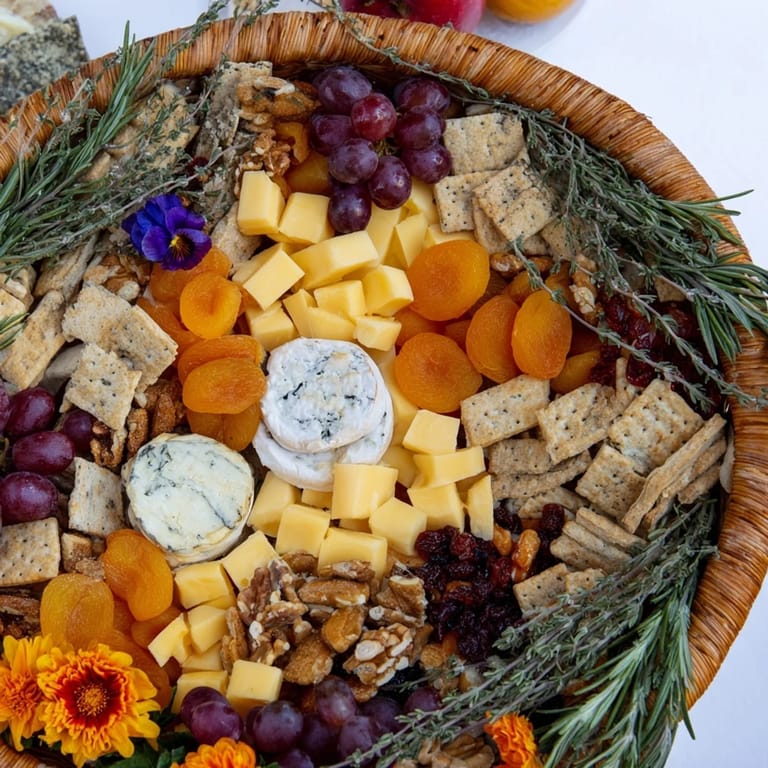
- This is the moment of magic. Tuck rosemary sprigs and thyme throughout the arrangement, letting them nestle among the fruits and nuts. Add edible flowers last, placing them where they catch light and draw the eye. Step back and look at the whole composition—does it feel like autumn abundance? If something needs adjusting, move it now.
- Serve and watch magic happen:
- Present at room temperature, letting guests pick and choose their own combinations. The beauty of this arrangement is that there's no 'wrong' bite—every combination of cheese, fruit, nut, and herb tells its own story.
 Save
Save The moment I knew this cornucopia had become tradition was when my partner asked, 'Should we make the Horn of Plenty again this year?' without my suggesting it. That's when I understood it had stopped being a dish and become an expectation, a memory we were building together.
The Art of Arrangement
Creating a beautiful cornucopia isn't about following a map—it's about understanding balance. Imagine your arrangement in thirds: the opening of the horn should show your most beautiful elements (that wedge of aged cheddar, clusters of apricots), the middle should transition into the supporting fruits and nuts, and the base should anchor everything with grounding colors like walnuts and blue cheese. Color should dance around the arrangement rather than cluster—alternate warm apricot tones with cool blue cheese, bright cranberries with pale almonds. The arrangement feels complete when your eye never settles in one place, when there's always something new to discover, always another treasure peeking out.
Building Your Own Flavor Story
The beauty of this cornucopia is that it's a blank canvas for your preferences and memories. Grown up eating specific cheeses at your family's table? Include them. Have a favorite nut that isn't listed? Make space for it. This recipe is less a rulebook and more a starting framework for you to compose your own autumn celebration. I've made versions with roasted chickpeas alongside the nuts, arrangements that featured cherry tomatoes for a surprise bright moment, cornucopias where toasted pumpkin seeds replaced half the almonds. Each one was perfect because each one reflected who we were feeding and what we loved.
Taking It Beyond the Harvest Season
While this arrangement celebrates autumn most naturally, don't limit it to November. I've made versions for winter gatherings using dried apples and cranberries with fresh pomegranate seeds, spring versions with dried strawberries and pistachios, even summer arrangements that included toasted hazelnuts and dried blueberries. The cornucopia itself is a symbol of abundance that translates across seasons—adapt it to whatever fruits, nuts, and cheeses feel current and delicious, and you'll create something that feels both timeless and exactly right for this moment.
- Consider adding honey, fig jam, or apple butter on the side for dipping and drizzling—it transforms the arrangement into something even more decadent.
- Pair the cornucopia with a medium-bodied red wine or sparkling cider for an elevated tasting experience that feels intentional.
- If you're making a bread horn from scratch, shape it the day before and store it uncovered so it dries out slightly—it'll hold its shape better when filled.
 Save
Save Every cornucopia is a small act of intentionality in a hurried season. When you arrange one, you're saying 'this moment, this gathering, these people matter enough for me to pause and create something beautiful.' That's the real recipe here.
Recipe Q&A
- → Can I make the bread horn myself?
Yes, shaping bread dough around a foil cone and baking it until golden creates an edible horn base that holds fillings beautifully.
- → What cheeses work best for this centerpiece?
Rustic cheeses such as aged cheddar, goat cheese rounds, blue cheese crumbles, and gouda cubes offer a balanced variety of flavors and textures.
- → How should I store leftover items?
Store cheeses tightly wrapped in the refrigerator and keep dried fruits and nuts in airtight containers at room temperature to maintain freshness.
- → Can I substitute dried fruits in this arrangement?
Absolutely, swap in your preferred dried fruits like dates or cherries to suit taste and seasonal availability.
- → What is the best way to serve this centerpiece?
Serve at room temperature, allowing guests to pick their favorite bites, making it perfect for relaxed, communal gatherings.