 Save
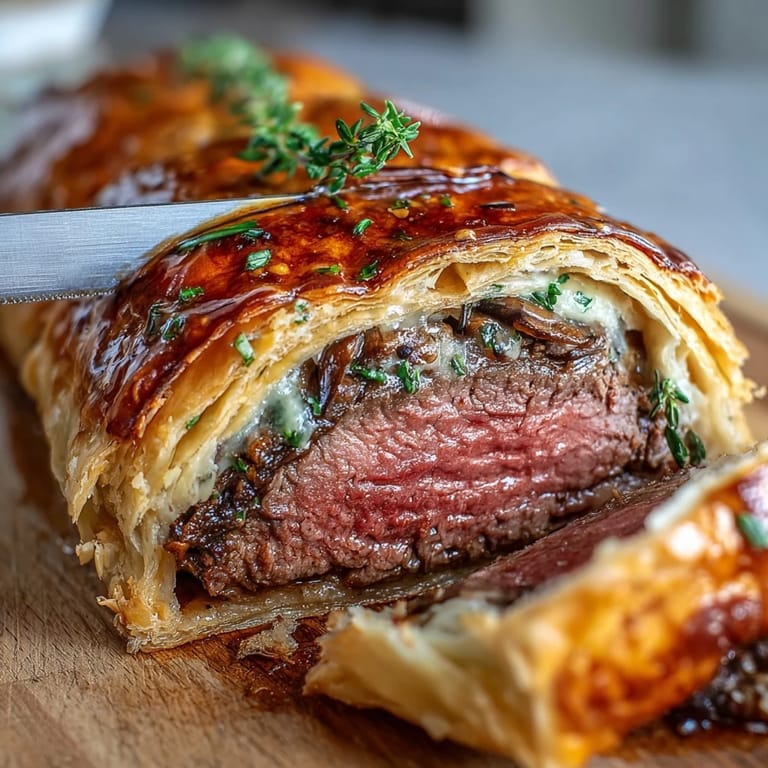
Save My hands were shaking the first time I pulled a Beef Wellington from the oven, certain I'd ruined it. The pastry had puffed into this impossibly golden shell, and when I sliced through, the beef was blushing pink, exactly as it should be. That moment taught me that some recipes aren't as terrifying as their reputation suggests. Wellington has this mystique around it, but once you understand the rhythm of searing, wrapping, and baking, it becomes less about perfection and more about confidence. Now it's my go-to when I want to remind myself that I'm capable of more than I think.
I made this for my parents' anniversary once, and my dad, who never comments on food, went quiet after the first bite. He looked up and said it was the best thing I'd ever cooked, which felt like winning something. My mom took a photo before we even served it, the pastry still steaming on the board. That night, the kitchen smelled like butter and thyme for hours afterward, and I didn't mind cleaning up at all. It's funny how a dish can turn a regular dinner into a memory you keep coming back to.
Ingredients
- Beef tenderloin (2 lb): This is the star, so buy the best you can afford and make sure it's evenly shaped so it cooks uniformly.
- Salt and black pepper: Season generously before searing, the crust you build here is the foundation of flavor.
- Vegetable oil (2 tbsp): High smoke point is key, you need serious heat to get that deep brown sear without burning.
- Cremini mushrooms (1 lb): Chop them fine so they cook down into a paste, any larger and they'll release too much moisture.
- Shallots (2, minced): They add a sweet, delicate onion flavor that doesn't overpower the earthiness of the mushrooms.
- Garlic (2 cloves, minced): Just enough to add depth without making the duxelles taste like garlic bread.
- Unsalted butter (2 tbsp): This helps the mushrooms caramelize and adds a silky richness to the duxelles.
- Fresh thyme (2 tbsp, chopped): The herbaceous note that ties everything together, dried thyme won't give you the same brightness.
- Prosciutto (10 slices): This creates a moisture barrier and adds a salty, savory layer that contrasts beautifully with the beef.
- Dijon mustard (2 tbsp): A thin coating adds tang and helps the duxelles stick to the beef.
- Puff pastry (14 oz): Thaw it in the fridge overnight so it's pliable but still cold when you roll it out.
- Egg (1 large, beaten): The wash gives the pastry that glossy, bakery-perfect finish.
- Flour (for dusting): Just enough to keep the pastry from sticking, too much and it'll look chalky after baking.
Tired of Takeout? 🥡
Get 10 meals you can make faster than delivery arrives. Seriously.
One email. No spam. Unsubscribe anytime.
Instructions
- Preheat and Prep:
- Set your oven to 425°F and give it time to fully heat while you work. A hot oven is essential for puffing the pastry and cooking the beef evenly.
- Sear the Beef:
- Season the tenderloin all over with salt and pepper, then heat oil in a heavy skillet until it's almost smoking. Sear each side for about 2 minutes until you have a deep brown crust, then set aside to cool completely.
- Make the Duxelles:
- In the same skillet, melt butter and sauté the shallots and garlic for a minute until fragrant. Add the mushrooms and thyme, season well, and cook over medium heat until all the liquid evaporates and you're left with a thick, dark paste, about 10 minutes.
- Lay Out the Prosciutto:
- Place a large sheet of plastic wrap on your counter and arrange the prosciutto slices in a slightly overlapping rectangle, just big enough to wrap around the beef. This step is easier if you take your time and line them up neatly.
- Spread the Duxelles:
- Spread the cooled mushroom mixture evenly over the prosciutto, leaving a small border around the edges. This layer is what keeps the beef moist and flavorful.
- Coat the Beef:
- Brush the cooled beef all over with Dijon mustard, then place it along one edge of the prosciutto and duxelles. The mustard adds a sharp note that cuts through the richness.
- Roll and Chill:
- Using the plastic wrap to help you, roll the prosciutto tightly around the beef, twisting the ends to seal it into a compact log. Refrigerate for 20 minutes to firm everything up.
- Encase in Pastry:
- Roll out the puff pastry on a floured surface until it's large enough to fully wrap the beef. Unwrap the beef, place it in the center, and fold the pastry over, trimming any excess and sealing the edges with a bit of egg wash.
- Prepare for Baking:
- Place the wrapped Wellington seam-side down on a parchment-lined baking sheet. Brush the entire surface with beaten egg, and if you're feeling fancy, use pastry scraps to make decorative leaves or shapes on top.
- Final Chill:
- Pop it back in the fridge for 10 minutes so the pastry firms up before baking. This helps it hold its shape and puff evenly.
- Bake:
- Bake for 40 to 45 minutes until the pastry is deeply golden and an instant-read thermometer reads 120°F for rare or 130°F for medium-rare. The smell will be intoxicating.
- Rest and Slice:
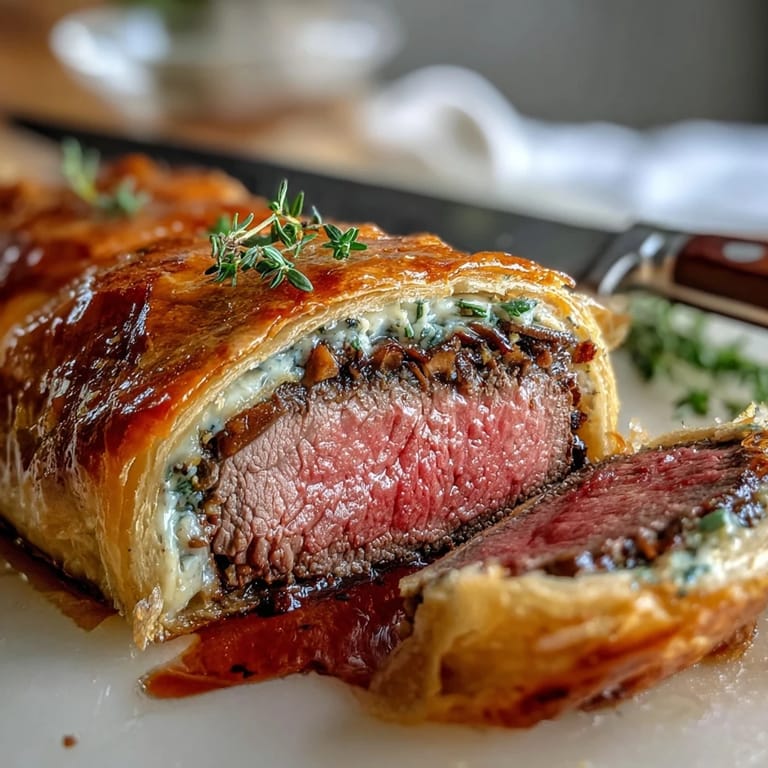
- Let the Wellington rest for 10 to 15 minutes before slicing, this allows the juices to redistribute. Use a sharp knife and confident strokes for clean slices.
 Save
Save The first time I served this to friends, someone said it felt like a celebration even though it was just a random Saturday. That's what Wellington does, it turns an ordinary evening into something worth remembering. I love how quiet the table gets when you bring it out, everyone watching as you slice through the layers. It's one of those dishes that makes you feel like you've really accomplished something, and honestly, you have.
Choosing Your Beef
I used to think any tenderloin would work, but the shape and quality matter more than I realized. Look for a center-cut piece that's even in thickness so it cooks at the same rate all the way through. If one end is thinner, it'll overcook while the thicker part is still rare. Ask your butcher to trim it well and tie it if needed, they'll appreciate that you care about the details. A well-chosen piece of beef is half the battle won before you even turn on the stove.
Mastering the Mushroom Duxelles
The first time I made duxelles, I didn't cook it long enough and ended up with a soggy, watery mess that made the pastry pale and limp. You have to be patient and let the mushrooms release all their liquid, then keep cooking until that liquid evaporates and the mixture darkens and thickens. It should look almost like a paste and smell deeply earthy and concentrated. If you taste it and it's bland, add more salt and thyme, this layer needs to be well-seasoned because it's doing a lot of flavor work. I sometimes add a splash of brandy or sherry halfway through for extra depth, but that's optional.
Serving and Pairing
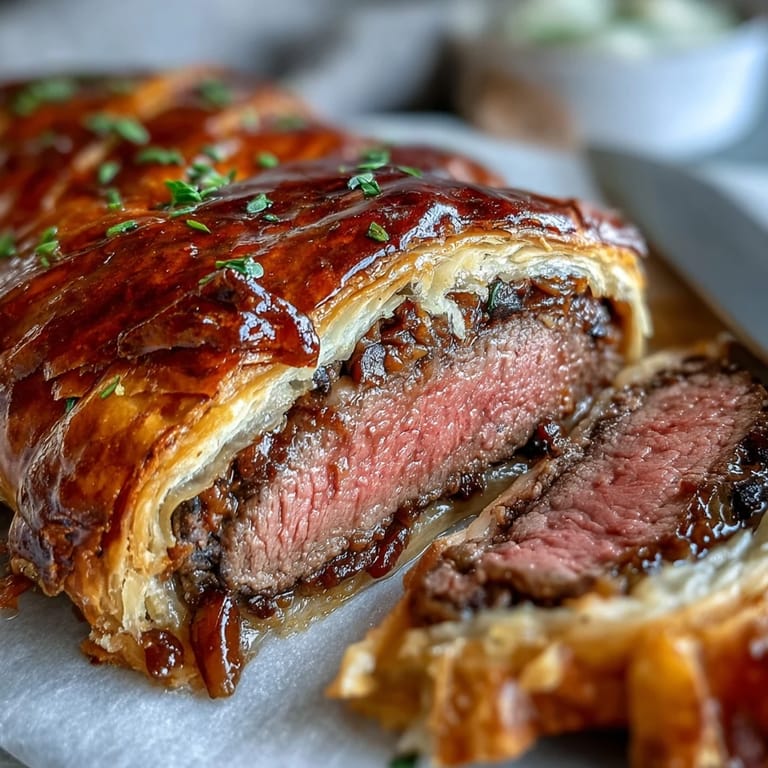
Wellington is rich, so I like to serve it with something bright and acidic to balance the buttery pastry and tender beef. A simple arugula salad with lemon vinaigrette or roasted asparagus with a squeeze of lemon works beautifully. For the sauce, a red wine reduction is classic, but even a good quality store-bought demi-glace warmed up with a knob of butter will do the trick. I've also served it with horseradish cream, which some people love and others find too sharp, so know your crowd.
- Let the Wellington rest on a board and slice it at the table for maximum drama.
- Pair it with a bold red wine like Cabernet Sauvignon or a Bordeaux blend.
- Leftovers can be gently reheated in a low oven, though I prefer them cold with mustard and pickles.
 Save
Save Every time I make Beef Wellington, I'm reminded that cooking isn't just about feeding people, it's about creating moments that feel special. I hope this becomes one of those recipes you pull out when you want to surprise yourself with what you can do.
Recipe Q&A
- → Can I prepare Beef Wellington ahead of time?
Yes, you can assemble the Wellington up to 24 hours in advance. Wrap it tightly in plastic wrap and refrigerate. Add 5-10 minutes to the baking time if cooking from cold.
- → Why is my puff pastry soggy?
Soggy pastry usually results from excess moisture in the mushroom duxelles. Cook the mushrooms until completely dry and paste-like, and ensure the beef is completely cooled before wrapping.
- → What internal temperature should I aim for?
For medium-rare (recommended), aim for 130°F (54°C). The beef will continue cooking as it rests. For rare, target 120°F (49°C), and for medium, 140°F (60°C).
- → Can I use a different cut of beef?
Beef tenderloin is ideal for its tenderness and uniform shape. A center-cut filet works best. Avoid cuts with significant fat marbling as they release moisture during cooking.
- → What should I serve with Beef Wellington?
Classic accompaniments include roasted vegetables, creamy mashed potatoes, green beans, and a rich red wine sauce or beef jus. Keep sides simple to let the Wellington shine.
- → How do I prevent the pastry from burning?
If the pastry browns too quickly, tent loosely with aluminum foil. Starting at a high temperature ensures a crispy exterior while the beef remains perfectly cooked inside.