 Save
Save There's something almost magical about the moment chicken hits a hot skillet and that golden crust forms in seconds. I learned to make this garlic butter chicken on a random Tuesday when I had leftover chicken breasts and a friend dropping by unexpectedly—no fancy ingredients, just what was already in my kitchen. What started as a last-minute scramble turned into something I now make constantly, sometimes twice a week.
I made this for a potluck once and watched people pile it onto their plates before anything else was even ready. Someone asked if I'd gotten it catered, which might be the highest compliment I've ever received in my kitchen. The smell alone—butter and garlic mingling together—seemed to draw everyone into the kitchen before we'd even sat down to eat.
Ingredients
- Boneless, skinless chicken breasts or thighs (1.5 lbs, cut into 1-inch pieces): Thighs are honestly more forgiving if you're worried about dryness, but breasts work beautifully if you don't overcook them—the key is getting those pieces roughly the same size so they finish together.
- Salt and black pepper (1/2 teaspoon each): Don't skip seasoning the raw chicken; this is where real flavor starts building.
- Smoked paprika (1/2 teaspoon): Adds a subtle warmth and depth that makes people wonder what you did differently.
- Olive oil (1 tablespoon): Use something you don't mind spending a little on—quality oil makes a real difference in that sear.
- Unsalted butter (4 tablespoons): The foundation of the sauce, so use real butter, not a substitute.
- Garlic (5 cloves, finely minced): Fresh garlic only—jarred won't give you that same bright, punchy flavor.
- Red pepper flakes (1/4 teaspoon, optional): Just a whisper of heat, but it wakes up the whole dish if you want a little kick.
- Low-sodium chicken broth (1/4 cup): Keeps the sauce from being too heavy while adding savory depth.
- Fresh lemon juice (1 tablespoon): A squeeze of brightness that ties everything together and cuts through the richness.
- Fresh parsley (1 tablespoon, chopped): Finish with this—it adds color and a fresh note that makes the dish feel complete.
Tired of Takeout? 🥡
Get 10 meals you can make faster than delivery arrives. Seriously.
One email. No spam. Unsubscribe anytime.
Instructions
- Dry your chicken and season generously:
- Pat those pieces completely dry—any moisture on the surface will steam instead of sear, and you want that golden crust. Dust with salt, pepper, and smoked paprika right before the skillet hits the heat.
- Get your skillet screaming hot and sear the chicken:
- Heat the oil until it shimmers and moves easily around the pan, then lay the chicken in a single layer. You'll hear it sizzle; that sound means it's working. Let it sit for 3–4 minutes per side without moving it around—patience here creates that beautiful, caramelized exterior.
- Build the sauce base:
- Once the chicken's out of the pan, reduce the heat so you don't burn the garlic, then add butter and let it melt slowly. The garlic should get golden and fragrant, not brown and bitter—you're looking for about 1 minute of stirring.
- Deglaze and simmer:
- Pour in the broth and lemon juice, and use your spoon to scrape up all those caramelized bits stuck to the bottom of the skillet. Those brown flecks are pure flavor, so don't leave them behind. Let it bubble gently for a couple minutes.
- Bring it all together:
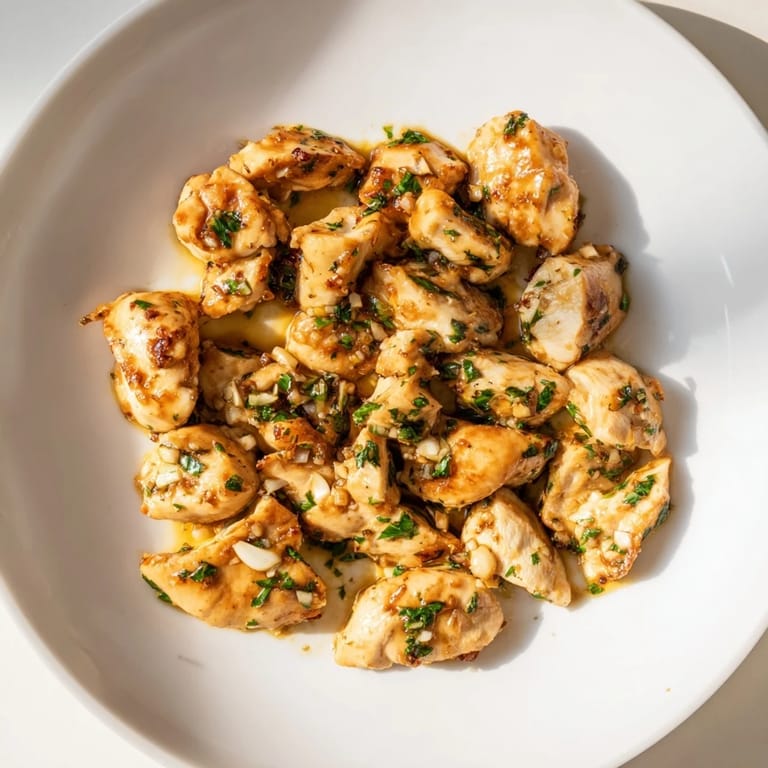
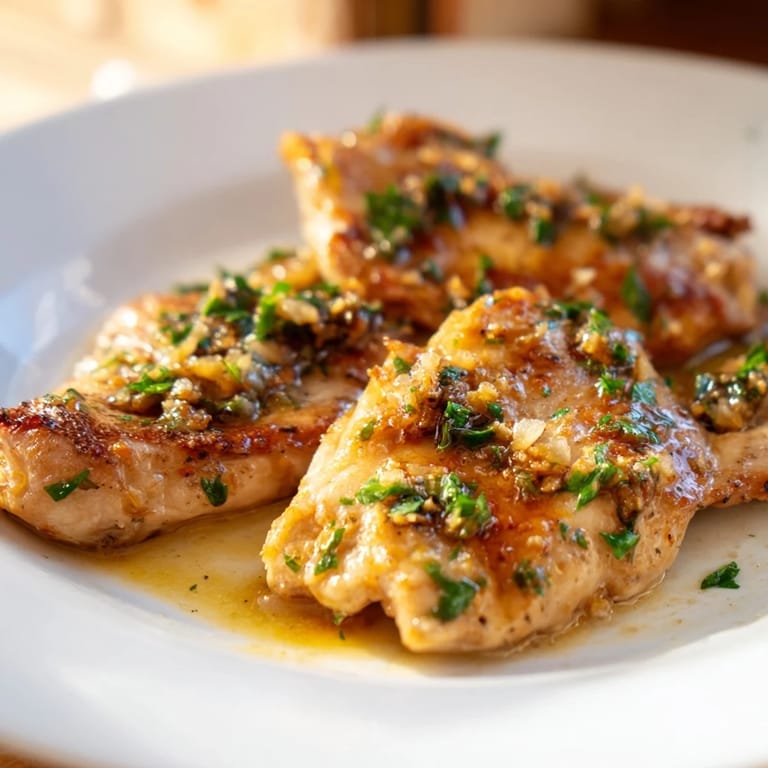
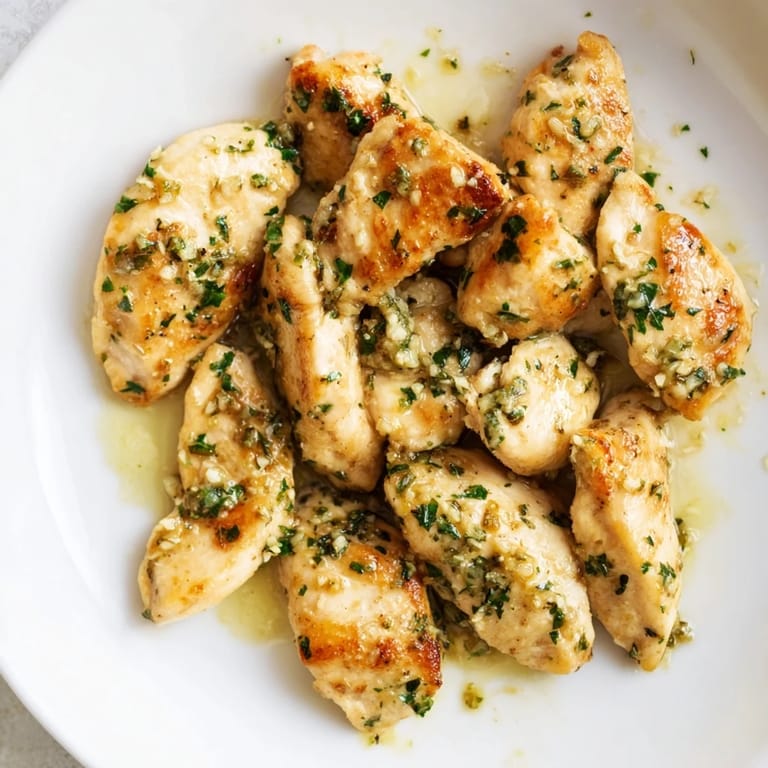
- Return the chicken to the skillet and toss everything together, coating each piece in that glossy, garlicky sauce. Give it another minute or two to heat through, then shower it with fresh parsley and serve immediately while everything's still hot.
 Save
Save I made this for my mom once when she wasn't feeling great, and she sat at the kitchen counter just watching me cook it. By the time it was done, the whole apartment smelled like comfort itself, and she actually smiled—the real kind. That's when I realized this dish does something more than just feed people; it says something without words.
Timing and Temperature Matter
Getting the heat right is half the battle here. Medium-high for the initial sear ensures your chicken gets that gorgeous crust before the inside gets dry, and reducing to medium for the garlic protects it from burning into bitterness. I used to rush everything on high heat and ended up with either raw centers or tough, overcooked exteriors—finding that sweet spot in the middle changed everything. Temperature control in your skillet is honestly just as important as the ingredients themselves.
Ways to Serve and Stretch It
This dish is genuinely versatile in a way that makes it worth mastering. Serve it over rice or mashed potatoes to soak up every drop of that sauce, pile it onto a bed of roasted vegetables for something lighter, or even nestle it into a crusty bread bowl if you're feeling fancy. I've tossed leftovers into pasta, spooned them over salads, and even tucked them into wraps the next day, and somehow they taste even better as the flavors settle and meld together overnight.
Variations and Swaps
Once you master the basic technique, this framework opens up so many possibilities. A splash of white wine instead of all broth adds sophistication, fresh thyme or rosemary swap in beautifully for parsley, and shrimp cooks in the same time and adapts to this sauce like it was made for it. Even the protein isn't sacred—I've made this with pork medallions, mushrooms, or even white beans when I wanted something meatless, and the garlic butter sauce carries everything forward with grace.
- Add a splash of dry white wine with the broth for a more complex, restaurant-quality depth.
- Stir in heavy cream at the very end if you want something richer and more indulgent.
- Keep extra sauce on hand by doubling the garlic butter component—it freezes beautifully and works on everything from vegetables to grilled fish.
 Save
Save This is the kind of dish that sneaks into your regular rotation and stays there. Once you've made it a few times, it becomes almost meditative—a dance of timing and heat and simple ingredients that transform into something that feels far more complicated than it actually is.
Recipe Q&A
- → What cut of chicken works best?
Boneless, skinless chicken breasts or thighs cut into bite-sized pieces sear evenly and stay tender.
- → Can I adjust the spice level?
Yes, red pepper flakes are optional and can be added or omitted to suit your preferred heat intensity.
- → How do I prevent the chicken from drying out?
Pat chicken dry before seasoning and sear over medium-high heat briefly to keep it juicy and tender.
- → What can I serve alongside this dish?
Steamed rice, mashed potatoes, or roasted vegetables complement the rich garlic butter flavors well.
- → Can I substitute chicken with other proteins?
Shrimp can be used as a seafood alternative, cooked in the garlic butter sauce with similar timing.