 Save
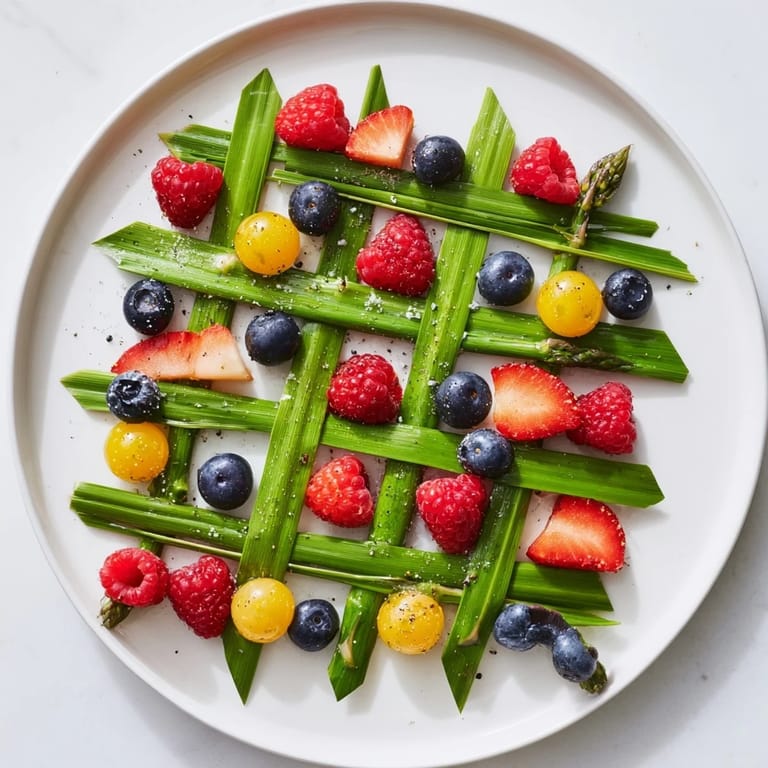
Save There was a moment during a spring farmers market visit when I spotted these impossibly long chives and a bundle of just-picked asparagus, and something clicked—what if I could weave them together like fabric? The idea took shape that afternoon in my kitchen: a playful lattice that would hold jeweled berries in its open squares, as if I'd built an edible mosaic. It felt ridiculous and beautiful at the same time, and I knew I had to see it through.
I made this for the first time at a dinner party where I'd promised something "unexpected," and my hands were shaking as I arranged those berries into the squares. My friend Sarah walked into the kitchen mid-setup and just said, "Oh, you're that person now," in a way that made me laugh and feel totally seen. When we brought it out, everyone leaned in like it was a map of somewhere they wanted to go, and suddenly the whole meal felt like an occasion instead of just dinner.
Ingredients
- Asparagus stalks: Choose medium thickness—they need to be flexible enough to weave without snapping, yet sturdy enough to hold the grid. Blanch them until just tender; overcooked asparagus becomes mushy and falls apart the moment you try to layer it.
- Fresh chives: The long stems are your invisible architecture here, acting like edible twine. Buy the longest chives you can find; they'll tie more securely around the intersections without breaking.
- Mixed berries: Blueberries, raspberries, strawberries, and golden berries create pops of color and flavor contrast. The key is using firm, dry berries so they don't weep juice and make the asparagus soggy.
- Extra virgin olive oil: A good quality oil matters because it's one of the few flavors in this dish—a peppery note bridges the sweet fruit and earthy asparagus.
- Flaky sea salt: This is your seasoning hero, bringing out the natural sweetness of the berries while highlighting the green bite of asparagus.
Tired of Takeout? 🥡
Get 10 meals you can make faster than delivery arrives. Seriously.
One email. No spam. Unsubscribe anytime.
Instructions
- Blanch the asparagus into tender spears:
- Bring salted water to a rolling boil and add your trimmed asparagus, watching as the color shifts to that brilliant green within 1–2 minutes. Immediately scoop them out and plunge into an ice bath to lock in that color and stop the cooking—this is the moment that separates crisp, fresh asparagus from limp disappointment.
- Soften the chive stems:
- A quick 5-second dip in the hot water makes the chives flexible enough to tie without snapping. Cool them right away and pat them completely dry, or they'll slip around when you're trying to secure your lattice.
- Weave your lattice foundation:
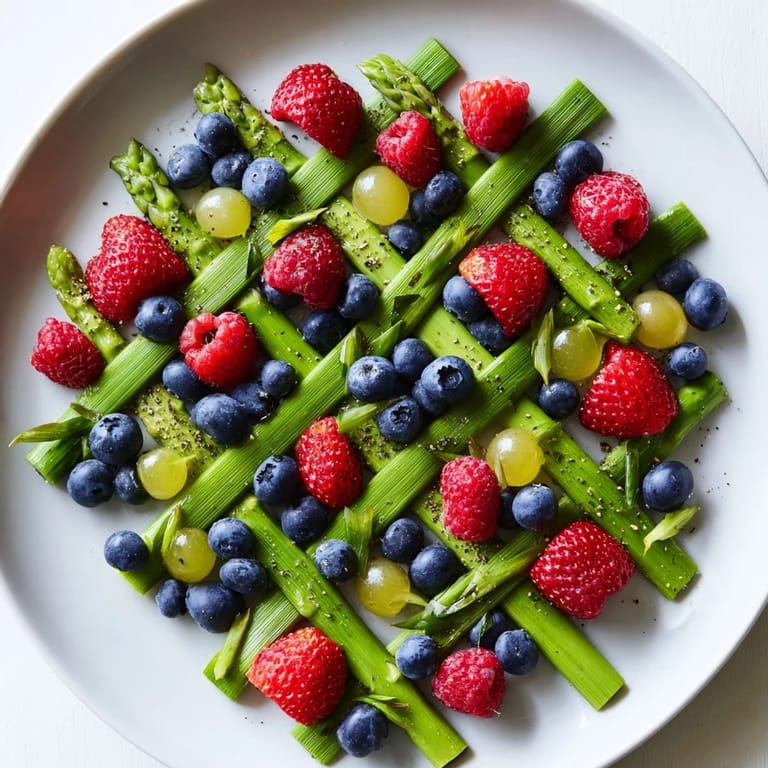
- Lay 8 asparagus stalks parallel on your platter, spacing them about an inch apart. Now comes the satisfying part—take the remaining 8 stalks and weave them perpendicular, going over-under-over-under, as if you're braiding. Take your time here; it's easier than you'd think, and the geometry is forgiving.
- Tie the intersections with chive knots:
- At each crossing point, gently wrap a chive stem around the junction and tie a loose knot. You're not trying to crush anything; just secure enough so the grid holds its shape when you move the platter.
- Fill the squares with berries:
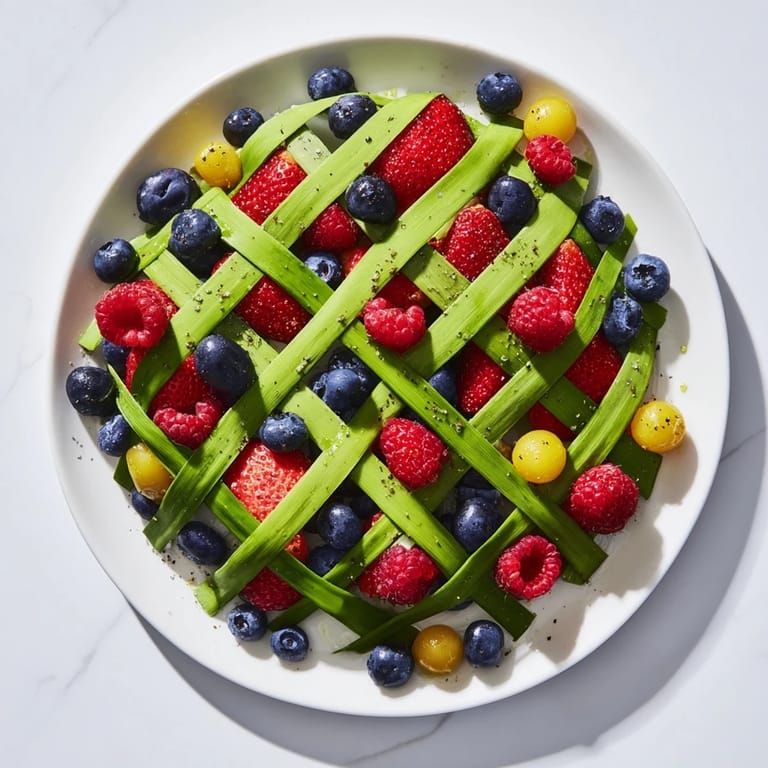
- This is where the dish transforms into something magical—nestle your berries into each open square, mixing the colors and sizes so each square looks intentional and jeweled.
- Season with restraint:
- Just before serving, drizzle the oil lightly across the lattice, sprinkle with a whisper of sea salt, and finish with a few grinds of black pepper. The asparagus will taste green and fresh, the berries will taste like themselves, and the salt will tie it all together.
 Save
Save What struck me most was realizing this dish isn't really about the ingredients—it's about the fact that you've built something that exists for maybe two hours before it's gone forever. There's something kind of profound about that.
Fruit & Flavor Pairings That Work
The beauty of this lattice is its flexibility—blackberries add earthiness, red currants bring tartness, pomegranate seeds add a crisp pop. I once swapped in fresh figs halved lengthwise, and the texture contrast was unexpected and perfect. The rule is simple: use whatever is firm, small, and colorful, and avoid anything too watery or soft that would collapse into the asparagus.
Make It Your Own
After the first time I made this, I started experimenting with finishes that transformed the whole mood—a light drizzle of aged balsamic vinegar adds sophistication and a touch of sweetness, while fresh mint leaves scattered across create a garden-fresh aesthetic. I've also learned that serving it on a bed of arugula or atop a dollop of herbed crème fraîche deepens the flavors without overwhelming the delicate architecture.
Timing & Temperature
Serve this chilled or at room temperature, but never warm—the heat would wilt the greens and melt the asparagus's crisp texture. I like to assemble it about 30 minutes before guests arrive, giving it time to settle into the platter while staying completely fresh.
- Prep all components separately if making ahead, then assemble just before serving.
- Keep berries in the fridge until the last moment so they stay firm and don't release juice.
- If serving at a warm gathering, keep the platter on ice underneath to maintain everything's cool, fresh bite.
 Save
Save This dish reminds me that the best meals don't need to be complicated—they just need to be made with intention and served with a little bit of playfulness. Build it, share it, and watch what happens.
Recipe Q&A
- → How do you soften the chives for weaving?
Dip the long chive stems briefly in hot water for five seconds, then cool them in ice water. This makes them pliable for weaving without breaking.
- → What is the best method to blanch asparagus?
Boil asparagus stalks in salted water for 1-2 minutes until bright green and tender, then transfer immediately to an ice bath to stop cooking and preserve color.
- → Can other fruits be used besides berries and golden fruits?
Yes, small firm fruits like blackberries, red currants, or pomegranate seeds work well as alternatives to add bursts of sweetness.
- → How do you secure the asparagus lattice structure?
Gently tie long chive stems around the intersections where asparagus stalks cross to hold the woven grid together securely.
- → What seasoning enhances this lattice's flavor?
A simple drizzle of extra virgin olive oil, a sprinkle of flaky sea salt, and freshly ground black pepper bring out the natural flavors without overpowering them.
- → Is this dish served warm or cold?
It is best served chilled or at room temperature, making it refreshing and ideal for spring or brunch occasions.