 Save
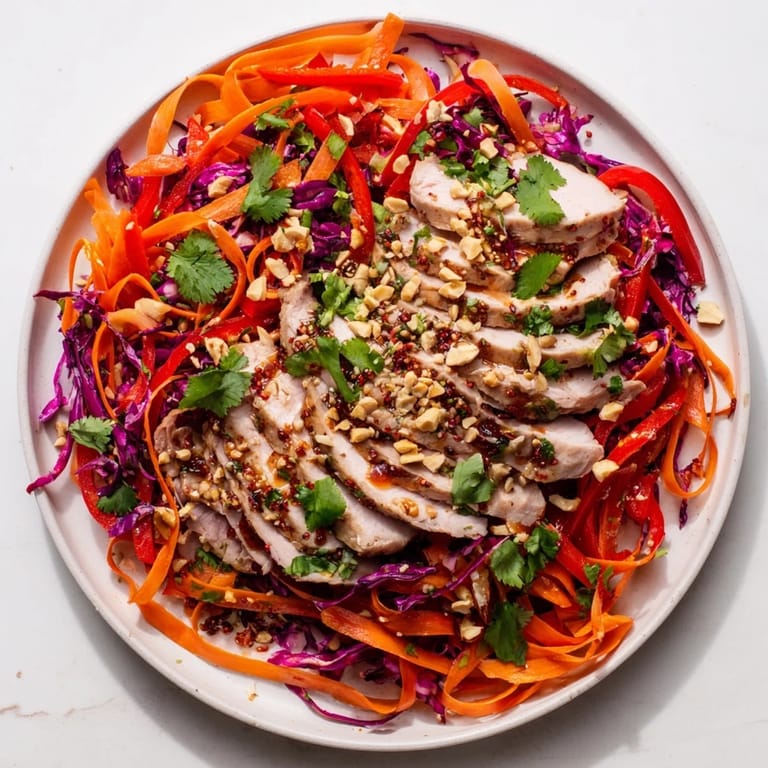
Save There's something about the way a vegetable peeler catches the light that makes me slow down in the kitchen. One afternoon, I was standing at the counter watching my neighbor through the window—she was tossing vegetables with this infectious energy, and I realized I'd been making salads all wrong. They were lifeless, predictable things until I started playing with texture and contrast the way she did. That's when carrot ribbons stopped being just a technique and became the whole point: thin enough to catch the dressing, colorful enough to make people stop and actually look at what they're eating. This slaw came from trying to recreate that feeling, built around tender chicken and a dressing so good it makes even the most skeptical eater lean back with surprise.
I made this for my sister during a particularly hectic week when she needed something that tasted like care but didn't demand I spend hours cooking. She was sitting at my kitchen island, scrolling through her phone with that tired energy, and the moment she took a bite—the way her shoulders relaxed, the way she went back for another forkful immediately—I knew I'd stumbled onto something real. That's the power of this slaw: it looks abundant and tastes like intention, even when you're moving fast.
Ingredients
- Boneless, skinless chicken breasts (2, about 400g): You want them relatively even in thickness so they cook through at the same time; if they're uneven, pound them gently to level them out. Fresh matters here because the chicken needs to taste bright, not musky.
- Carrots (4 large, peeled into ribbons): Use a vegetable peeler and let yourself get into a rhythm—it's meditative, and those ribbons are what make this dish feel special instead of ordinary. The thinner they are, the more they'll soften slightly from the dressing without losing their snap.
- Red cabbage (2 cups, finely shredded): The color matters psychologically; it makes people want to eat this. Shred it thin enough that it wilts just slightly from the warm chicken and dressing.
- Red bell pepper (1, thinly sliced): This adds sweetness and another dimension of crunch; don't skip it thinking it's just filler.
- Scallions (3, thinly sliced): The sharp onion bite matters—it's what keeps the slaw from becoming one-note. Use both white and green parts.
- Fresh cilantro (1/2 cup): If you're in the cilantro-tastes-like-soap camp, use flat-leaf parsley instead without guilt; this is your salad, not mine.
- Roasted peanuts (1/4 cup, roughly chopped, optional): They add richness and texture; I always use them because the moment you taste what they contribute, you'll understand why.
- Toasted sesame seeds (1 tbsp): Toast them yourself in a dry pan for 2 minutes—the difference between store-bought and toasted is the difference between background noise and a song you actually hear.
- White miso paste (2 tbsp): This is the secret in the dressing; it adds umami depth without tasting fishy or weird. Find it in the Asian section of any decent grocery store.
- Rice vinegar (2 tbsp): Gentler than regular vinegar, and it doesn't overpower the other flavors; it harmonizes instead.
- Soy sauce (1 tbsp in dressing, plus 1 tbsp for marinade): Use good soy sauce if you can; it matters more in a dressing where it's so visible than in other dishes.
- Honey or maple syrup (1 tbsp): This rounds out the dressing's sharp edges and makes it feel complete without being sweet.
- Freshly grated ginger (1 tbsp in dressing, plus 1 tsp for marinade): Ginger from a jar is a crime—get a small knob and grate it yourself. The difference is everything.
- Toasted sesame oil (2 tsp in dressing, plus 1 tbsp for marinade): Use it sparingly; it's intense and beautiful, not a bulk ingredient.
- Neutral oil (3 tbsp): Canola works, grapeseed is slightly more sophisticated, but honestly any neutral oil you trust will do.
- Fresh lime juice (1 tbsp): Squeeze it yourself if you can; bottled loses something essential.
- Garlic clove (1 small, minced): Just one—this dressing shouldn't taste like you're making an Italian vinaigrette.
Tired of Takeout? 🥡
Get 10 meals you can make faster than delivery arrives. Seriously.
One email. No spam. Unsubscribe anytime.
Instructions
- Marinate the chicken while you get your head in the game:
- Mix soy sauce, sesame oil, ginger, salt, and pepper in a small bowl, then coat the chicken breasts completely and let them sit for 10 minutes. This isn't a long marinate, but it's enough to season them through and add flavor that radiates from the inside.
- Cook the chicken until it's golden and cooked through:
- Heat a grill pan or skillet over medium heat and cook each side for 5–7 minutes until you get a nice sear and the internal temperature hits 165°F. Let it rest for 5 minutes after cooking, which keeps it from being tough, then slice it thinly against the grain so each bite is tender.
- Prepare your vegetables while the chicken cooks:
- Use a vegetable peeler to shave carrots into ribbons, then toss them into a large bowl with the cabbage, bell pepper, scallions, and cilantro. The moment of prepping vegetables is when you notice if you're in the right mood for cooking—if you're not, this is the recipe that brings you back.
- Build the dressing with intention:
- Whisk miso, rice vinegar, soy sauce, honey, ginger, sesame oil, neutral oil, lime juice, and garlic together until smooth and creamy. Taste it—it should taste alive and slightly complex, not one-dimensional. If it feels too sharp, add another small drizzle of honey; if it feels flat, add a squeeze more lime.
- Bring everything together gently:
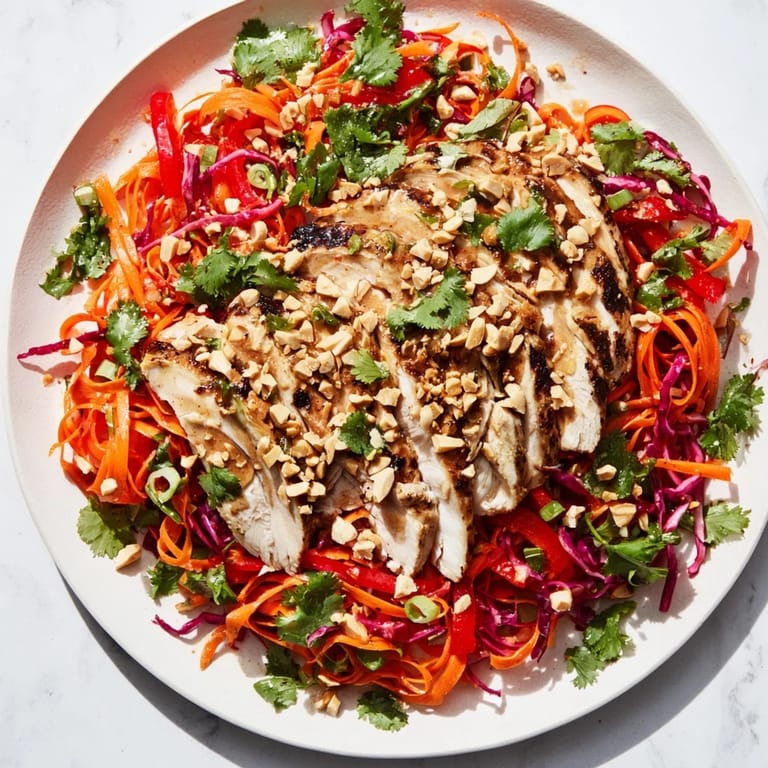
- Add the sliced chicken to the vegetables, pour the dressing over everything, and toss gently so you coat everything without breaking the vegetables into mush. The goal is for each component to taste dressed but distinct, not blended into a confused pile.
- Finish and serve while it still has personality:
- Sprinkle with roasted peanuts and toasted sesame seeds right before serving so they stay crunchy. This salad is best eaten immediately, while the warm chicken is still releasing steam and the vegetables still have their snap.
 Save
Save I served this to someone who'd been claiming they didn't really like salads, and watching them go back for thirds while barely making eye contact with their phone was a small victory I think about more often than I should. Food that makes people forget to perform, that makes them just eat and enjoy and stop thinking so hard—that's the food worth making.
Why the Texture Matters So Much
Contrast is everything in this dish; it's what separates something boring from something you actually want to eat. The warm, tender chicken against the cool, crisp vegetables, the way the ribbons of carrot catch the dressing differently than the shredded cabbage does—these details are what your mouth is actually tasting. When I started thinking about salads this way, stopped treating them as vehicles for dressing and started thinking about them as compositions, the whole thing shifted. Every element should do something different, provide a different sensation, so that eating it feels active and interesting instead of like an obligation.
The Dressing Is Everything
I've made this slaw with a dozen different dressings, trying everything from lime juice–based to peanut butter–based, and every time I come back to this ginger-miso combination. There's something about the way miso adds richness without heaviness, the way ginger keeps it bright, that makes even the simplest vegetables taste like you're eating something sophisticated. The dressing is where the work actually is in this recipe; everything else is just support for it. Take time with it, taste it as you go, and adjust it until it makes you lean back a little.
Making It Your Own
This is the kind of recipe that loves adaptations and doesn't punish you for making changes. I've made it with grilled tofu for vegetarian friends, added cucumber for extra crunch in summer, thrown in edamame for protein when I was being fancy. The skeleton of this dish is solid enough to hold a lot of variation, which means you're not locked into making it one way forever. What matters is that the dressing is excellent and the vegetables are fresh and your technique with the peeler is meditative, not rushed.
- Try adding sliced cucumber or edamame for texture and protein without changing the essential character of the dish.
- If cilantro tastes soapy to you, flat-leaf parsley or fresh mint work beautifully as substitutes.
- This works just as well with grilled tofu or tempeh if you want to skip the chicken, adjusting your seasoning slightly since tofu is milder.
 Save
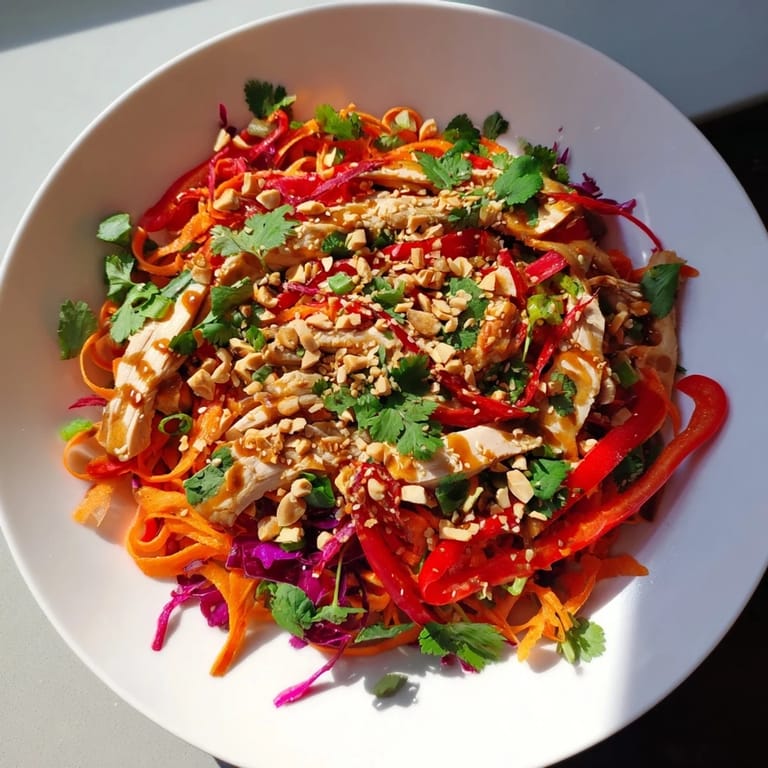
Save This slaw is the kind of thing that makes weeknight dinner feel intentional and a bit luxurious without demanding anything you don't have in your kitchen already. Make it when you want to feel like you cooked something real.
Recipe Q&A
- → How do I make carrot ribbons?
Use a vegetable peeler to shave large peeled carrots into thin, delicate ribbons for texture and visual appeal.
- → What is the best way to cook the chicken?
Marinate chicken breasts briefly, then cook on a hot grill pan or skillet for 5-7 minutes per side until thoroughly cooked and juicy.
- → Can I substitute peanuts if allergic?
Yes, omit peanuts or substitute with toasted seeds like pumpkin or sunflower for added crunch.
- → How should I store leftovers?
Keep the salad and dressing separate in airtight containers and refrigerate. Combine just before serving to maintain crispness.
- → What beverages pair well with this dish?
A crisp Sauvignon Blanc or chilled jasmine tea complements the fresh flavors and light ginger-miso dressing nicely.
- → Is it possible to make a vegetarian version?
Yes, replace chicken with grilled tofu or tempeh to add protein while maintaining the dish's flavor profile.