 Save
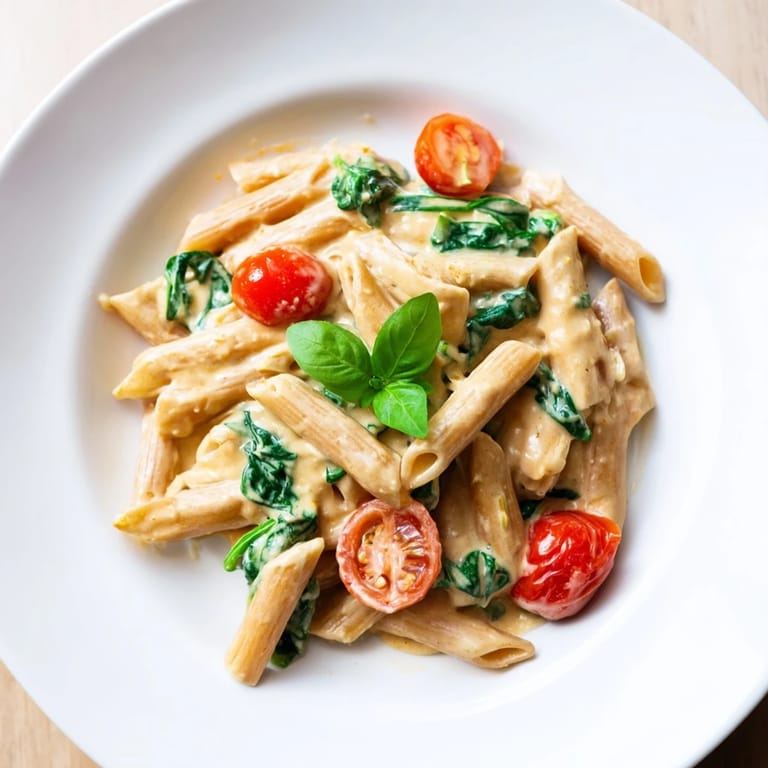
Save I discovered this pasta entirely by accident one Wednesday night when I was staring into my fridge wondering what I could possibly make with the large container of cottage cheese I'd impulse-bought at the grocery store. I'd always dismissed cottage cheese as a breakfast or snack thing, something to eat alone with fruit, but something made me think: what if I blended it? The moment I poured that silky sauce over hot pasta and took the first bite, I realized I'd been missing out on one of the easiest, creamiest, most protein-packed weeknight dinners hiding right there in my dairy section.
I made this for my sister when she was visiting and mentioned she wanted to eat better but wasn't about to give up pasta, and watching her face light up when she tasted how creamy it was felt like a small victory. She kept asking if it was some fancy restaurant technique, and I loved telling her it was literally just blended cottage cheese, milk, and garlic—the kind of humble ingredients that don't look impressive until they transform into something completely different.
Ingredients
- Whole wheat or regular pasta (12 oz): The foundation here, and honestly, any shape works—I tend to reach for penne or fusilli because the sauce clings to them nicely, but short rigatoni is equally good.
- Low-fat cottage cheese (1 1/2 cups): This is your secret weapon for the whole thing; blending it until completely smooth is what turns it into something that tastes nothing like the cottage cheese you remember.
- Milk (1/2 cup): This loosens the sauce to the right consistency, so it coats the pasta instead of clumping up; dairy or plant-based both work, though whole milk or oat milk give the richest feel.
- Grated Parmesan cheese (1/4 cup): This adds a sharp, salty note that keeps the sauce from tasting flat or one-dimensional.
- Garlic (2 cloves): The blender takes care of mincing these, and they mellow out into the sauce, providing warmth without being aggressive.
- Extra-virgin olive oil (2 tbsp): This rounds out the sauce with richness and helps it emulsify properly so it doesn't separate.
- Salt and pepper to taste: Start conservative; you can always add more once you taste it together with the pasta.
- Red pepper flakes (optional pinch): I add these when I want a whisper of heat, but it's entirely optional depending on your mood.
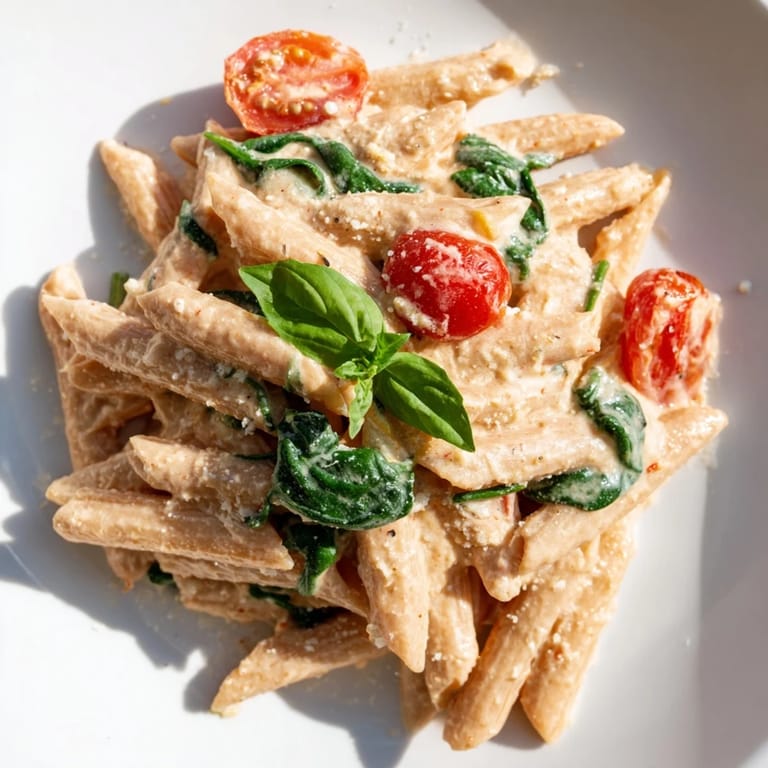
- Baby spinach (2 cups) and cherry tomatoes (1/2 cup): These add freshness and texture, but they're honestly optional—I skip them some nights and the dish is still wonderful.
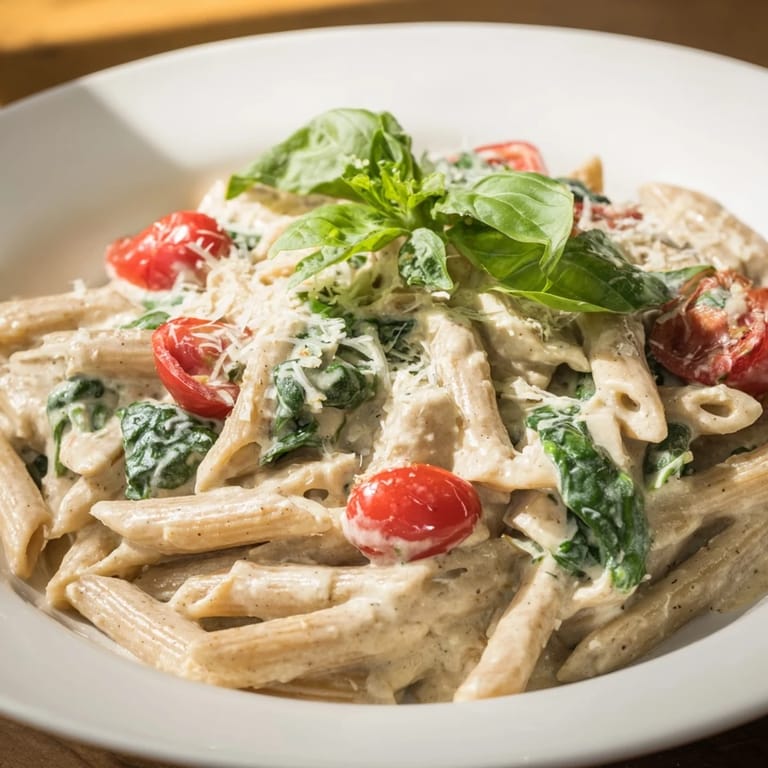
- Fresh basil and extra Parmesan for garnish: These finishing touches make the whole thing feel intentional instead of thrown together.
Tired of Takeout? 🥡
Get 10 meals you can make faster than delivery arrives. Seriously.
One email. No spam. Unsubscribe anytime.
Instructions
- Get the pasta going:
- Fill a large pot with salted water—enough that the pasta can move around freely—and bring it to a rolling boil. Salt it generously so the water tastes like the sea; this is where most of the flavor in your pasta gets built. Add the pasta and cook it until it's al dente, which means it should have a tiny bit of resistance when you bite it, not mushy.
- Make the magic sauce:
- While the pasta is cooking, throw the cottage cheese, milk, Parmesan, garlic, olive oil, salt, pepper, and red pepper flakes into your blender. Blend it until it's completely smooth and velvety—this usually takes about 30 to 45 seconds on high speed, and you want zero cottage cheese chunks visible. Stop and scrape down the sides if needed.
- Combine with restraint:
- Before you drain the pasta, scoop out at least half a cup of that starchy pasta water and set it aside—this is your insurance policy for a sauce that flows instead of clumps. Drain the pasta, put it back in the pot on low heat, and pour in your sauce, then gently toss everything together, adding a splash of that pasta water little by little until the sauce coats every piece and looks almost glossy.
- Add the vegetables if you want them:
- Toss in the spinach and tomatoes now and stir gently for about a minute until the spinach is wilted and the tomatoes are just barely softened. If you're skipping the vegetables, that's completely fine—this dish doesn't need them to be delicious.
- Serve it warm:
- Divide it between bowls and tear some fresh basil over the top, finishing each bowl with another pinch of Parmesan. Eat it immediately while the sauce is still creamy and warm.
 Save
Save There's something quietly satisfying about making a dish that looks and tastes indulgent but is actually doing your body good, and that's exactly what this pasta does. It's the kind of meal that feels like comfort but makes you feel strong afterward, which is a rare and lovely combination.
Why This Works as a Weeknight Dinner
The beauty of this dish is that every single element happens in your pot or blender—there's no complicated stovetop juggling, no waiting for cream to reduce, no watching over something nervous. You can literally start cooking and have dinner plated in less time than it takes to scroll through your phone while waiting for water to boil. The protein from the cottage cheese and Parmesan means this actually fills you up, which makes it perfect for nights when you want something satisfying that doesn't require sides or overthinking.
Ways to Make It Your Own
The foundation of this recipe is solid, but it's also incredibly flexible depending on what you have and what you're craving. I've made it with torn roasted chicken stirred in for nights when I want extra protein, and I've made it with sautéed mushrooms instead of spinach for an earthier feeling. The sauce itself takes well to different herbs too—swap basil for dill, or add a pinch of nutmeg if you want something slightly more sophisticated.
The Cottage Cheese Question
Most people have an old memory of cottage cheese that doesn't excite them, and I understand that completely—I was the same way until I realized that blending it transforms it into something entirely different. When you blend cottage cheese with milk and fat and salt, those curds disappear and what you get is a sauce that's indistinguishable from something made with heavy cream or ricotta, except it has way more protein and way fewer calories. It's also significantly cheaper than cream-based sauces, which means you can make this regularly without it feeling like a luxury.
- Full-fat cottage cheese makes the sauce richer if you can find it, but low-fat works beautifully too.
- Blend for the full time until you genuinely see no graininess at all—this is not the place to rush.
- Cold cottage cheese blends smoothly, so don't worry about tempering it first.
 Save
Save This pasta reminded me that sometimes the best dishes hide in plain sight, waiting for someone to look at an ingredient sideways and think about it differently. It's the kind of dinner that makes you feel like you've figured something out.
Recipe Q&A
- → How do I make the sauce creamy?
Blend cottage cheese with milk, Parmesan, garlic, and olive oil until completely smooth for a velvety consistency.
- → Can I use different pasta types?
Yes, whole wheat, regular, or gluten-free pasta work well depending on your preference or dietary needs.
- → What vegetables complement this dish?
Baby spinach and cherry tomatoes add freshness and color but feel free to substitute with arugula, kale, or peas.
- → How can I increase the protein content?
Add cooked chicken breast or sautéed tofu cubes to the dish for an extra protein boost.
- → Is this suitable for vegetarian diets?
Yes, it uses dairy ingredients and can exclude meat, making it appropriate for vegetarian preferences.