 Save
Save I'll never forget the first time I arranged a wreath board for our holiday open house three years ago. My kitchen felt like a florist's studio as I gathered jewel-toned grapes, creamy cheeses, and sprigs of fragrant rosemary, transforming them into something almost too beautiful to eat. My neighbor walked in, paused, and said, "Did you buy this from a caterer?" when it was simply ingredients arranged with intention and care. That moment taught me that the most impressive entertaining doesn't require complicated cooking—it requires presence and a little creativity.
My sister asked me to bring this to her holiday party last December, and I watched people literally circle the board like they were admiring a piece of art. They took photos. They debated which cheese to pair with which fruit. A wreath board doesn't just feed people—it gives them permission to slow down and enjoy a gathering without guilt or rushed eating.
Ingredients
- Brie cheese, 100g, sliced into wedges: The buttery softness is your anchor—choose a wheel that's ripe enough to be creamy but still hold its shape.
- Aged cheddar, 100g, cubed: Look for a sharp one with crystals for complexity; those little crunchy bits are magic against soft fruits.
- Goat cheese, 100g, cut into rounds: The tang cuts through richness beautifully—use a warm knife to slice it cleanly.
- Prosciutto, 80g, folded: Slice it yourself if possible; folding it creates elegant volume without much weight.
- Salami, 80g, sliced: Choose quality—it deserves attention as a flavor anchor, not an afterthought.
- Red grapes, 1 cup, halved: Halving them lets you nestle them into gaps and intensifies their sweetness visually.
- Green grapes, 1 cup, halved: The color contrast is essential; don't skip this for economy.
- Pomegranate arils, 1/2 cup: These jeweled seeds are the final flourish—add them last so they don't stain everything else.
- Cherry tomatoes, 1 cup: Choose smaller ones that won't dominate the wreath; they're about accent, not statement.
- Mini cucumbers, 1/2 cup, sliced: Fresh and cool, they prevent the board from feeling too rich.
- Roasted almonds, 1/2 cup: The crunch is essential for textural contrast; unsalted lets the other flavors shine.
- Mixed olives, 1/2 cup: Use whole or halved—they anchor flavor and add visual weight.
- Dried cranberries, 1/4 cup: These are your pop of tartness and burgundy accent.
- Fresh rosemary, 6–8 sprigs: This is the wreath's skeleton—choose sprigs with good shape and aromatics.
- Olive branches, a few small ones: Ensure they're food-safe varieties, thoroughly washed; they're decorative and edible.
- Whipped feta dip, 1 cup: Make it yourself (feta, cream, lemon juice, olive oil) or buy quality; this is your centerpiece's flavor.
- Olive oil, 1 tablespoon: Use good oil for drizzling—it should shine on top of the dip.
- Freshly cracked pepper, 1/2 teaspoon: The final garnish that says, "Someone cared about the details."
Tired of Takeout? 🥡
Get 10 meals you can make faster than delivery arrives. Seriously.
One email. No spam. Unsubscribe anytime.
Instructions
- Set your stage:
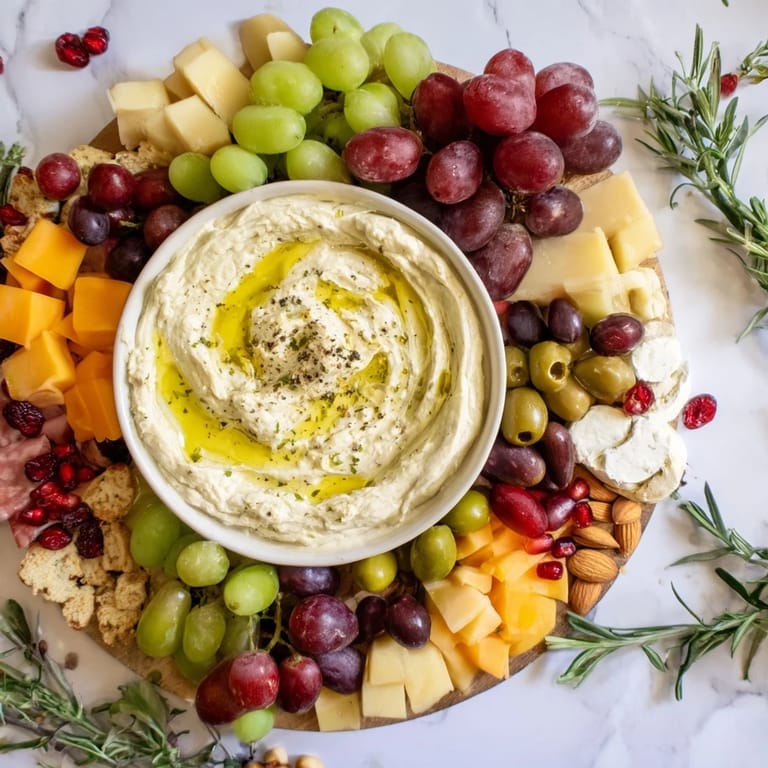
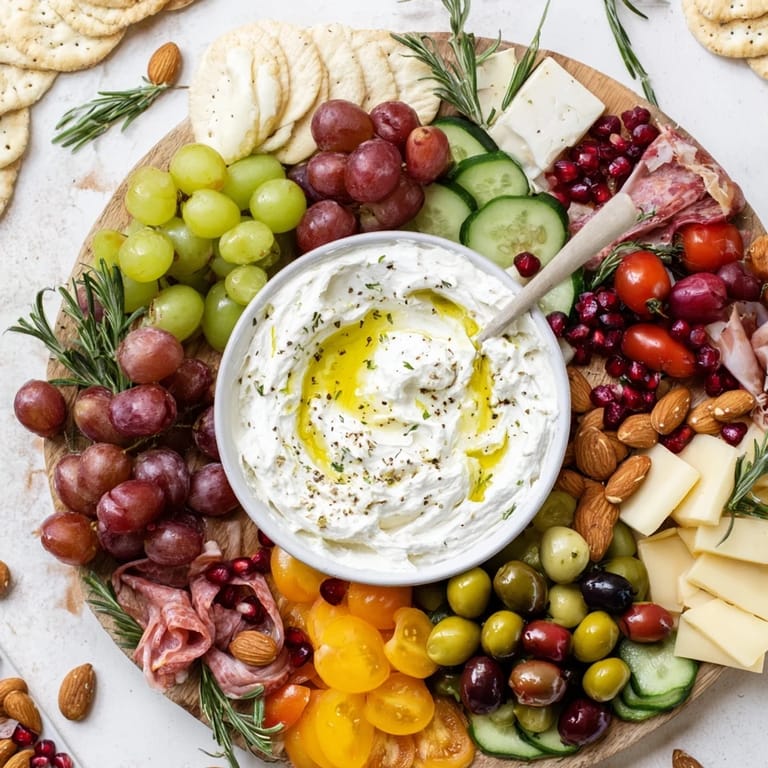
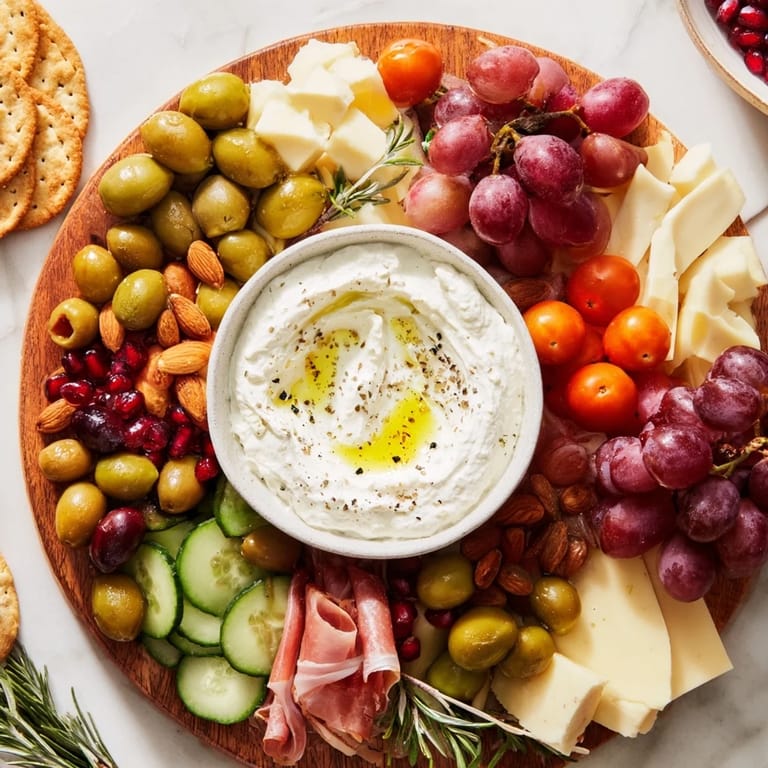
- Place a small bowl in the center of a large round board or platter. Fill it with your whipped feta dip, creating a creamy anchor. Drizzle with olive oil and sprinkle with freshly cracked pepper. Take a breath—this is your foundation, and it's already beautiful.
- Build the wreath's framework:
- Arrange rosemary and olive branches in a circular shape around the bowl. This is your canvas, your guide. Step back and look at it from above; you're creating the illusion of an actual wreath, so let the greenery flow naturally with slight gaps and overlaps.
- Layer the cheese as your base:
- Nestle cheese wedges, cubes, and rounds evenly around the foliage, alternating varieties so you're seeing color and texture transitions. This is where patience pays off—imagine you're filling in a painting with blocks of color that complement each other.
- Tuck in the cured meats:
- Fold or roll the prosciutto and salami, tucking them between cheese pieces like hidden treasures. They should peek out, not dominate. If you're making this vegetarian, skip this step entirely; the board will be just as stunning.
- Nestle the fresh fruits:
- Add grapes, cherry tomatoes, and cucumber slices, pressing them gently into the spaces among cheeses and meats. Use your eye to balance colors—if one side feels too red, move some green grapes there.
- Scatter the jewels:
- Distribute pomegranate arils, almonds, olives, and dried cranberries across the entire wreath. These aren't placed randomly; they're scattered with intention, filling gaps and creating visual rhythm.
- Step back and adjust:
- Look at your wreath from above as if it's the centerpiece of a table. Rotate it, add more of something if a section feels sparse, remove if it feels crowded. This is the magic moment—you're an artist now, not just assembling.
- Serve with presence:
- Place crackers or bread on the side. Let people admire the board for a moment before diving in—they will.
 Save
Save Last year, I made this for a work party, and afterward, a colleague I barely knew asked for the recipe. We ended up talking for twenty minutes about her holiday traditions, and she made this board for her own family gathering. A simple arrangement of good ingredients became the thread that connected us. That's what this board does—it gives people an excuse to gather, to choose, to savor.
The Art of the Circular Arrangement
The wreath shape isn't just decoration—it's psychology. Our eyes naturally follow the circle, moving from one ingredient to the next without hierarchy. This is why a chaotic rectangular platter can feel overwhelming, but a wreath feels organized and welcoming. When arranging, think of yourself as creating a visual journey. Start with your greenery to establish the path, then fill in with cheeses as anchors, then use smaller items (fruits, nuts) to create stopping points for the eye. The colors should flow and transition—deep burgundy cranberries next to bright green grapes, pale brie next to dark olives. If you make decisions based on color harmony first and flavor second, the board will sing.
Choosing Your Cheeses Wisely
The three cheeses suggested here represent a flavor spectrum: the buttery softness of brie, the sharp complexity of aged cheddar, and the tangy brightness of goat cheese. But this is where you can personalize. If your guests prefer mild flavors, swap the sharp cheddar for a young, creamy version. If someone at your gathering loves smoked flavors, add a wedge of smoked gouda. The rule is simple: choose cheeses that represent different textures and flavors, with at least one that's creamy, one that's crumbly, and one that's firm. Let them sit at room temperature for 15 minutes before arranging so they're actually pleasant to eat, not cold and dense.
Making It Your Own
This is a template, not a prison. Missing pomegranate arils? Use diced fresh apple instead. Don't love olives? Add roasted chickpeas for crunch. Have beautiful fresh figs in season? Slice them and layer them in. The key is maintaining the color balance and texture variety—you want creamy, crunchy, sweet, salty, and fresh all represented. One year I made this with roasted beets, fresh herbs scattered throughout, and herbed labneh instead of feta, and it was just as magical. Your board should reflect what you love and what's available to you.
- Starfruit and kiwi slices add surprising color and a tropical note if you want to play with the palette.
- A fully plant-based version works beautifully with vegan cheeses, seeds instead of nuts, and hummus instead of feta dip.
- If you want warm flavors, add toasted pumpkin seeds, candied walnuts, or even small cubes of aged manchego for a more autumn vibe.
 Save
Save This wreath board has become my signature entertaining move because it feels special without being stressful. It's the appetizer that lets you actually enjoy your guests instead of disappearing into the kitchen. Make it with love, and people will taste it.
Recipe Q&A
- → How can I make this wreath vegetarian-friendly?
Simply omit the cured meats and substitute regular feta dip with a hummus-based alternative for a delicious vegetarian-friendly option.
- → What cheeses work best for layering on the board?
Brie, aged cheddar cubes, and rounds of goat cheese provide a lovely balance of creamy and sharp flavors, as well as varied textures and colors.
- → Can I prepare the wreath in advance?
Arrange the ingredients shortly before serving to maintain freshness and prevent the foliage and fruits from wilting or drying out.
- → What are good beverage pairings with the wreath?
Light white wines like Sauvignon Blanc, a red Pinot Noir, or sparkling wines with festive bubbles complement the flavors nicely.
- → How do the rosemary and olive branches enhance the board?
They add aromatic, edible greenery that creates a festive wreath effect and a subtle herbal fragrance enhancing the overall presentation.
- → Are there suitable alternatives for nuts in this dish?
Roasted almonds work well, but you can substitute with walnuts or pecans if preferred, keeping similar crunch and flavor profiles.