 Save
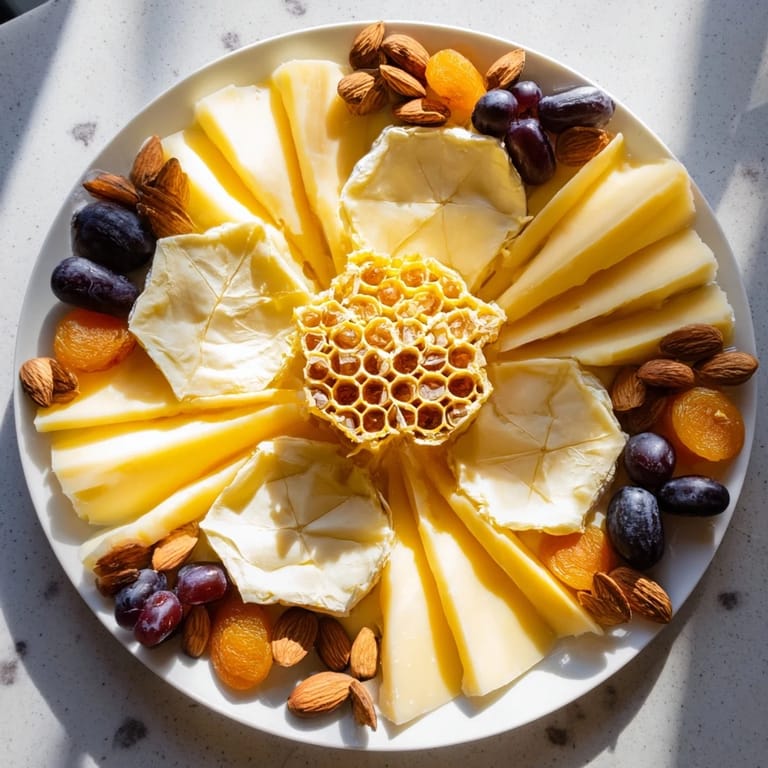
Save The moment I saw that edible honeycomb at the specialty shop, I knew exactly what I wanted to build. There's something about geometry that makes food feel intentional, almost ceremonial—and honeycomb shapes just whispered beehive to me. I spent that afternoon with a hexagon cutter, a cutting board covered in cheese crumbs, and the kind of quiet focus you only get when you're creating something purely for beauty. When friends arrived and saw that golden centerpiece radiating outward in perfect hexagons, their faces told me everything. This isn't just a board; it's edible architecture.
I made this for my partner's work dinner once, and I watched their colleagues actually pause mid-conversation just to admire it before eating. Someone asked if I'd taken a pastry course, and I had to laugh—it's just angles and honesty. That's when I realized the real magic of a beautiful board isn't the effort; it's how it makes people feel like they're being celebrated.
Ingredients
- Manchego cheese: Nutty and slightly salty, it cuts into clean hexagons and holds its shape beautifully—this is your reliable anchor cheese.
- Aged cheddar: The color alone is worth it, but the sharpness grounds the board against the milder cheeses.
- Gruyère: It brings elegance and a subtle sweetness that plays well with honey, which you'll understand the moment they combine on a cracker.
- Brie: Soft and luxurious, but chill it first or your hexagon cutter becomes a mashing tool instead.
- Blue cheese: A small amount goes far—it's the surprise note that makes people sit up straighter.
- Goat cheese log: Fresh and creamy, it slices like butter once cold and adds a tangy contrast to the richer cheeses.
- Whole wheat crackers: Sturdy enough to carry cheese without crumbling, and their earthiness complements both sweet and savory accompaniments.
- Seeded crackers: The seeds catch light and add visual interest, plus they taste like you planned this down to the last detail.
- Edible honeycomb: Non-negotiable for the centerpiece—it's the story at the heart of the whole arrangement.
- Runny honey: Drizzled warm, it pools and catches light, creating visual drama and flavor pockets throughout.
- Marcona almonds: Buttery and smooth, they're different enough from regular almonds that guests notice the thoughtfulness.
- Dried apricots: Their warm color bridges the gap between cheese and cracker, and sweetness without cloying.
- Fresh grapes: Jewel-like and refreshing, they're your palate cleanser and visual punctuation.
Tired of Takeout? 🥡
Get 10 meals you can make faster than delivery arrives. Seriously.
One email. No spam. Unsubscribe anytime.
Instructions
- Chill and cut your cheeses:
- Pull out a hexagon cutter—mine lives in my drawer now—and get your firm cheeses cold for exactly 20 minutes; soft cheeses like Brie need it more. The cutter glides through like warm butter through cold cheese when everything's the right temperature, and you'll see the difference immediately in clean edges versus crushed corners.
- Transform the crackers:
- This part feels meditative: cut, place, admire, repeat. Some will shatter and that's okay—broken hexagons become gaps to fill with almonds anyway. Save your best pieces for the outer rings where they'll be seen.
- Crown your board with honeycomb:
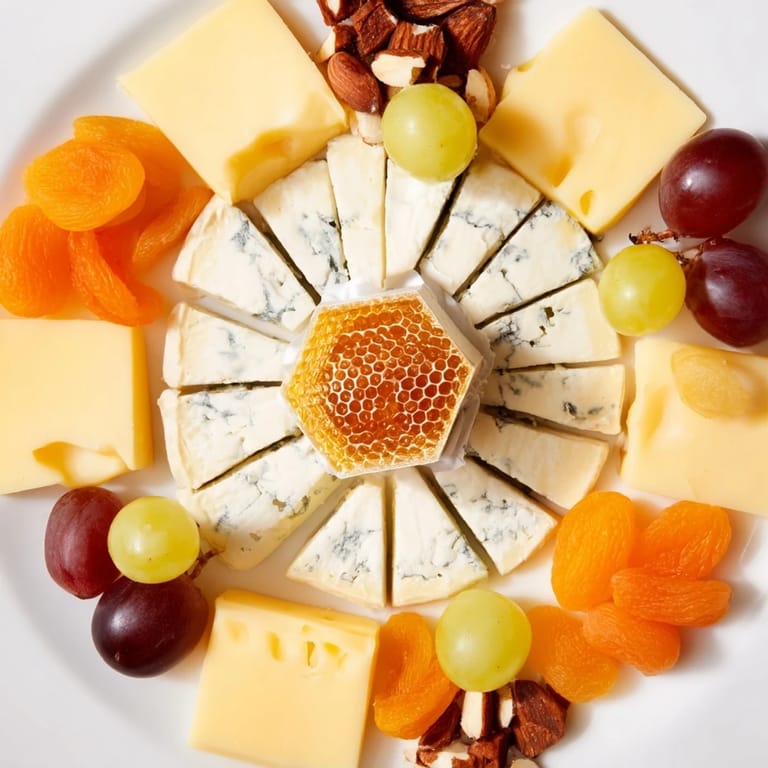
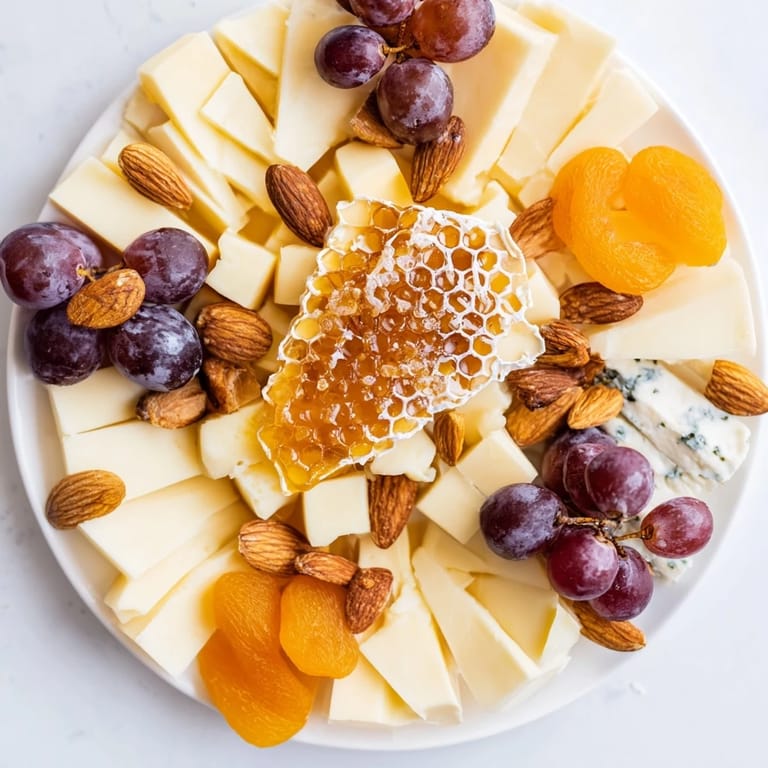
- Dead center is where that edible honeycomb lives, and everything else radiates outward from there. It's your focal point, your why, your reason the whole thing works.
- Build in concentric rings:
- Start with cheese hexagons close to the honeycomb, alternating colors and textures as you work outward—blue next to white, pale next to golden. The pattern emerges as you go, almost like you're not making choices, just revealing what was always meant to be there.
- Frame with crackers:
- Once the cheese rings are down, create your outer circles with hexagon-cut crackers, filling gaps with intention rather than panic. These crackers hold the whole composition together and give guests actual vehicles for the cheese.
- Scatter and balance:
- Almonds, apricots, and grapes fill the remaining negative space, but don't crowd it—negative space is what makes this feel elegant instead of chaotic. Step back and look for holes, then fill only what needs filling.
- Drizzle with intention:
- Warm honey in a thin stream around the honeycomb and across the cheese creates shine and promise of sweetness. Don't overthink it—three or four deliberate lines beat a hesitant mess.
- Final flourish:
- If you have edible flowers or microgreens, scatter them now as your signature. If not, the board is complete and perfect without them.
 Save
Save There was a moment while arranging this board when I realized I was holding my breath, as if any sudden movement might ruin the pattern I'd created. That's when it clicked for me—beautiful food isn't about perfection, it's about intentionality. The slight imperfections, the cheese that didn't cut quite straight, the cracker that cracked just enough to look rustic—those are what made it real.
The Geometry of Generosity
Serving boards shaped like nature—spirals, hexagons, mandalas—feel like you're offering more than food; you're offering thought and care. The hexagon pattern taps into something almost primordial, like we're all recognizing the efficiency of a honeycomb without ever formally learning why it matters. This design turns a cheese board into a conversation starter and a gift to look at before you even taste it.
Pairing Beyond Wine
A crisp Sauvignon Blanc is perfect, yes, but I've also served this alongside sparkling water with fresh lemon, a dry rosé, or even a light beer that cuts through the richness without competing. The board itself is so well-composed that it doesn't demand a specific pairing—it elevates whatever you pour. The honey especially acts as a bridge, making even simple pairings feel intentional.
Timing, Temperature, and Trust
This is a recipe where timing is the real technique—not because it's complicated, but because cheese is honest food that shows temperature immediately. Arrange this 15 minutes before people sit down, no more, no less. Cold cheese feels stingy; room-temperature cheese feels generous and shows off its true flavor and texture. The moment between completion and serving is when this board transforms from a project into an experience.
- Buy all your cheeses from a proper cheese counter where they'll let you taste before committing.
- Keep your hexagon cutter sharp, dry, and handy because you'll want to make this again.
- Remember that hospitality is just precision applied with affection.
 Save
Save This board changed how I think about entertaining—it proved that restraint and geometry can be just as impressive as complexity. Every time I make it, I remember that a simple idea executed with care is always going to outshine a complicated one done hastily.
Recipe Q&A
- → What is the best way to cut the cheeses into hexagons?
Use a food-safe hexagon-shaped cutter about 2–3 inches wide. Chill softer cheeses briefly before cutting to achieve clean edges.
- → Can I use different crackers for the board?
Yes, you can choose large wheat or seeded crackers. Gluten-free options also work well if needed.
- → How should the honeycomb be placed on the board?
Position the edible honeycomb at the center as a visual focal point around which cheeses and crackers are arranged.
- → What are good accompaniments to complement the cheeses?
Marcona almonds, dried apricots, fresh grapes, and a drizzle of runny honey add flavor contrast and color balance.
- → Are there tips for maintaining neat hexagon shapes?
Wipe the cutter clean between cuts and use a sharp metal cookie cutter for best results. Chilling soft cheeses helps preserve shape.
- → Which wines pair well with this board?
Light white wines like Sauvignon Blanc or sparkling wines complement the variety of cheeses and honey notes beautifully.