 Save
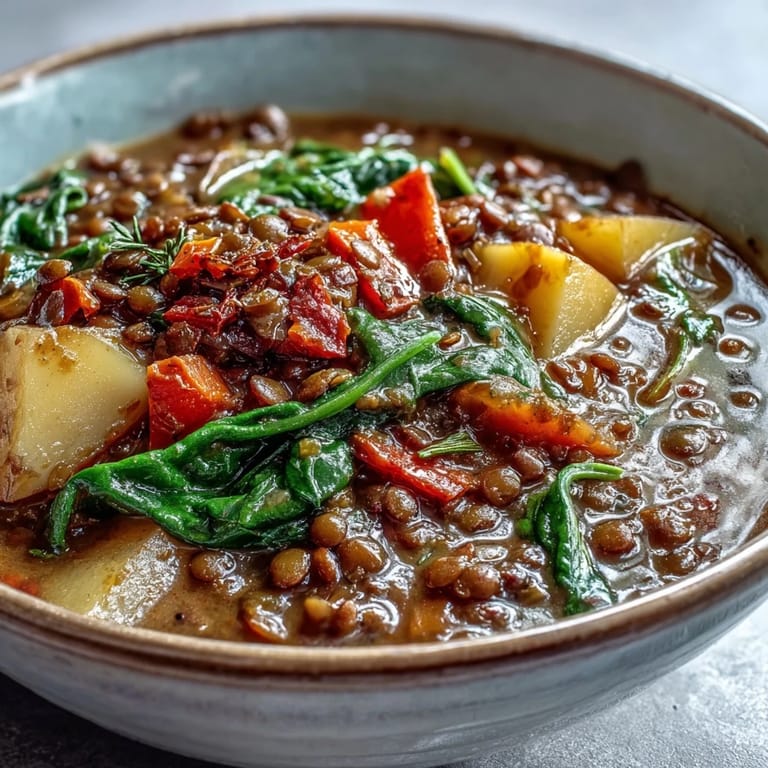
Save My kitchen was thick with autumn rain the afternoon I first ladled this stew into mismatched bowls for friends who'd shown up unannounced. The smell of cumin and smoked paprika had drawn them in from the living room, and suddenly we were all gathered around the stove, trading stories while the lentils softened into tender submission. That was years ago, but I still make it the same way, because there's something almost magical about how simple vegetables and legumes transform into something that feels both deeply nourishing and utterly effortless.
I made this for my partner during the first winter we lived together, when the apartment still felt new and we didn't know each other's kitchen habits yet. He watched from the counter as I chopped vegetables with probably too much concentration, and by the time we sat down to eat, the stew had warmed not just our bellies but something quieter between us. That bowl of lentils became proof that cooking for someone else, even imperfectly, is its own kind of language.
Ingredients
- Brown or green lentils (1 ½ cups): The backbone of this stew—they hold their shape better than red lentils and create a satisfying, slightly earthy texture that anchors everything else.
- Vegetable broth (4 cups): Use homemade if you have it, but don't stress if you don't; quality store-bought matters more than spending hours simmering.
- Olive oil (2 tablespoons): Just enough to coax out the sweetness from your onions and carrots without making the stew feel heavy.
- Onion, carrots, celery, and bell pepper: These create what cooks call the flavor base—they're the foundation everything else builds on.
- Garlic (3 cloves): Minced small so it distributes evenly and doesn't dominate any single spoonful.
- Potato (1 medium): Adds body and substance; cubing it keeps the pieces visible and textured rather than disappearing into mush.
- Canned tomatoes (1 can, 400 g): The acidity brightens everything and prevents the stew from tasting one-dimensional.
- Spinach or kale (2 cups): Added near the end so it stays vibrant and doesn't turn into a tired shadow of itself.
- Cumin and smoked paprika: These two spices do most of the heavy lifting—they're what make this stew taste intentional instead of accidental.
- Thyme and bay leaf: Subtle herbals that tie everything together without announcing themselves loudly.
- Salt and black pepper: Never skip seasoning until the very end; it makes the difference between good and forgettable.
Tired of Takeout? 🥡
Get 10 meals you can make faster than delivery arrives. Seriously.
One email. No spam. Unsubscribe anytime.
Instructions
- Start with the aromatics:
- Warm your olive oil in a large pot over medium heat, then add the diced onion, carrots, celery, and bell pepper. Let them soften for about 5 to 7 minutes, stirring occasionally—you're looking for them to lose their rawness and start to smell sweet.
- Wake up the garlic:
- Add your minced garlic and cook for just a minute until the smell shifts and becomes almost peppery. This brief moment prevents garlic from burning and turning bitter.
- Build your stew:
- Add the cubed potato, rinsed lentils, canned tomatoes with all their juice, cumin, smoked paprika, thyme, bay leaf, and vegetable broth. Stir everything together so nothing sticks to the bottom, then bring it to a rolling boil.
- Let it simmer gently:
- Once it's boiling, reduce the heat to low, cover the pot, and let it bubble softly for 30 to 35 minutes. You're aiming for lentils and potatoes that are tender enough to break with a wooden spoon but not so soft they've surrendered completely.
- Finish with green:
- Remove the bay leaf (important, or someone's going to bite into it), then stir in your chopped spinach or kale and let it wilt for 2 to 3 minutes. This is where the stew gets its final brightness.
- Season and adjust:
- Taste it, then taste it again. Add salt and pepper gradually because you want to season gently, not all at once. If it's too thick, thin it with more broth or water until it reaches the consistency you're after—somewhere between a thick soup and a thin stew.
- Serve with intention:
- Ladle it into bowls, garnish with fresh parsley if you have it, and squeeze lemon over the top. That brightness at the end makes everything taste sharper and more alive.
 Save
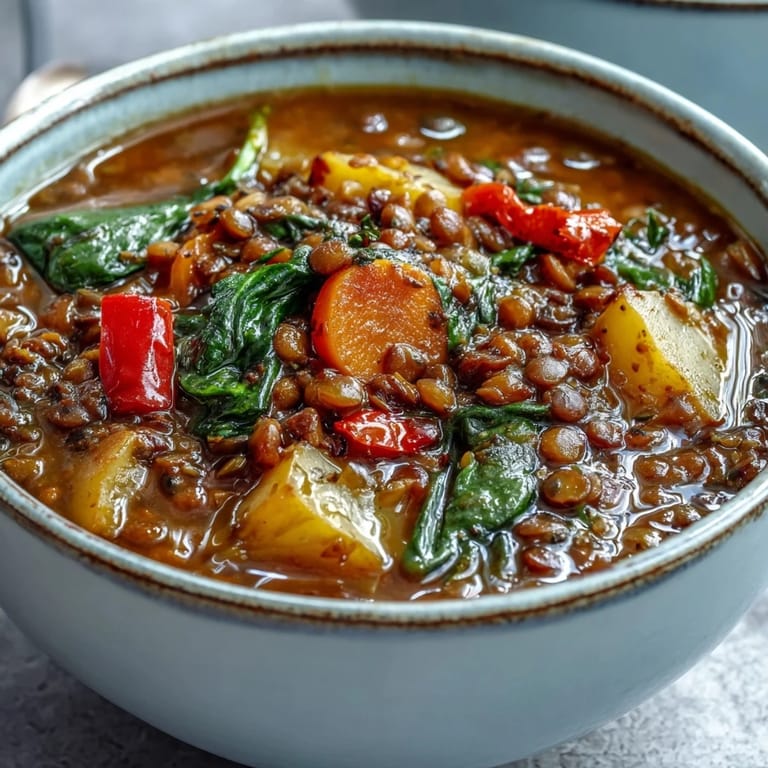
Save My mother called one evening while I was making this, and I had her taste it over video chat after I'd ladled it into a bowl. She nodded, then told me I'd finally learned why she loved cooking—not because the food was complicated, but because it connected you to something real and unrushed. That conversation changed how I think about what it means to feed people.
Why This Stew Works as Comfort Food
There's science behind why lentil stew feels so deeply satisfying. The combination of plant-based protein from the lentils and the slow-release carbohydrates from the potatoes creates a sustained energy that doesn't spike and crash the way heavier meals do. Add the warming spices—cumin and smoked paprika have been used in traditional cooking for centuries because they actually make your body feel calmer and more grounded. When you eat a bowl of this stew, you're not just feeding yourself; you're giving your nervous system permission to slow down.
Customizing Your Stew
One of the reasons I keep making this recipe is that it's incredibly forgiving about substitutions. Swap the red bell pepper for yellow if that's what you have, use parsnips instead of carrots, or trade the potato for sweet potato if you're craving something slightly sweeter. The structure stays solid no matter what, because the lentils and broth do all the heavy lifting. I've even added a splash of balsamic vinegar in winter or a pinch of cayenne when I wanted heat, and it's always felt right.
Serving and Storing Ideas
This stew is one of those rare recipes that tastes better on day two or three, after all the flavors have gotten to know each other in the refrigerator. I usually make a big batch and eat it throughout the week, sometimes over rice, sometimes with crusty bread, sometimes straight from a mug on mornings when I need something warm before I face the world. It freezes beautifully for up to three months, so you can make double and save half for a future moment when you need comfort but don't have energy for cooking.
- Serve it over cooked grains like rice, quinoa, or farro to make it more substantial and stretch it further.
- A thick slice of toasted bread with a little olive oil rubbed on top makes the perfect vehicle for scooping up the bottom of the bowl.
- Leftovers actually taste better, so don't apologize if you're eating this three days in a row.
 Save
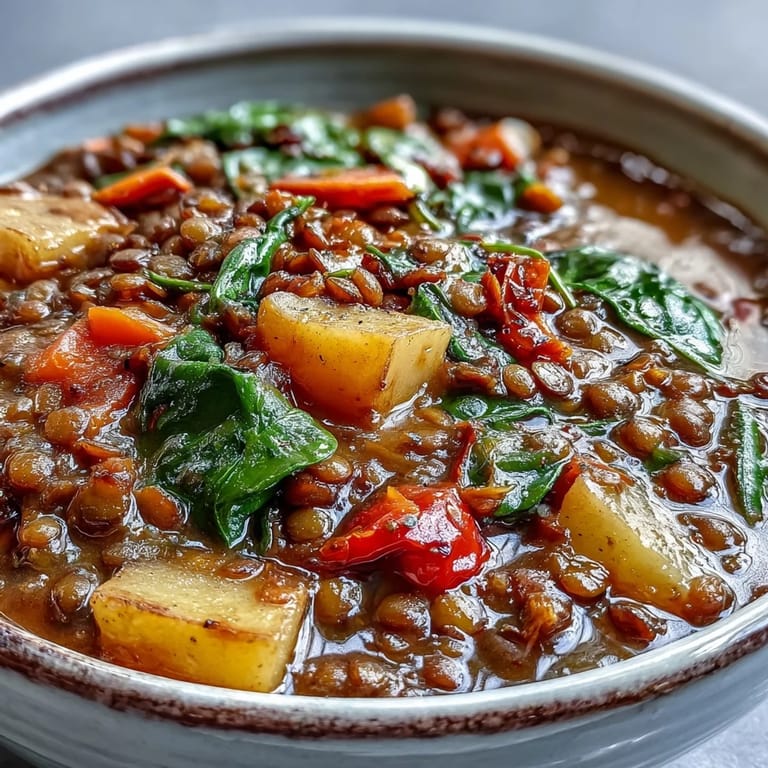
Save This stew has become the recipe I turn to when everything feels complicated, because it reminds me that good food doesn't have to be fussy. Make it, eat it, feel better.
Recipe Q&A
- → What type of lentils work best?
Brown or green lentils hold their shape beautifully during simmering, creating the perfect texture. Red lentils tend to break down too much and will make the dish thicker than intended.
- → Can I make this in a slow cooker?
Absolutely. Sauté the vegetables first, then transfer everything to your slow cooker. Cook on low for 6-7 hours or high for 3-4 hours until lentils are tender.
- → How long does this keep in the refrigerator?
Stored in an airtight container, this stew stays fresh for 4-5 days. The flavors actually deepen and improve after a day or two, making it excellent for batch cooking.
- → What can I serve with this?
Crusty bread or warm naan are perfect for soaking up the flavorful broth. A simple green salad with vinaigrette adds freshness and balances the hearty stew.
- → Is this freezer-friendly?
This freezes exceptionally well for up to 3 months. Cool completely before transferring to freezer-safe containers, leaving some space for expansion during freezing.
- → How can I add more protein?
Stir in a can of drained chickpeas or white beans during the last 10 minutes of cooking. Alternatively, serve with a dollop of Greek yogurt or sprinkle with hemp seeds.