 Save
Save The first time I made okonomiyaki was in a tiny apartment kitchen after a late-night craving struck. Steam fogged my glasses as I whisked the batter, the earthy scent of dashi filling the room. My Japanese neighbor had shown me the technique weeks before, laughing as I struggled to flip the pancake without sending cabbage flying everywhere. Something about that savory, umami-rich flavor captured a feeling I couldn't quite name - comfort and adventure all at once.
Last summer, I made these for friends who had never tried Japanese street food. The kitchen windows were open, letting in a warm breeze as everyone gathered around watching the bonito flakes wave like they were alive. We stood there with chopsticks, passing plates and laughing when someone got mayonnaise on their chin. Even my friend who swears he hates cabbage went back for seconds.
Ingredients
- Cabbage: The backbone of authentic okonomiyaki, I learned to slice it extra thin so it cooks through perfectly while maintaining a slight crunch.
- Dashi stock: After trying water once in desperation, I realized dashi is non-negotiable for that subtle ocean flavor that makes these pancakes truly Japanese.
- Bonito flakes: These paper-thin shavings of dried fish might look intimidating but they transform with heat, adding a smoky depth that elevates the entire dish.
- Okonomiyaki sauce: This sweet-savory glaze creates that distinctive caramelized flavor that makes you close your eyes with each bite.
- Japanese mayonnaise: Kewpie mayo is richer and tangier than American versions, creating the perfect creamy counterpoint to the other toppings.
Tired of Takeout? 🥡
Get 10 meals you can make faster than delivery arrives. Seriously.
One email. No spam. Unsubscribe anytime.
Instructions
- Prepare your batter:
- Whisk the flour, dashi, eggs, salt and baking powder until just combined, like a slightly thicker pancake batter. Small lumps are actually good here, as overmixing makes the pancakes tough.
- Create your veggie mix:
- Fold in the mountain of cabbage along with green onions, carrot and bean sprouts, using your hands to ensure everything gets evenly coated. The batter should just barely bind the vegetables together.
- Cook with patience:
- Pour a quarter of your mixture onto a medium-hot oiled skillet, gently shaping into a circle about half an inch thick. If using bacon, lay the strips across the top now so they render as the pancake cooks.
- Master the flip:
- After about 5 minutes, when the edges look set and the bottom is golden brown, take a deep breath and commit to the flip. A confident, quick motion works better than hesitation here.
- Add the finishing touches:
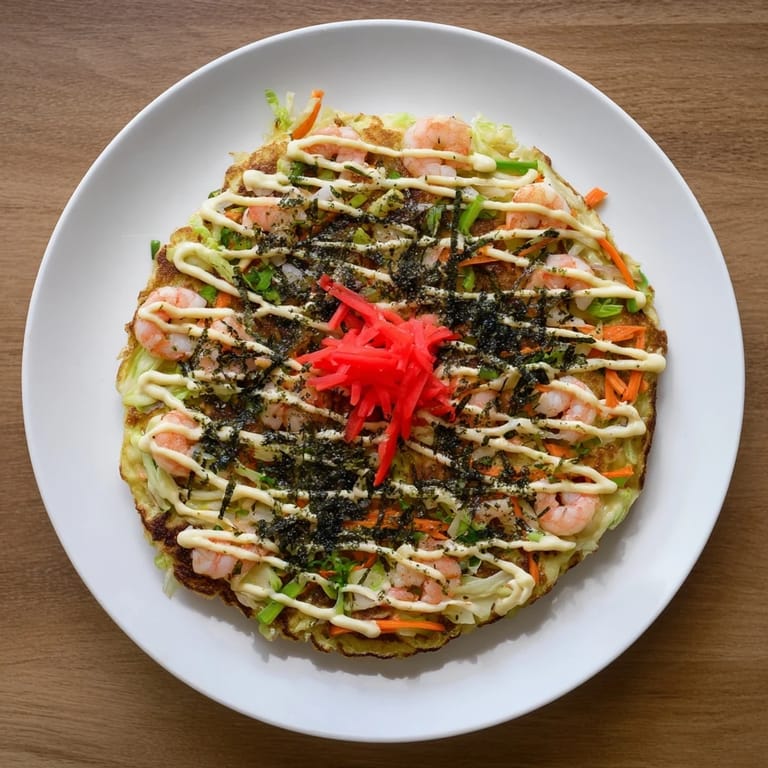
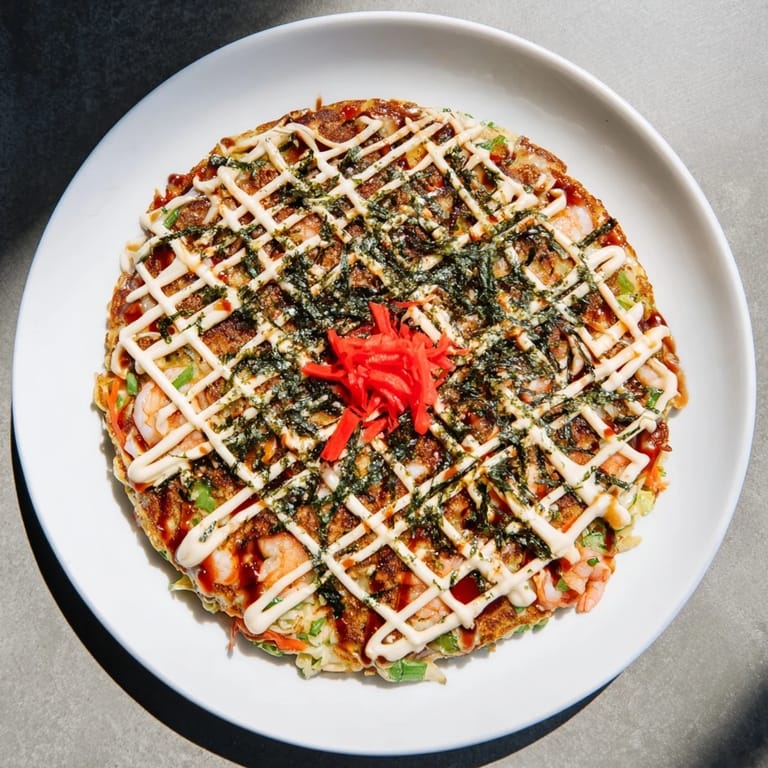
- Transfer your golden pancake to a plate and immediately drizzle with okonomiyaki sauce and mayo in a crisscross pattern. Shower with bonito flakes and watch them dance from the heat, then add aonori and pickled ginger for color and zip.
 Save
Save One winter evening when nothing seemed to go right, I found myself making okonomiyaki as a form of therapy. The methodical chopping of cabbage, the sizzle of batter hitting the pan, and that moment when the bonito flakes began to wave as if saying hello, somehow put everything in perspective. My kitchen smelled like a street corner in Osaka, and for a moment, cooking felt like the most important thing in the world.
Flavor Variations
The beauty of okonomiyaki lies in its name, which essentially means cook what you like. Ive thrown in leftover roasted sweet potatoes during fall, added corn kernels in summer, and even tried a fusion version with cheese that melts into pockets of gooey goodness. Each variation tells its own story, but the technique remains the same, a canvas for seasonal inspiration.
The Art of Topping
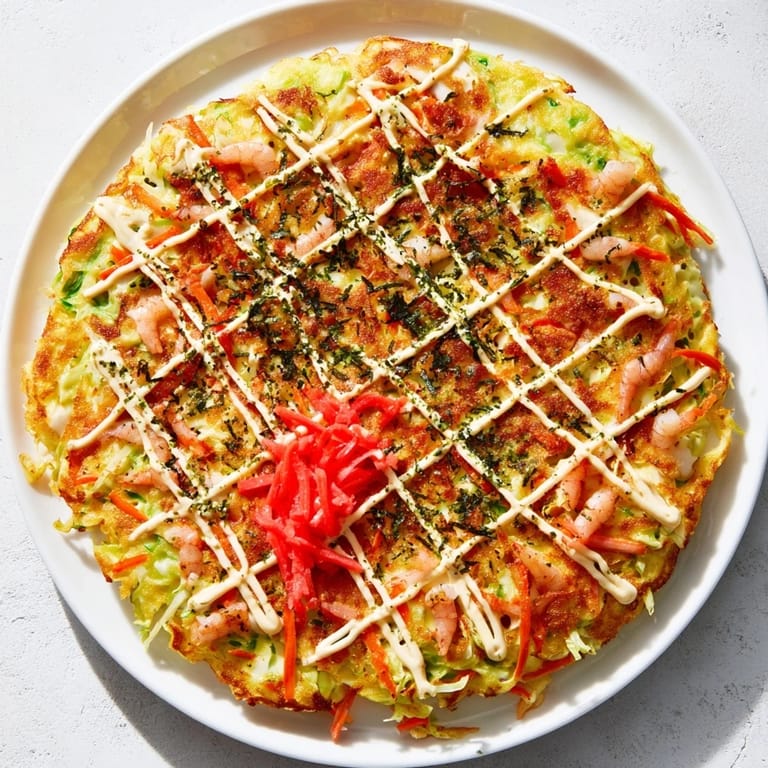
In Japan, I noticed okonomiyaki shops have their signature drizzling styles, some doing zigzags, others concentric circles with their sauces. At home, Ive developed a squeeze bottle technique that allows for more control, creating a pattern that makes each serving feel special. The mayo should be just warm enough from the pancake to melt slightly without completely losing its shape.
Serving Suggestions
While traditionally served on its own as a complete meal, Ive found okonomiyaki pairs beautifully with a simple miso soup or a small side of pickled cucumbers to cut through the richness. In summer, a cold glass of beer creates that authentic izakaya experience, while hot green tea works wonderfully in cooler months.
- Consider setting up a DIY topping bar when serving to friends, allowing everyone to customize their pancake to taste.
- Pre-chop all ingredients and store separately in the refrigerator to make weeknight cooking much faster.
- Leftovers can be reheated in a covered skillet with a few drops of water to restore moisture.
 Save
Save Okonomiyaki reminds us that humble ingredients like cabbage can transform into something extraordinary with a little attention and technique. Whenever I make these savory pancakes, Im transported across continents while standing right in my own kitchen.
Recipe Q&A
- → What is dashi stock and can I substitute it?
Dashi is a fundamental Japanese broth made from kombu seaweed and bonito flakes, providing authentic umami depth. If unavailable, water works in a pinch, though you'll lose some savory complexity. For richer flavor, use chicken or vegetable broth instead.
- → Can I make okonomiyaki ahead of time?
Yes, okonomiyaki can be prepared several hours ahead and stored in the refrigerator, then reheated gently in a skillet over low heat for 2-3 minutes per side. However, they taste best served immediately while the toppings remain distinctly layered and the pancake stays warm.
- → What's the best way to flip these pancakes without breaking them?
Use a sturdy, wide spatula and ensure the bottom is completely golden before attempting to flip. Slide the spatula completely under the pancake in one smooth motion, then flip confidently in a quick, decisive movement. Practice makes perfect.
- → How do I customize okonomiyaki for dietary preferences?
The beauty of okonomiyaki lies in flexibility. For vegetarian versions, skip the bacon and shrimp. Add corn, mushrooms, cheese, or tempura scraps to the batter. You can also experiment with different vegetables based on what you have available and your taste preferences.
- → What's the difference between okonomiyaki sauce and takoyaki sauce?
Both sauces are similar but okonomiyaki sauce is typically thinner and designed for drizzling across a large surface, while takoyaki sauce is slightly thicker for ball-shaped snacks. If you can't find okonomiyaki sauce specifically, blend Worcestershire sauce, ketchup, and soy sauce in equal parts.
- → Why do bonito flakes move on top of hot okonomiyaki?
The heat from the freshly cooked pancake causes the thin, dried bonito flakes to waver and undulate due to rising steam and air currents. This visual dance is actually a sign that your okonomiyaki is perfectly hot and ready to eat—it's part of the theatrical joy of the dish.