 Save
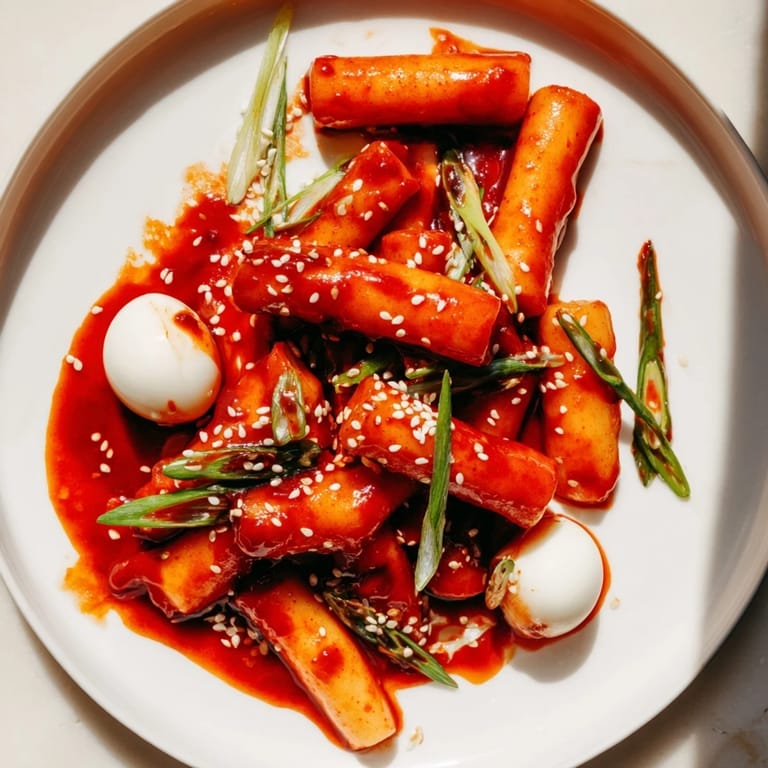
Save The first time I made tteokbokki was on a rainy afternoon when the world outside my window looked exactly like Seoul during monsoon season. The steam fogged up my kitchen windows as the vibrant red sauce bubbled away, filling my apartment with an aroma that transported me straight to the busy streets of Myeongdong. I had been craving those chewy rice cakes for weeks, their pillowy texture and the spicy-sweet sauce that clings to them like a perfect glaze.
Last winter when my friend Min visited from Busan, she watched me cook with an amused smile playing across her lips. When I asked what was funny, she showed me how her grandmother would vigorously stir the tteokbokki with a wooden spoon, making a figure-eight motion to prevent sticking. That simple technique completely transformed how evenly the sauce coated each rice cake, and now I cant make it any other way.
Ingredients
- Korean rice cakes: These cylindrical delights are the star of the show, and I learned through many batches that the freshest ones have a subtle shine to them and feel slightly moist to the touch.
- Gochujang: This fermented chili paste is non-negotiable for authentic flavor, offering depth that regular hot sauce simply cant match.
- Kombu and anchovies: Creating a proper dashi broth base makes all the difference, infusing the sauce with an umami foundation that elevates the entire dish.
- Green onions: I always add them at the very end to maintain their vibrant color and fresh flavor that cuts through the richness.
- Sesame seeds: These tiny gems add a nutty finish and subtle crunch that completes each spoonful perfectly.
Tired of Takeout? 🥡
Get 10 meals you can make faster than delivery arrives. Seriously.
One email. No spam. Unsubscribe anytime.
Instructions
- Prepare your rice cakes:
- Soak them in warm water for about 10 minutes if theyre refrigerated or hard. You want them to be pliable but not soggy, just like giving them a gentle wake-up before their spicy bath.
- Create your dashi base:
- Combine water, kelp, and anchovies in a pot and simmer for 10 minutes until the liquid becomes slightly golden and fragrant. The kitchen should start filling with that distinctive umami aroma that makes your mouth water in anticipation.
- Build your flavor bomb:
- Remove the kelp and anchovies, then stir in gochujang, gochugaru, soy sauce, sugar, honey, and minced garlic until completely dissolved. Watch as the broth transforms into that iconic vibrant red that promises a perfect balance of sweet heat.
- Unite the ingredients:
- Add your rice cakes, onion, and cabbage to the pot and bring to a gentle boil. The sauce will immediately begin to cling to the rice cakes, starting the magical transformation.
- Patience pays off:
- Simmer for 10-15 minutes, stirring occasionally with that figure-eight motion I mentioned. Youll know theyre ready when the rice cakes develop that perfect chewy-soft texture and the sauce has thickened to coat the back of your spoon.
- Add the finishing touches:
- Toss in green onions and boiled eggs in the final two minutes of cooking. The residual heat will warm everything through without overcooking these delicate additions.
- Garnish and serve:
- Transfer to a serving dish and sprinkle with sesame seeds just before bringing to the table. The heat from the dish will lightly toast the seeds, releasing their nutty aroma as everyone digs in.
 Save
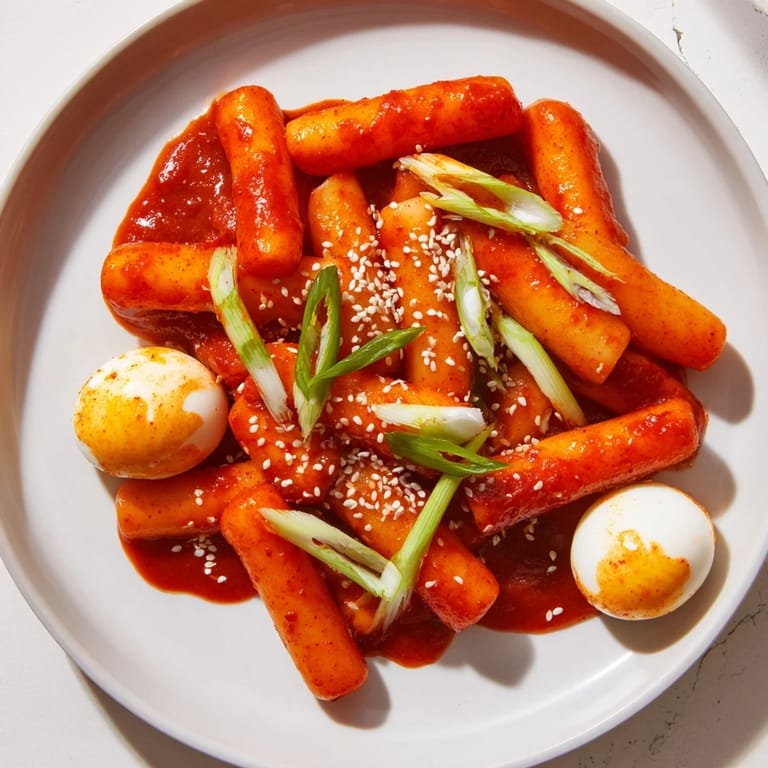
Save One evening during a particularly fierce snowstorm, I made a huge batch of tteokbokki that became more than just dinner. As we huddled around the steaming pot, chopsticks poised and eager, I realized this dish had transformed from something I merely enjoyed eating to a ritual that brought warmth beyond temperature. My friend who claimed to hate spicy food ended up having three servings, declaring it warm enough to thaw her frozen toes.
Making It Your Own
After making tteokbokki countless times, Ive found its incredibly adaptable to what you have on hand. Sometimes I throw in sliced fishcake for that authentic street food experience, while other times I add cubes of melty cheese that create stretchy, Instagram-worthy pulls between bites. My vegetarian friends swear by adding fried tofu puffs that soak up the sauce like flavor sponges, creating little pockets of intense taste that burst with each bite.
Serving Suggestions
Tteokbokki has this wonderful ability to be both a main dish and part of a larger spread. I love serving it alongside crisp kimchi to provide a cooling counterpoint to the spice, or with steamed dumplings for a more substantial meal. For an authentic Korean drinking food experience, try it with a cold bottle of makgeolli, the slightly sweet rice wine that miraculously tempers the heat while enhancing the flavors.
Storage and Reheating
The beauty of tteokbokki lies in how it transforms overnight, as the rice cakes continue to absorb the sauce, becoming even more flavorful by the next day. The first time I discovered leftover tteokbokki in my fridge, I was skeptical it would reheat well, but a quick steam with a splash of water brought it back beautifully, perhaps even more delicious than the first serving.
- Store any leftovers in an airtight container in the refrigerator for up to 3 days, though the texture begins to change after the first day.
- When reheating, always add a tablespoon or two of water to loosen the sauce before gentle warming.
- Give it a gentle stir every 30 seconds while reheating to prevent the rice cakes from sticking together and forming one giant, albeit delicious, clump.
 Save
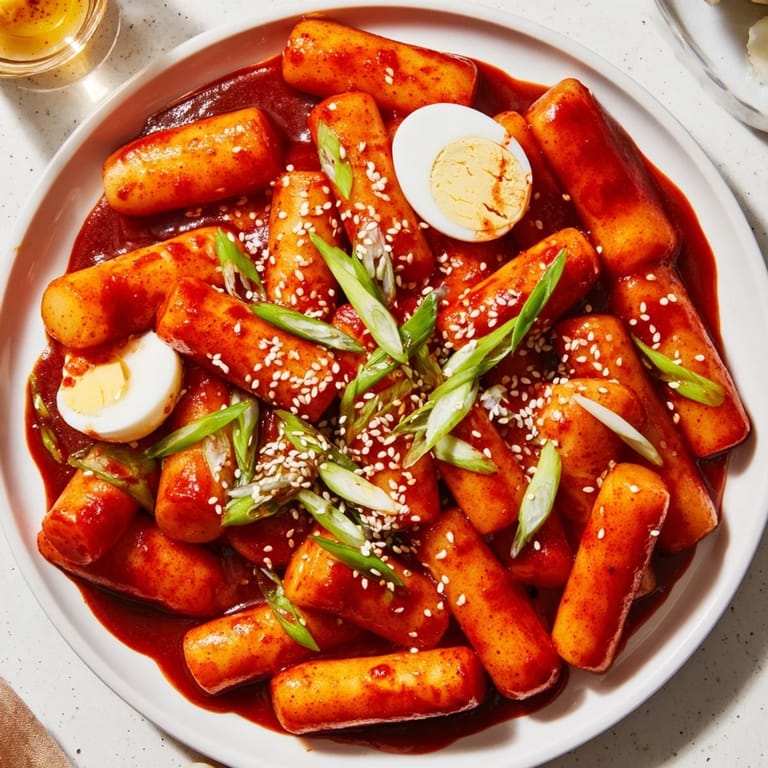
Save Every time I make tteokbokki, I think about how this humble street food brings people together, creating moments of shared joy around a bubbling pot. Whether youre making it for yourself or a table full of friends, this dish carries the magic of Korean comfort in every chewy, spicy bite.
Recipe Q&A
- → What are Korean rice cakes and where can I find them?
Korean rice cakes (tteok) are cylindrical, chewy pasta-like products made from glutinous rice flour. They're available in Asian grocery stores, often found in the refrigerated or frozen sections. Look for packages labeled 'tteokbokki tteok' or 'Korean rice cakes.' If unavailable, some recipes accept substitutes like mochi, though the traditional texture differs.
- → How do I prevent the rice cakes from sticking together?
Soak the rice cakes in warm water for 10 minutes before cooking to soften them. During cooking, stir occasionally with a wooden spoon to prevent clumping. If using pre-cooked cakes, soaking may not be necessary. Keep the heat at a gentle boil rather than a rolling boil to maintain even cooking.
- → Can I make this dish vegetarian?
Yes, tteokbokki can be made vegetarian by substituting the anchovy broth with vegetable broth or using kelp-only broth. Omit fish cakes if adding extras. Ensure your gochujang and gochugaru are from vegetarian sources, as some brands may contain fish-based ingredients. Always check package labels for hidden animal products.
- → How do I adjust the spice level?
Control heat by adjusting gochugaru (Korean chili flakes). Start with the recommended 1 tablespoon and add more for extra heat, or reduce for a milder version. You can also balance spice with additional honey or sugar. Taste as you cook and adjust seasonings accordingly before serving.
- → What's the best way to serve tteokbokki?
Serve immediately while hot in a shallow bowl or plate with plenty of sauce. Garnish with sesame seeds, sliced green onions, and boiled eggs. Pair with pickled radish, steamed dumplings, or kimchi for an authentic Korean meal experience. The contrast of cool, tangy sides complements the hot, spicy main dish beautifully.
- → Can I prepare this ahead of time?
Prepare components in advance: soak rice cakes, mince garlic, and chop vegetables up to 4 hours ahead. Store in separate containers in the refrigerator. The broth can be made and refrigerated for 24 hours. Reheat broth, add rice cakes, and cook fresh just before serving for optimal texture and flavor.