 Save
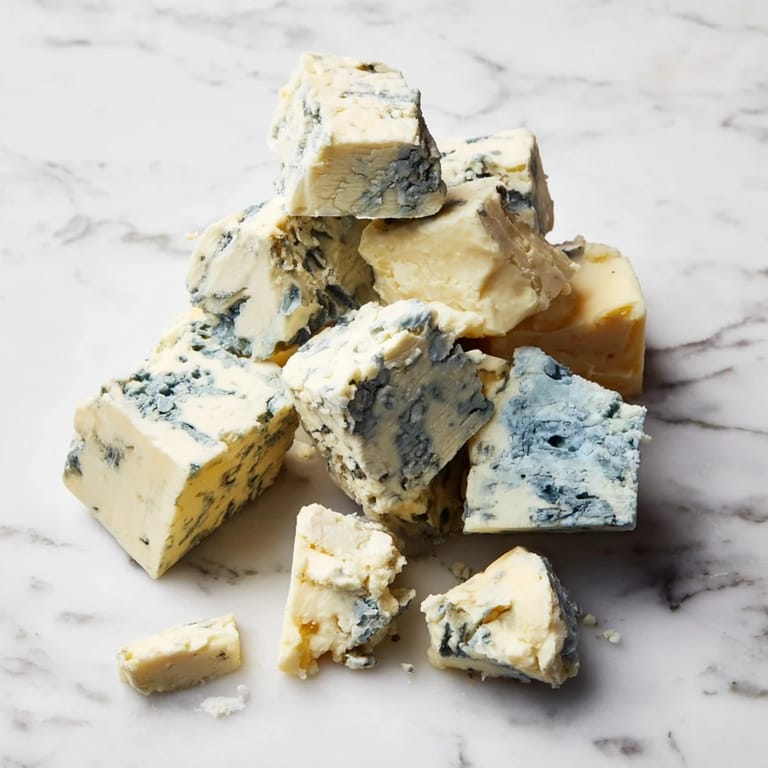
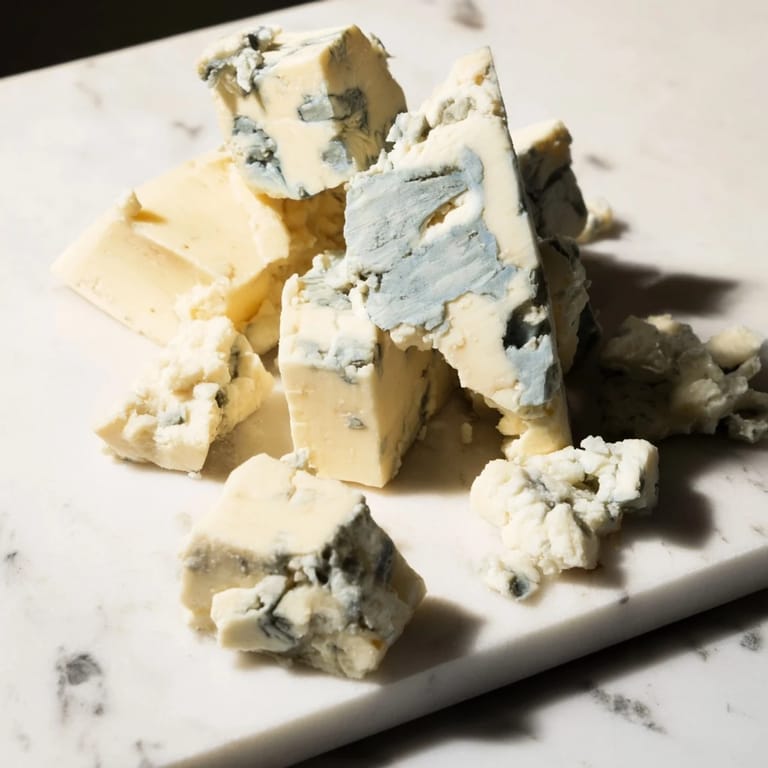
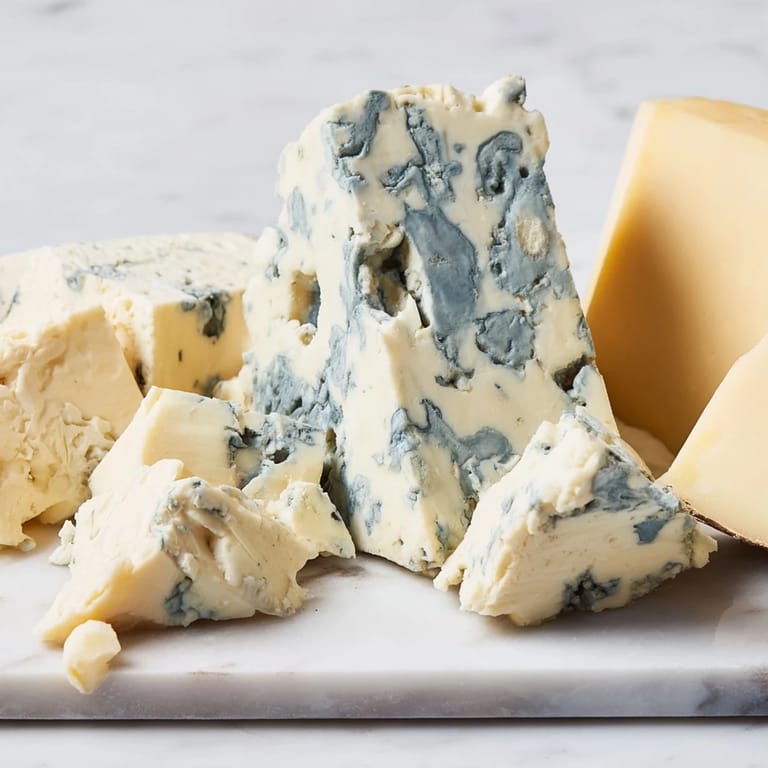
Save There's a moment that happens at every good dinner party—when someone leans over the cheese board and just stops, staring at it like they've found something unexpected and beautiful. That's what happened the first time I arranged blue cheese and white cheddar on a piece of marble, letting them sit there like they'd been naturally quarried. The veining in the stone beneath seemed to echo the blue running through the cheese, and suddenly it wasn't just food anymore—it was a landscape you could eat.
I made this for a friend's birthday once, and she walked into the kitchen while I was still arranging it. She didn't say anything—just pulled up a chair and watched me shift the chunks around like I was solving a puzzle. By the time people arrived, she'd already told them it was going to be special, which meant they really looked at it instead of just diving in. That made all the difference.
Ingredients
- Blue cheese (200 g): Roquefort, Gorgonzola, or Stilton all work beautifully—choose whichever appeals to you, then cut it into large, irregular chunks that show off the veining.
- Aged white cheddar (200 g): The sharper the better; aged cheddar has a crystalline crunch that contrasts wonderfully with the creamy blue.
- Fresh grapes or sliced pears (optional): They provide sweetness and color; grapes are easier to grab, but pears add elegance.
- Crackers or crusty bread (optional): Whatever you choose should be sturdy enough to hold a piece of cheese without crumbling.
- Honey or fig jam (optional): A small drizzle opens up the flavors and gives people another reason to take another bite.
Tired of Takeout? 🥡
Get 10 meals you can make faster than delivery arrives. Seriously.
One email. No spam. Unsubscribe anytime.
Instructions
- Chill your canvas:
- If you have time, place the marble slab in the refrigerator for 15–20 minutes so the surface stays cool and the cheeses don't soften too quickly.
- Arrange with intention:
- Place the blue cheese and white cheddar chunks across the slab, spacing them so there's negative space—this creates that quarry feeling and lets each piece stand out. Let the marble's natural veining guide your eye.
- Layer in accompaniments:
- Tuck grapes or pear slices into the gaps, and nestle small bowls of honey or jam nearby so people can dip if they want.
- Step back and look:
- Before anyone sees it, take a moment to see if the arrangement feels balanced—is there a natural flow? Does the eye know where to start? Adjust as needed.
 Save
Save There was a night when my partner was stressed about work, and I set this out without any fanfare—just placed it on the table while we talked. She reached for a piece of cheddar, then blue cheese, then a grape, and I watched her actually slow down. Sometimes food isn't about impressing people; it's about giving them permission to pause.
Why This Works as a Centerpiece
A cheese board on marble doesn't need flowers or candles because the food itself becomes the focal point. The visual contrast—pale cheddar against deep blue veining, bright grapes nestled between stone and cheese—naturally draws the eye and starts conversations. People linger because there's something satisfying about the way it looks.
The Chemistry of Cheese Pairing
Blue cheese and aged cheddar are textural opposites: one is creamy and funky, the other crystalline and sharp. When you eat them together, they balance each other out, but when you eat them separately, you get to experience both sides of that contrast. Adding grapes or pear gives you a sweet reset between bites, which is why people can keep going.
Making It Your Own
This board is a starting point, not a rulebook. Some people add a third cheese—a golden washed-rind or a creamy goat cheese—for extra color and complexity. Others skip the fruit and focus purely on cheese and accompaniments. Trust what you like and what will make your table feel right.
- Pair with a crisp white wine like Sauvignon Blanc or a light-bodied red like Pinot Noir.
- If you're serving this to guests with preferences, ask ahead and have a few cracker options on hand.
- The best thing you can do is arrange it with care and then let people discover it for themselves.
 Save
Save This isn't about being fancy or impressing anyone—it's about taking a moment to arrange something beautiful and then sharing it. That's its own kind of kindness.
Recipe Q&A
- → What cheeses are used in this display?
Large chunks of blue cheese like Roquefort, Gorgonzola, or Stilton combined with aged white cheddar create the main flavor components.
- → How should the marble slab be prepared?
Chill the marble slab beforehand to keep the cheeses cool and enhance the overall presentation.
- → What accompaniments complement the cheese selection?
Fresh grapes, pear slices, honey, fig jam, crackers, or crusty bread work well to add texture and subtle sweetness.
- → Can other cheeses be added for variety?
Yes, including a third cheese such as a washed-rind or creamy goat cheese adds color and texture contrast.
- → Is this suitable for special diets?
This option is vegetarian and gluten-free if bread or crackers are avoided or gluten-free choices are made.