 Save
Save There's something about assembling a bowl that feels less like cooking and more like creating—especially when you're working with bright Mediterranean flavors that seem to glow on the plate. I discovered this shrimp bowl during one of those mid-week moments when I wanted something that tasted restaurant-quality but didn't require fussing over multiple pans for hours. The beauty of it is that everything comes together in under 40 minutes, and somehow the result feels like you've spent the entire afternoon thinking about it.
I made this for friends who were visiting during late summer, and I remember one of them asking if I'd ordered it from somewhere because the flavors were so clean and balanced. The compliment stuck with me—not because I needed validation, but because it reminded me that simple ingredients treated with care can genuinely impress people. We sat outside with the bowls balanced on our laps, passing lemon wedges back and forth, and the conversation just flowed naturally in that way it does when everyone's eating something they actually love.
Ingredients
- Large shrimp (1 lb, peeled and deveined): The larger they are, the more confident you can feel cooking them—they're harder to overcook and they look more impressive on the plate.
- Olive oil (1 tbsp): Use something you actually enjoy the taste of, because you'll taste it directly in the shrimp.
- Garlic (3 cloves total, minced): Two cloves go with the shrimp, one with the tahini sauce—don't skip either one.
- Smoked paprika (1 tsp): This is what gives the shrimp its warmth and subtle depth; regular paprika won't quite get you there.
- Sea salt and black pepper: These are your baseline seasonings, so taste as you go and adjust to your preference.
- Cooked quinoa (1 cup): The grain base holds everything together; brown rice and farro work beautifully too if that's what you have.
- Cherry tomatoes (1 cup, halved): Choose ones that feel slightly heavy for their size—they'll be sweeter and more flavorful.
- Cucumber (1 cup, diced): The refreshing crunch balances the richness of the tahini sauce perfectly.
- Kalamata olives (1/2 cup, pitted): Buy them already pitted if you can; it saves time and your fingers.
- Red onion (1/2 cup, thinly sliced): The sharpness of raw red onion is essential here—it cuts through the creaminess.
- Baby spinach or arugula (1 cup): Either works; spinach is milder, arugula adds a peppery note.
- Tahini (1/4 cup): This is the soul of the sauce—make sure it's fresh and not separated at the bottom of the jar.
- Fresh lemon juice (2 tbsp): Always use fresh; bottled lemon juice tastes tinny by comparison.
- Water (2 tbsp, plus more for thinning): Start with this amount and adjust until the sauce reaches a drizzle-able consistency.
- Ground cumin (1/4 tsp): A small amount goes a long way; it echoes the Mediterranean theme without overwhelming.
- Fresh parsley (2 tbsp, chopped): This is your final flourish—don't skip it, as it adds brightness and color.
Tired of Takeout? 🥡
Get 10 meals you can make faster than delivery arrives. Seriously.
One email. No spam. Unsubscribe anytime.
Instructions
- Get your grains ready:
- Start with your quinoa or rice according to package directions and set it aside to cool slightly. This gives you a head start so everything else comes together smoothly.
- Season the shrimp:
- Toss the shrimp with olive oil, minced garlic, smoked paprika, salt, and pepper in a medium bowl. Make sure each shrimp is well coated—the oil helps them cook evenly and prevents sticking.
- Cook the shrimp:
- Heat your skillet over medium-high heat until a drop of water sizzles on contact, then add the shrimp. Cook for 2 to 3 minutes per side until they turn from gray to a vibrant pink and feel firm to the touch—don't walk away from the stove here, as this is where timing matters.
- Make the tahini sauce:
- While the shrimp cools slightly, whisk together tahini, fresh lemon juice, water, minced garlic, cumin, and salt in a small bowl. The mixture will look thick at first, but keep whisking and it'll loosen into a silky sauce; add more water a teaspoon at a time if needed.
- Layer your bowls:
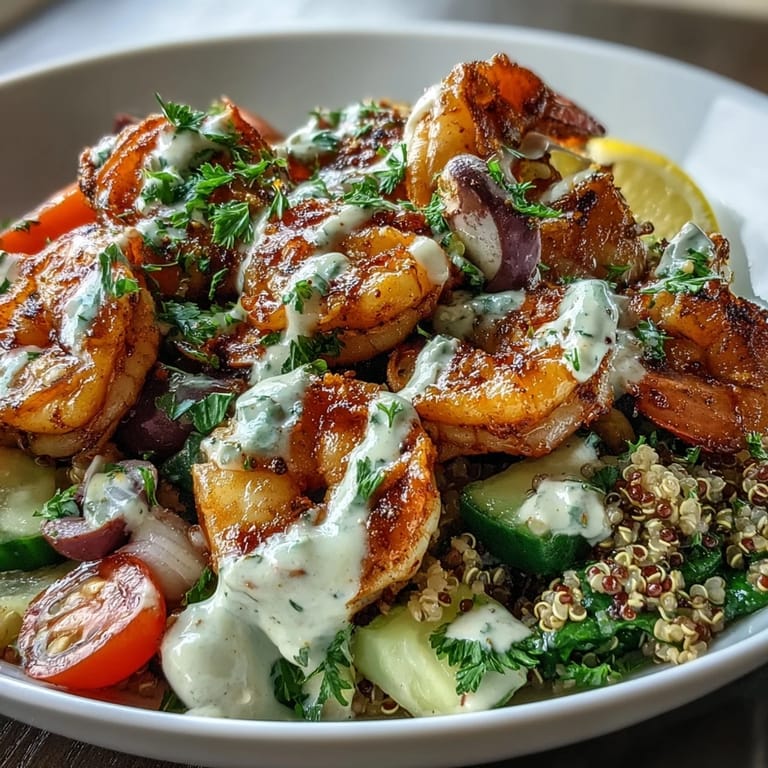
- Divide the cooked grains among serving bowls, then top each with a handful of fresh greens. Arrange the cherry tomatoes, cucumber, olives, and red onion around the greens, leaving space in the center for the shrimp.
- Bring it together:
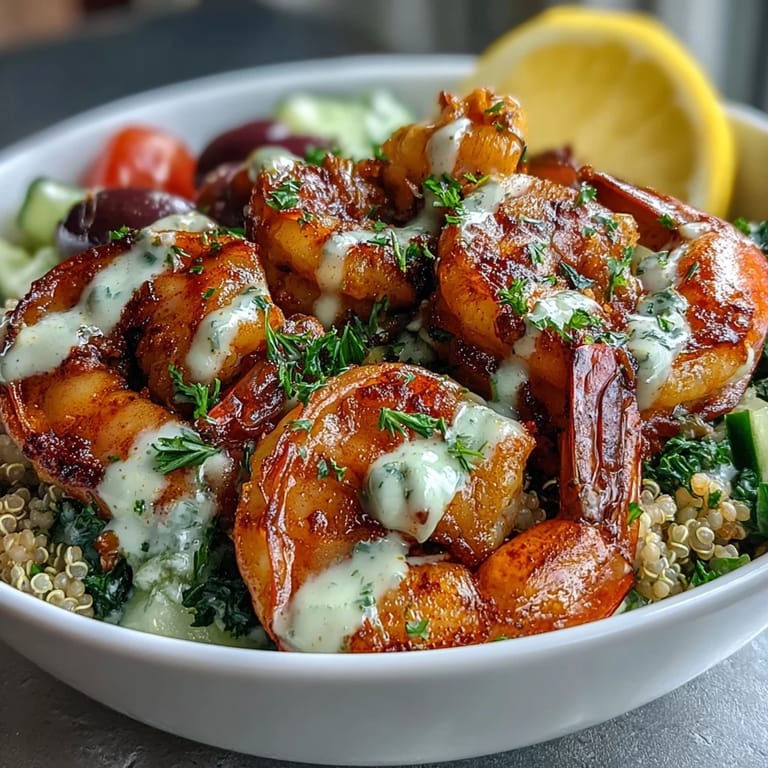
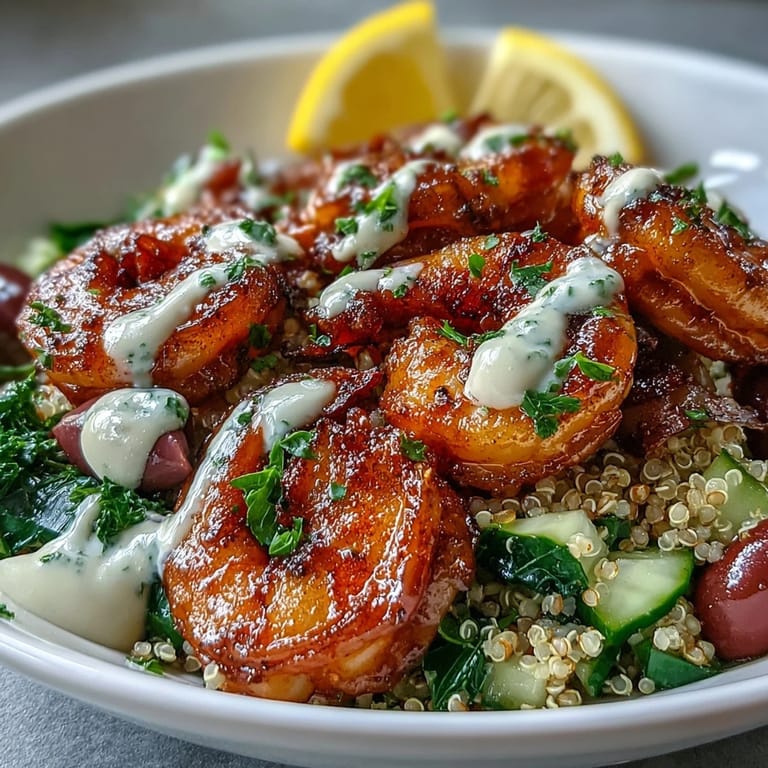
- Crown each bowl with a portion of the sautéed shrimp, then drizzle generously with tahini sauce. Garnish with fresh chopped parsley and serve with lemon wedges on the side so everyone can adjust the brightness to their taste.
 Save
Save What I love most about this bowl is that it's equally satisfying for a quick solo lunch or impressive enough for company, and it somehow tastes even better the next day when the flavors have had time to mingle. There's something genuinely nourishing about eating something this colorful and thoughtfully assembled—it feels good going down and you feel good after.
Building Your Bowl
The architecture of the bowl matters more than you might think. Starting with grains gives you a sturdy base, layering greens adds nutritional punch and visual contrast, and scattering the vegetables creates little pockets of different textures as you eat. The order isn't rigid—this is your bowl to arrange however you like—but putting the greens directly on the warm grains lets them soften just slightly while still keeping their structure.
Playing with Proteins
While the shrimp is what I keep coming back to, this bowl is genuinely flexible with protein swaps. Grilled chicken breasts, pan-fried tofu, or even chickpeas work beautifully, though you'd adjust the cooking time accordingly. The tahini sauce remains the hero no matter what you choose, so that's your constant—everything else is an invitation to improvise based on what's in your kitchen or what you're in the mood for.
The Tahini Sauce Moment
Making tahini sauce is genuinely one of those small kitchen victories that feels disproportionately satisfying. The transformation from thick paste to velvety drizzle happens almost magically as you whisk in lemon juice and water, and you get this moment where you realize you've created something completely worth the effort. Once you nail this sauce, you'll start making it for other things—grain bowls, roasted vegetables, even as a dip for warm pita—because it's that good.
- If your tahini looks separated with oil on top, stir it back together before measuring.
- Taste the sauce before serving and adjust lemon juice or salt to your preference.
- A tiny pinch more cumin won't hurt if you want to amp up the Mediterranean flavor.
 Save
Save This bowl is the kind of meal that makes you feel like you've taken care of yourself while still enjoying something genuinely delicious. Make it once and it becomes your go-to.
Recipe Q&A
- → Can I use frozen shrimp?
Yes, thaw frozen shrimp completely before cooking. Pat them dry with paper towels to remove excess moisture, which helps achieve better searing and flavor absorption from the seasoning.
- → What grains work best?
Quinoa, brown rice, farro, or couscous all complement the Mediterranean flavors beautifully. Quinoa offers the quickest cooking time and lightest texture, while farro provides a satisfying chewiness.
- → How long does the tahini sauce keep?
The tahini sauce can be stored in an airtight container in the refrigerator for up to one week. It may thicken when cold—simply whisk in a small amount of water to reach desired consistency.
- → Can this be made ahead?
Absolutely. Prepare the grains, chop vegetables, and mix sauce up to three days ahead. Store components separately and assemble when ready to serve. Cook shrimp fresh for best texture.
- → What protein substitutions work?
Grilled chicken breast, crispy chickpeas, or marinated tofu make excellent alternatives. Adjust cooking times accordingly—chicken needs thorough cooking while chickpeas and tofu just need heating through.