 Save
Save The mezze platter became my culinary saving grace during that sweltering summer when turning on the oven felt criminal. I'd discovered it during a trip to Lebanon years before, watching families gather around tables laden with colorful small plates. The mezze tradition spoke to me - food meant for lingering, for conversation, for connection rather than just sustenance. Back home, I began assembling these vibrant platters whenever friends dropped by unexpectedly, loving how something so effortless could feel so abundant.
Last spring, I arranged this mezze platter for my book club, spreading everything across my grandmother's old wooden board. Rain tapped against the windows as we discussed our latest read, hands continuously reaching for one more olive, another scoop of hummus. What struck me most was how the conversation flowed differently than our restaurant meetings - something about sharing food from a common source created an intimacy that transformed acquaintances into friends.
Ingredients
- Chickpeas: The foundation of proper hummus, I discovered that using home-cooked chickpeas instead of canned makes the hummus incredibly silky, though in a pinch, canned works perfectly well.
- Tahini: Quality matters tremendously here - look for tahini that isnt separated and has a nutty aroma rather than bitter notes.
- Mixed olives: The contrast between briny kalamatas and buttery green olives creates a beautiful flavor balance, and I sometimes warm them with a bit of olive oil and orange zest.
- Feta cheese: I prefer the blocks packed in brine rather than pre-crumbled for better texture and moisture.
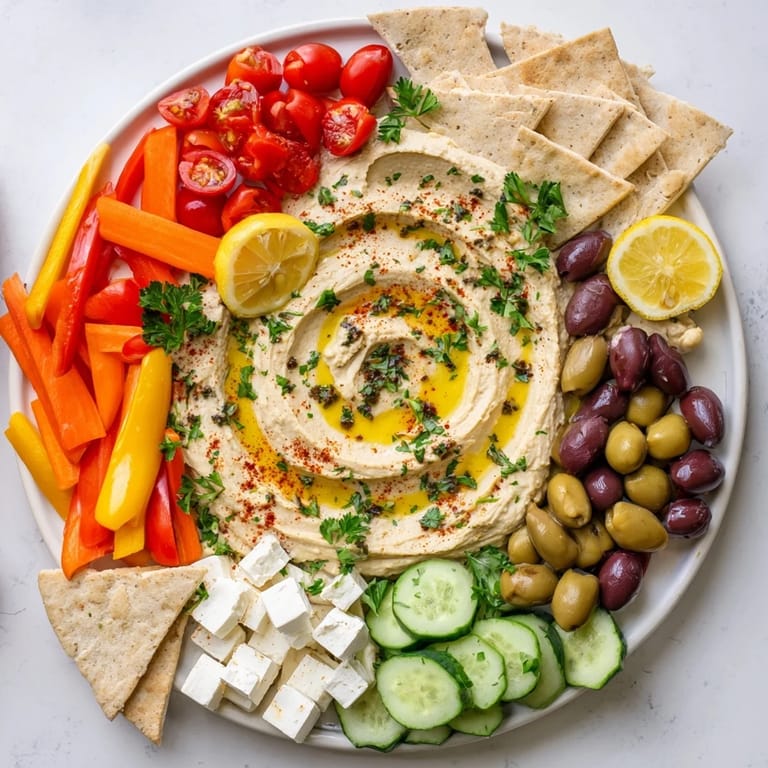
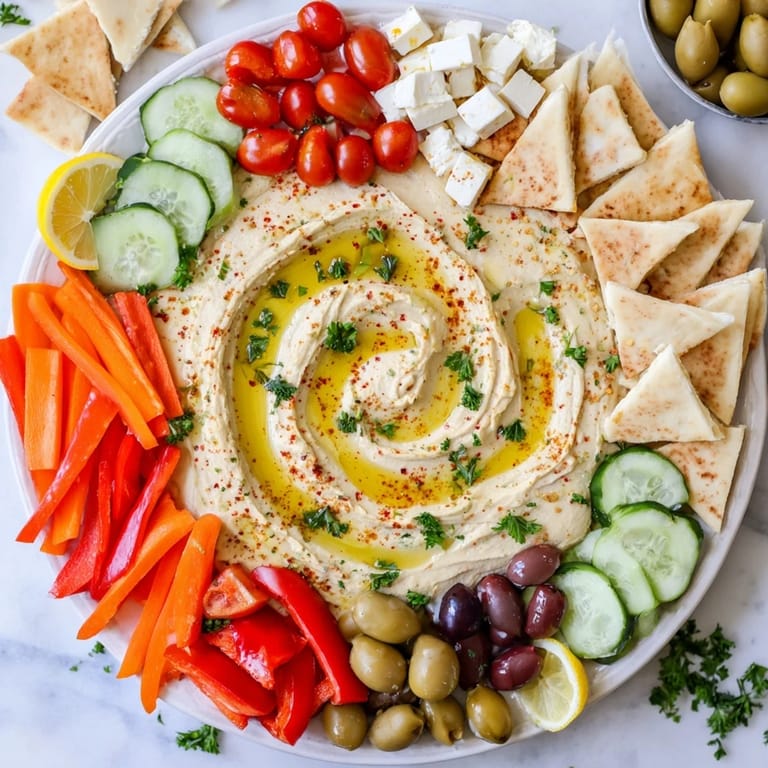
- Fresh vegetables: The rainbow of colors from cherry tomatoes, cucumbers, bell peppers and carrots makes the platter visually stunning while providing crisp vessels for scooping.
- Pita bread: Briefly warming it before serving makes all the difference in both texture and taste.
Tired of Takeout? 🥡
Get 10 meals you can make faster than delivery arrives. Seriously.
One email. No spam. Unsubscribe anytime.
Instructions
- Create silky hummus:
- In your food processor, combine chickpeas, tahini, lemon juice, olive oil, garlic, cumin and salt, then blend until completely smooth. Add cold water tablespoon by tablespoon until it reaches a consistency where it holds its shape but spreads easily.
- Assemble the foundation:
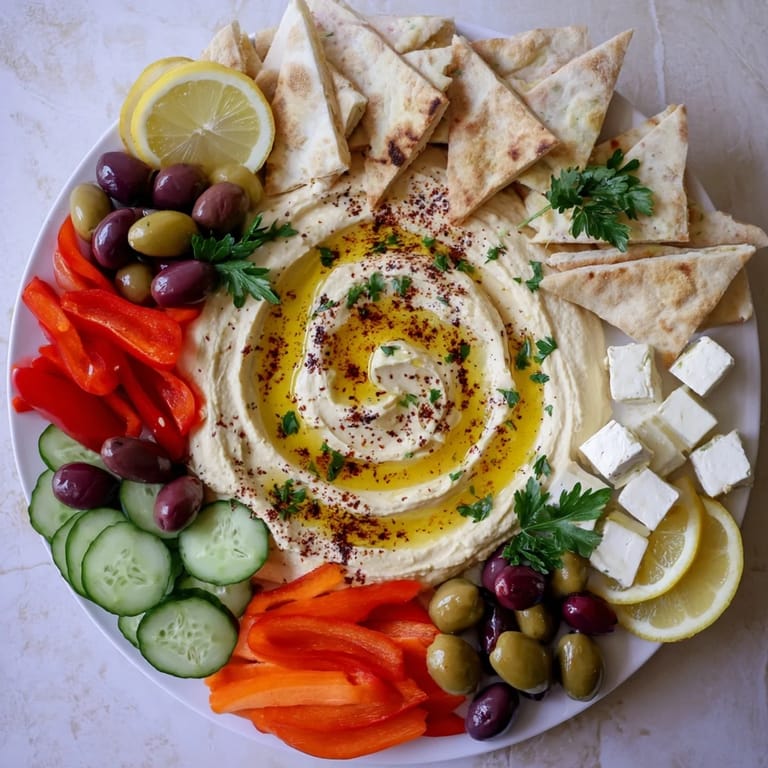
- Spread the hummus onto one side of your serving platter, creating a shallow well with the back of your spoon that you can fill with a glug of olive oil. Notice how the oil pools in the depression, creating a little golden lake that catches the light.
- Create color zones:
- Rather than mixing all vegetables together, create distinct pockets of each component around the hummus. This visual organization makes the platter more appealing and allows guests to easily identify what theyre reaching for.
- Warm the pita:
- Just before serving, toast pita until its warm but still pliable, then cut into triangles. The gentle heat awakens the yeasty aroma and creates a perfect contrast to the cool components.
- Add finishing touches:
- Sprinkle fresh herbs, a dusting of sumac or paprika over the hummus, and arrange lemon wedges for squeezing. These final flourishes bring brightness and make the platter feel complete and thoughtfully prepared.
 Save
Save My most treasured mezze memory comes from when my neighbor Fatima first tried my platter. She had recently moved from Damascus and I was nervous serving her something from her cultural tradition. She took one bite of hummus, closed her eyes, and whispered that it tasted like home. We spent the evening with her teaching me subtle improvements while sharing stories of the meals that shaped her childhood, the platter between us becoming a bridge between our different worlds.
The Art of Balancing Flavors
What makes a mezze platter truly sing is the careful balance of flavors and textures that play off each other. The creamy hummus against the sharp bite of feta, the juicy sweetness of tomatoes contrasting with briny olives - these deliberate pairings create a dance of sensations with each bite. I learned this principle from watching an elderly Lebanese woman at a food market, who arranged her offerings with such precision that customers instinctively knew which items to combine on their flatbread.
Making It Ahead
The beauty of mezze lies partly in its make-ahead friendliness. The hummus actually improves after sitting for a day, developing deeper flavor as the garlic and lemon permeate throughout. I often prep everything the morning before a gathering, storing components separately in the refrigerator, then assemble just before guests arrive. This approach lets me enjoy my own party instead of being trapped in the kitchen while everyone else is having fun.
Serving Suggestions
How you present your mezze matters almost as much as what youre serving. I discovered this by accident when I ran out of serving dishes and used my sons wooden train set board, which somehow transformed the meal into something memorable. Now I look for unexpected serving vessels - slate tiles, wooden cutting boards, even cleaned clay plant saucers for a rustic Mediterranean feel.
- Consider height variation by placing some components in small bowls while others rest directly on the platter.
- Leave breathing room between elements rather than crowding everything together - the negative space creates visual appeal.
- Keep extra pita warming in the oven and refresh the platter halfway through your gathering with a second batch of vegetables.
 Save
Save Mezze isnt just food - its an invitation to slow down and connect. The next time life feels rushed or conversations seem superficial, try gathering around a platter where hands reach and share from the same source.
Recipe Q&A
- → Can I prepare the hummus ahead of time?
Yes, hummus keeps well in an airtight container in the refrigerator for up to 5 days. Make it a day or two before your gathering for convenience. Simply transfer to your platter and drizzle with fresh olive oil just before serving.
- → What vegetables work best on a mezze platter?
Cherry tomatoes, cucumbers, bell peppers, carrots, and radishes are classic choices. You can also add celery, fennel, or zucchini. Cut vegetables into bite-sized pieces or sticks for easy dipping and eating.
- → How do I warm the pita bread without drying it out?
Wrap pita breads in a damp kitchen towel and place in a warm oven at 300°F for 2-3 minutes. Alternatively, warm them directly over a gas flame for a few seconds per side for a slight char. Avoid overbaking to maintain softness.
- → Can I make this platter gluten-free?
Absolutely. Replace regular pita with gluten-free pita bread or serve with gluten-free crackers instead. Always verify that tahini and other ingredients are certified gluten-free to avoid cross-contamination.
- → What cheese alternatives work if I don't have feta?
Labneh, goat cheese, ricotta salata, or halloumi are excellent substitutes. Each brings its own tangy or creamy character. Choose based on your preference for texture and flavor intensity.
- → How can I elevate the hummus flavor?
Add roasted red peppers for sweetness, smoked paprika for depth, or pine nuts for crunch. Fresh herbs like cilantro or mint, a touch of harissa for heat, or caramelized onions on top all enhance the traditional base.