 Save
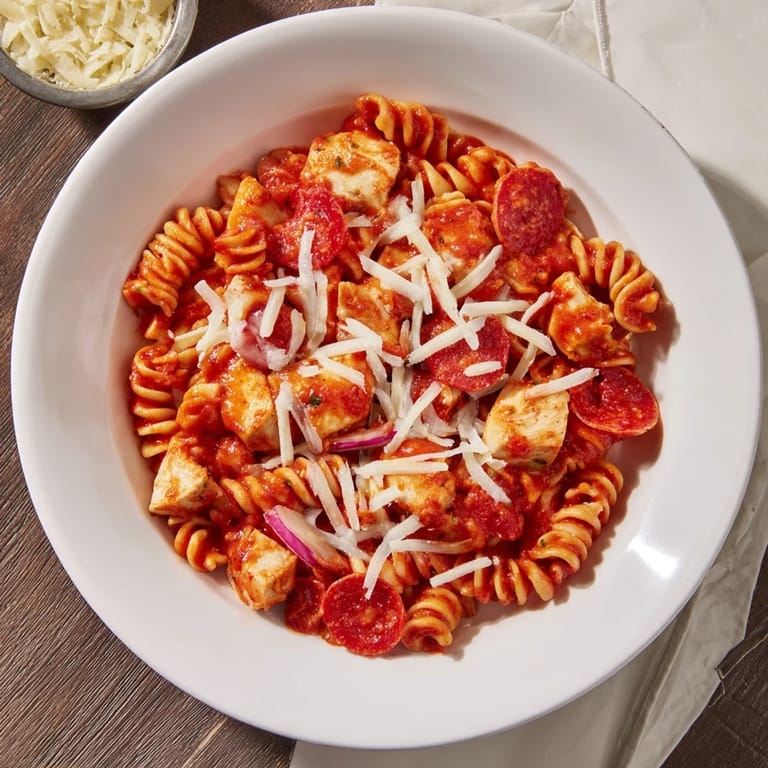
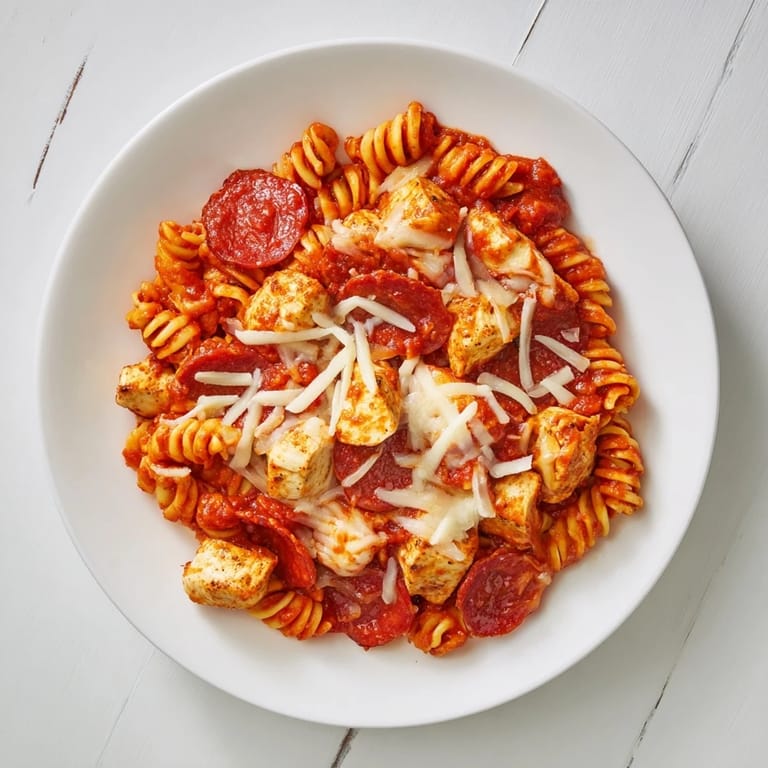
Save The first time I made this, I was tired and hungry, staring at a half-empty pantry with nothing but a craving for pizza. Instead of ordering out, I grabbed my biggest skillet and started throwing things together—chicken, pasta, sauce, cheese. Twenty minutes later, something miraculous happened: pizza flavors, every strand of pasta coated in that tangy marinara, all in one beautiful pan. My partner came home to the smell and asked what restaurant I'd ordered from. I just smiled and said, "made it."
I made this for a weeknight dinner when friends called last-minute asking to come over. Instead of panicking, I remembered this recipe and realized I could have it on the table in half an hour. What started as a potential disaster turned into the easiest "fancy" dinner I've ever hosted. They came back the next week asking for the recipe, convinced I'd been holding out on my cooking skills.
Ingredients
- Chicken breast: Cut into bite-sized pieces so it cooks quickly and stays tender, absorbing all the pizza flavors as it simmers with the pasta.
- Pepperoni: The spicy, salty star that makes this feel like real pizza—sliced or quartered based on how aggressive you want the flavor.
- Rotini pasta: The spiral shape catches sauce beautifully and holds its texture perfectly in the broth.
- Mozzarella and Parmesan: A double cheese situation that creates a creamy, tangy finish when stirred through hot pasta.
- Marinara or pizza sauce: The foundation that ties everything to that pizza dream—use a good quality brand you actually like eating.
- Onion, garlic, and bell pepper: These aromatics build the depth that makes people ask what your secret ingredient is (spoiler: it's just time).
- Chicken broth: This liquid becomes the cooking medium that transforms raw pasta into tender strands while building a light sauce.
- Italian herbs and red pepper flakes: Dried herbs work fine here and release their flavors into the broth; red pepper flakes add that gentle heat kick.
Tired of Takeout? 🥡
Get 10 meals you can make faster than delivery arrives. Seriously.
One email. No spam. Unsubscribe anytime.
Instructions
- Brown the chicken:
- Heat olive oil in your largest skillet over medium heat and let the chicken pieces get golden at the edges, about 3-4 minutes. You're not cooking it through—just giving it color and flavor for what comes next.
- Soften the aromatics:
- Add onion, garlic, and bell pepper to the same pan and let them get fragrant and soft, maybe 2-3 minutes. The pan stays hot and builds up all that browned flavor as a base.
- Toast the pepperoni:
- Toss in the pepperoni and stir for just a minute so it releases its oils and flavors into the mix.
- Combine everything:
- Pour in the uncooked pasta, sauce, broth, herbs, and pepper flakes all at once. Stir well so nothing sticks to the bottom and the pasta is mostly covered by liquid.
- Simmer and absorb:
- Bring to a gentle boil, then cover and drop the heat to low. Let it bubble quietly for 12-14 minutes, stirring once or twice, until the pasta is tender and the liquid soaks in. You'll see the transformation happen right before your eyes.
- Melt the cheese:
- Stir in half the mozzarella and all the Parmesan, then top with the remaining mozzarella. Cover and cook 2-3 more minutes until that cheese becomes a glossy, bubbly blanket over everything.
- Rest and serve:
- Turn off the heat and let it sit for 2 minutes—this helps the flavors settle and makes serving cleaner. Garish with extra herbs if your kitchen mood calls for it.
 Save
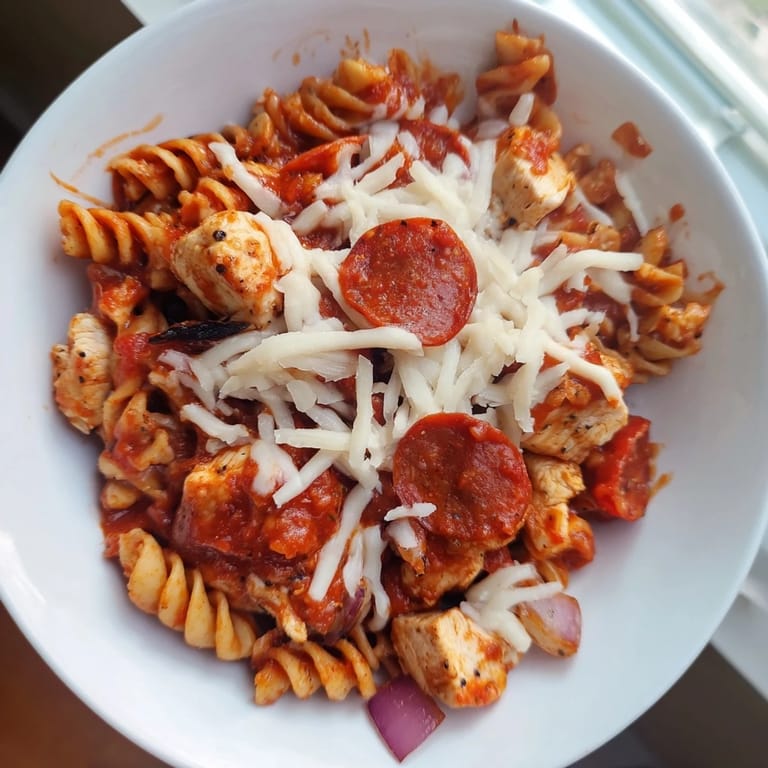
Save There's a specific moment when this dish becomes magic: when you stir in that cheese and the whole pan transforms into something glossy and unified. My kids asked for seconds before they even finished their first bite, and my partner said it was better than the pizza place we usually call. That's when I knew this recipe was staying in the regular rotation.
Why One Pan Changes Everything
Cooking pasta with sauce and broth directly in the pan means the starches release and thicken the liquid into a natural sauce—no draining, no separate pot, no sauce that slides off your pasta. The pasta absorbs the chicken and pepperoni flavors as it cooks, creating something more cohesive than tossing cooked pasta with sauce. This method also means less water waste, less cleanup, and that one-pan simplicity that somehow makes food taste more intentional.
Customizing Without Losing the Pizza Magic
Pepperoni is the non-negotiable anchor here, but everything else can shift based on what's in your fridge and what sounds good that day. I've made this with penne when rotini ran out, and the shorter, tubed shape grabbed sauce differently but still worked beautifully. Some nights I add mushrooms alongside the bell pepper, and the earthiness plays wonderfully against the salty pepperoni.
Making It Your Own
The beauty of this recipe is that it's forgiving and customizable—a template more than a rulebook. Once you make it once, you'll see where your tweaks want to live. A splash more red pepper flakes if heat is your love language, or half the pepperoni if you prefer subtler flavors.
- For extra spice, use hot pepperoni and don't hold back on the red pepper flakes—let that heat build throughout the cooking.
- Finish with fresh basil instead of dried herbs if you have it on hand, stirred in after the pan comes off the heat.
- A green salad alongside cuts through the richness perfectly and adds a fresh note to the entire meal.
 Save
Save This dish has become my answer to "what's for dinner" on nights when I need something fast but still feel like I've made an effort. It never disappoints and always makes the kitchen smell like pizzeria magic.
Recipe Q&A
- → Can I use different pasta shapes?
Yes, penne or fusilli work well as alternatives to rotini and maintain the dish's texture.
- → How spicy is this dish?
The heat comes from red pepper flakes and pepperoni; adjust amounts or omit flakes for milder flavor.
- → Can I substitute chicken broth with water?
Yes, water can be used but chicken broth adds richer flavor and depth.
- → Is it possible to add vegetables?
Absolutely, bell pepper adds sweetness, and mushrooms or olives work well too.
- → How do I know when the pasta is done?
Simmer until pasta is al dente and most of the liquid is absorbed, about 12–14 minutes.