 Save
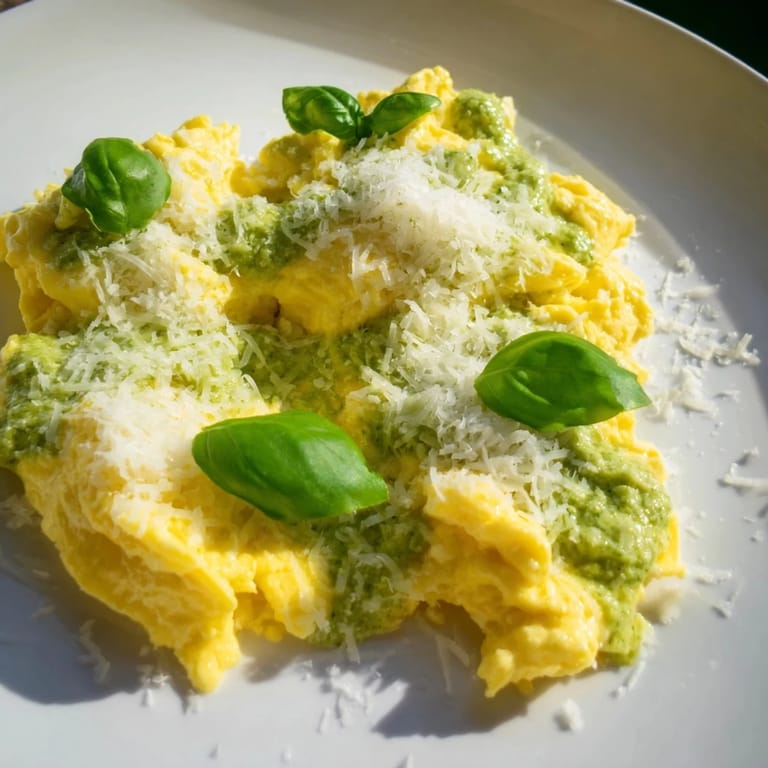
Save There's something about the smell of warm pesto hitting a hot pan that makes mornings feel less ordinary. One weekend, I was scrambling for something beyond toast and coffee, and I remembered a jar of basil pesto sitting in the fridge. On impulse, I whisked some eggs, added cottage cheese for unexpected creaminess, and what emerged was this bright, protein-packed scramble that felt both comforting and celebratory. It's become my go-to when I want breakfast to feel intentional.
I made this for my partner on a Tuesday morning, and they looked genuinely surprised when I set it down—creamy, flecked with green, with that herbal fragrance rising from the plate. They asked what it was, and when I said cottage cheese scrambled eggs, they paused. But after the first bite, they just nodded and asked if I could make it again tomorrow. Sometimes the simplest combinations are the ones that stick with people.
Ingredients
- Eggs: Use large, fresh ones if you can—you'll taste the difference in richness and the yolks will give you that golden color.
- Milk or cream: Just 2 tablespoons pushes the whole dish toward silky, but it's optional if you're keeping things light.
- Cottage cheese: Full-fat tastes better, but low-fat works fine; the key is not mixing it in too early or it can get stringy.
- Basil pesto: Store-bought is honest and saves time, but homemade brings a freshness that transforms the whole plate.
- Salt and pepper: Taste as you go—pesto already carries salt, so go easy at first.
- Fresh basil and Parmesan: These garnishes feel like a small luxury that takes thirty seconds and changes everything.
Tired of Takeout? 🥡
Get 10 meals you can make faster than delivery arrives. Seriously.
One email. No spam. Unsubscribe anytime.
Instructions
- Whisk and season your eggs:
- Crack four eggs into a bowl, add milk if you want extra creaminess, then whisk with salt and pepper until the yolks and whites are fully combined. The mix should be smooth and pale.
- Warm the pesto gently:
- Heat your nonstick skillet over medium-low heat, then add the pesto and let it warm for 30 seconds—you'll smell the basil wake up, and that's exactly what you want.
- Pour and pause:
- Pour the egg mixture into the pan and let it sit undisturbed for about 10–15 seconds so the bottom can just barely set.
- Fold everything together:
- Using a spatula, gently push the cooked egg from the edges toward the center with slow, deliberate strokes. This creates those soft, creamy curds instead of a dense scramble.
- Add the cottage cheese when eggs are still wet:
- When the eggs are just beginning to set but still look wet and creamy, fold in the cottage cheese gently. Keep stirring for another 20–30 seconds until the cheese is warmed through and everything is soft.
- Pull from heat immediately:
- The moment the eggs look just barely set, remove the pan. They'll continue cooking slightly from residual heat, and you want them creamy, never dry.
- Plate and garnish:
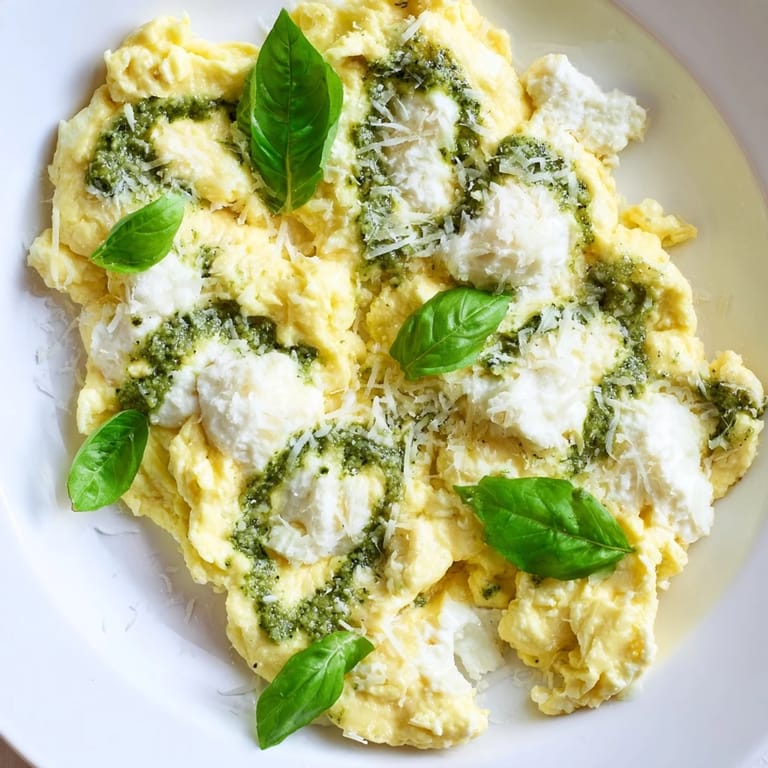
- Slide onto a plate, top with extra pesto, fresh basil leaves, and a sprinkle of Parmesan if you have it. Serve with crusty bread or toast for scooping.
 Save
Save I served this to a friend who's been vegetarian for years and was tired of the same egg rotations, and she got quiet in that way that means something just clicked for her. She asked for the recipe right then, no phone, just asked if I'd write it down. That moment made me realize how much a small shift—adding pesto, folding in cottage cheese—can make someone feel seen through food.
Why This Works as Breakfast
Eggs alone are satisfying, but they can feel plain if you're not paying attention. Pesto brings aromatic freshness and fat that makes every bite taste complex, while cottage cheese adds protein without heaviness. The combination feels lighter than cream but richer than plain scrambled eggs, which means you stay full without feeling sluggish. It's the kind of breakfast that doesn't apologize for being simple.
When to Make This
This is my answer to mornings when I want something faster than an omelet but more thoughtful than toast. It's perfect for when you're feeding two people and want them to feel like you actually cared. I also make it on days when I've got a jar of pesto that's been sitting in the fridge just long enough to remind me it exists. Summer is ideal because the basil in the pesto tastes bright and alive, but honestly, it works any time of year.
Ways to Shift the Flavor
Once you understand this framework, it opens up possibilities. Sun-dried tomato pesto changes the mood entirely—more savory, almost meaty. Sautéed spinach folded in before the cottage cheese adds earthiness and texture. You could swap the pesto for salsa verde if you want something more herbaceous and fresh. The beauty of this approach is that the eggs and cottage cheese stay the same, so the structure is stable even when you're experimenting.
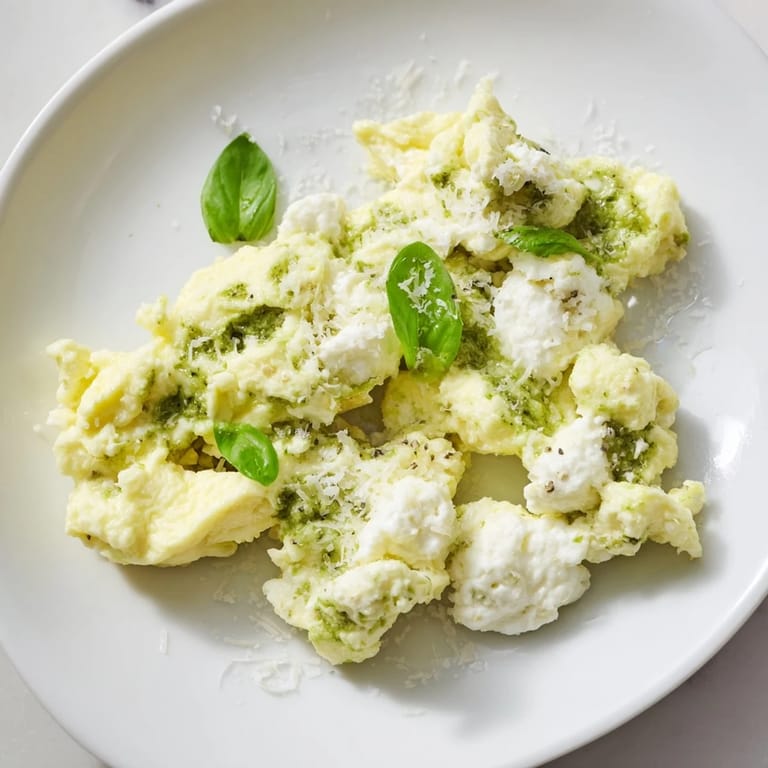
- Try ricotta instead of cottage cheese if you want a silkier, less lumpy texture.
- Add grated Parmesan directly into the egg mixture before cooking for deeper cheese flavor.
- If you're making this dairy-light, use low-fat cottage cheese and skip the milk entirely.
 Save
Save This recipe proves that you don't need complicated technique or dozens of ingredients to make breakfast feel special. It's proof that sometimes the best meals come from working with what's already in your fridge and trusting that simple combinations, made with intention, are enough.
Recipe Q&A
- → Can I use other types of cheese instead of cottage cheese?
Yes, ricotta can be used as a creamy alternative, offering a slightly different texture while maintaining richness.
- → How can I make the eggs extra creamy?
Add a small amount of milk or cream to the eggs before cooking, and cook over low heat for gentle scrambling.
- → Is it necessary to warm the pesto before adding eggs?
Warming the pesto briefly releases its aroma and blends the flavors better with the eggs during cooking.
- → What can I serve alongside for a complete breakfast?
Crusty bread or toast pairs well, adding texture and a satisfying contrast to the creamy eggs.
- → How do I avoid overcooking the eggs?
Remove the pan from heat as soon as the eggs are softly scrambled and creamy, since residual heat continues cooking.