 Save
Save There's something almost magical about roasting garlic until it turns sweet and buttery—the kind of transformation that makes you wonder why you ever used raw garlic in anything before. I discovered this soup by accident on a gray November afternoon when I had three heads of garlic sitting on my counter and absolutely nothing else that seemed appealing. What started as an experiment became the dish I've made dozens of times since, especially when someone needs comfort wrapped in a bowl.
I made this for my partner on the night we moved into our first apartment together, when our kitchen still smelled like the previous owners' spices and we barely had matching bowls. Watching them taste it and just close their eyes for a moment—that's when I knew this recipe was keeper material. Now it's become our go-to soup for quiet evenings, lazy Sundays, and whenever the weather turns cold enough that hot soup sounds like the only reasonable dinner.
Ingredients
- 3 large heads of garlic: The star of the show—slow roasting mellows the intensity and creates a creamy, almost buttery flavor that forms the soup's soul.
- 1 medium yellow onion, chopped: Provides depth and sweetness that balances the roasted garlic without overpowering it.
- 1 celery stalk, chopped: Adds a subtle earthiness and helps create a well-rounded vegetable foundation.
- 1 medium carrot, chopped: Brings natural sweetness and a touch of color to what would otherwise be pale gold.
- 2 tablespoons unsalted butter: Creates the silky base—use good butter if you have it, because you'll taste the difference.
- 1/2 cup heavy cream: Transforms the soup from simple to luxurious; don't skip this unless you're going vegan.
- 4 cups vegetable broth: The liquid backbone that lets everything else shine without stealing focus.
- 1/2 teaspoon dried thyme: Herbaceous but restrained, just enough to remind you this is a grown-up soup.
- 1/4 teaspoon freshly ground black pepper: Fresh pepper matters more here than anywhere else—pre-ground fades into nothing.
- 1/2 teaspoon salt, or to taste: Start conservative and adjust at the end once the cream is in.
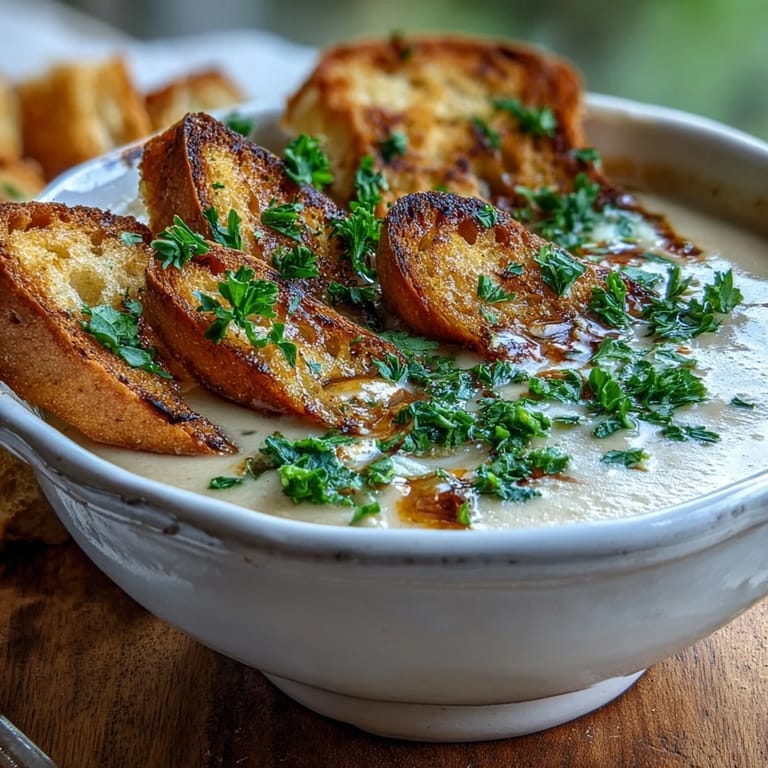
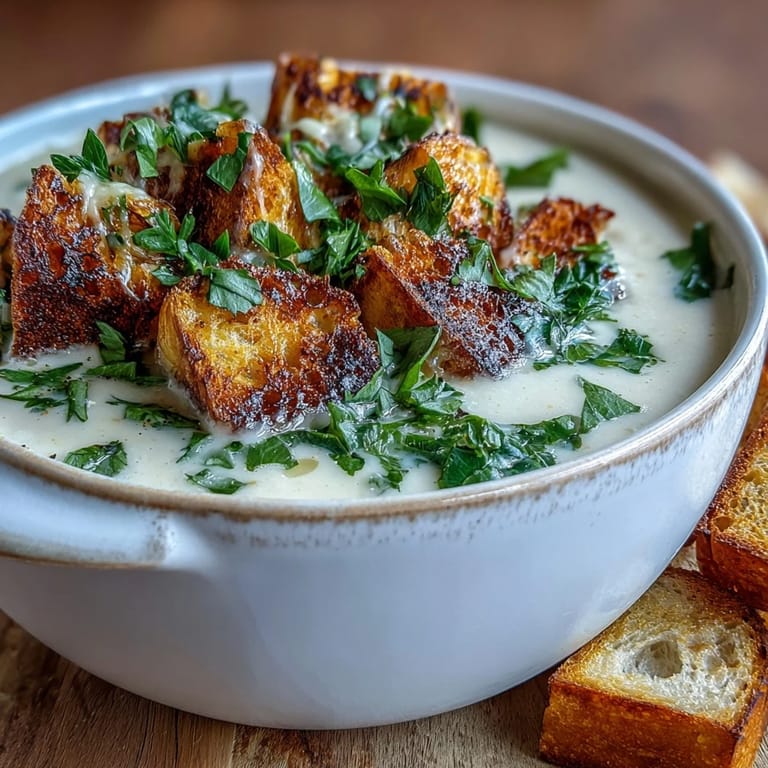
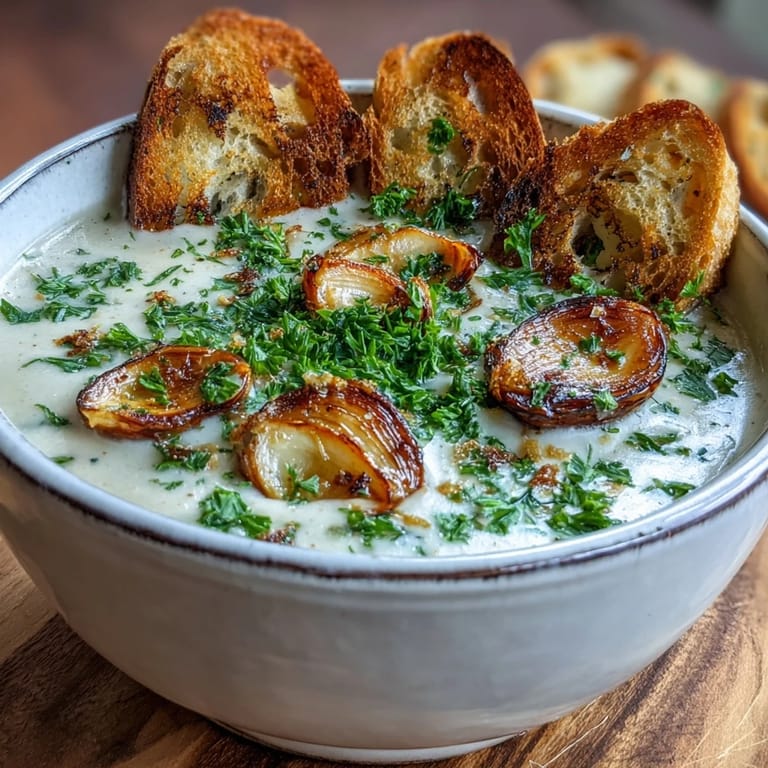
- Chopped fresh parsley, croutons, and olive oil for garnish: These finishing touches add texture and freshness to each spoonful.
Tired of Takeout? 🥡
Get 10 meals you can make faster than delivery arrives. Seriously.
One email. No spam. Unsubscribe anytime.
Instructions
- Prepare the garlic for roasting:
- Preheat your oven to 400°F and slice the top quarter-inch off each garlic head to expose the cloves inside. Drizzle generously with olive oil, wrap each head in foil, and roast for 35 to 40 minutes until the cloves are soft and golden brown—you'll know they're ready when a fork slides through easily and your kitchen smells like a dream.
- Cool and squeeze out the roasted cloves:
- Let the garlic rest for a few minutes, then gently squeeze each clove out of its papery skin into a small bowl. The cloves should slide out like butter—if they're resisting, they need another few minutes to cool.
- Build the flavor base:
- Melt butter in a large pot over medium heat, then add your chopped onion, celery, and carrot. Sauté for 5 to 7 minutes, stirring occasionally, until the vegetables are soft and fragrant—this is where you're creating the aromatic foundation that makes everything else work.
- Add garlic and seasonings:
- Gently stir in the roasted garlic cloves, dried thyme, salt, and pepper, cooking for about 2 minutes just until everything smells integrated and warm.
- Simmer with broth:
- Pour in your vegetable broth and bring the whole pot to a boil, then reduce heat and let it simmer for 10 minutes. This quiet simmering time lets all the flavors meld together and soften even further.
- Purée until silky:
- Using an immersion blender, purée the soup directly in the pot until it's completely smooth and creamy—or carefully transfer batches to a countertop blender if that's what you have. The immersion blender is honestly my favorite way because there's less cleanup and you get to watch the transformation happen right before your eyes.
- Finish with cream:
- Stir in the heavy cream and gently heat for 2 to 3 minutes, stirring occasionally—don't let it boil or you'll see tiny specks of separated cream, which you want to avoid. Taste and adjust salt and pepper to your preference.
- Serve with joy:
- Ladle into bowls and garnish with fresh parsley, croutons, or a drizzle of good olive oil. Serve while it's still steaming and the flavors are at their brightest.
 Save
Save What surprised me most about this soup was how it became a comfort ritual rather than just a dish. My neighbor started stopping by whenever she smelled it cooking, and now we make it together on the first cold day of fall like it's a seasonal tradition.
Why Roasted Garlic Changes Everything
Raw garlic is sharp and assertive, but roasting transforms it into something almost unrecognizable—sweet, creamy, and mellow enough that you can eat an entire head of it without wincing. The gentle heat breaks down the harsh sulfur compounds that make raw garlic bite your tongue, leaving behind this luxurious, almost caramel-like sweetness. Once you taste roasted garlic for the first time, you start roasting it for everything: spread on bread, stirred into mashed potatoes, folded into soft cheese.
Making It Your Own
This soup is forgiving enough to let you play without ruining anything. Some nights I add a pinch of cayenne for warmth, other times I blend in a handful of fresh sage, and once I added roasted red peppers because I had them and they were perfect. The vegetable broth can be swapped for chicken broth if you want richness, and the cream can become coconut cream, cashew cream, or olive oil depending on what you have and what you're craving. Start with the basic recipe to understand how it should taste, then feel free to improvise from there.
Storage, Leftovers, and Make-Ahead Wisdom
This soup keeps for three days in the refrigerator and reheats beautifully on the stove over gentle heat—just stir in a splash of extra broth if it's thickened too much. It also freezes wonderfully for up to three months, which means you can make double batches and have comfort waiting in your freezer for future rough weeks. I actually like to freeze it without the cream and add that fresh when reheating, because cream-based soups sometimes have a slightly different texture after freezing, though honestly it still tastes wonderful either way.
- Make-ahead tip: You can roast the garlic up to two days ahead and store it covered in the fridge.
- Batch cooking: Double or triple the recipe without any changes—the proportions are rock solid at any scale.
- Reheating secret: Always reheat on medium or medium-low heat to keep the soup silky and prevent the cream from separating.
 Save
Save This soup has taught me that sometimes the best dishes come from having very little to work with and just trusting the process. I hope it becomes something you make again and again, until someone asks you for the recipe and you realize you've created a small moment of comfort that you get to pass along to them.
Recipe Q&A
- → What does roasted garlic taste like?
Roasted garlic develops a sweet, mellow flavor with nutty undertones. The sharp pungency disappears, leaving behind creamy, caramelized cloves that add depth and richness without overwhelming your palate.
- → Can I make this soup ahead of time?
Absolutely. This soup actually tastes better the next day as flavors meld together. Store in an airtight container in the refrigerator for up to 4 days. Reheat gently over low heat, adding a splash of broth if needed to thin.
- → How do I make this vegan?
Replace butter with olive oil and swap heavy cream for full-fat coconut cream or cashew cream. The result remains velvety and satisfying while being completely plant-based.
- → What can I serve with roasted garlic soup?
Crusty bread, warm dinner rolls, or a simple green salad make excellent accompaniments. The soup also pairs beautifully with grilled cheese sandwiches for a classic comfort meal.
- → Why is my soup bitter?
Bitterness usually comes from over-roasting the garlic. Keep an eye on it during the last 10 minutes — the cloves should be golden and soft, not dark brown or burnt. If using very fresh garlic, the flavor can also be sharper.
- → Can I freeze this soup?
Yes, though the cream may separate slightly upon thawing. For best results, freeze before adding the cream, then blend in fresh cream when reheating. If freezing with cream, reheat slowly while whisking to restore smoothness.