 Save
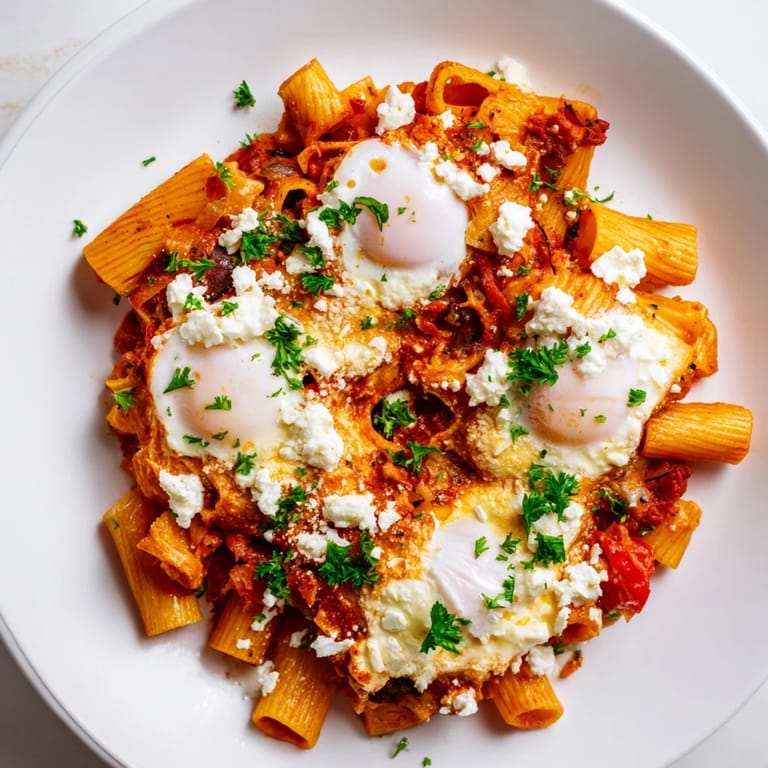
Save There's a moment when you realize that the best dishes aren't born from rigid traditions but from happy accidents in your own kitchen. I stumbled onto this shakshuka pasta bake one rainy evening when I had leftover tomato sauce simmering on the stove and a box of penne staring at me from the pantry. Instead of choosing between comfort and adventure, I decided to do both—layer the pasta into that spiced sauce, crack some eggs on top, and let the oven work its magic. That night, my kitchen smelled like something between a Mediterranean village and a cozy dinner party, and I knew I'd found something worth repeating.
I made this for friends who were expecting a simple pasta, and the moment they cracked into those warm eggs and watched the yolk bleed into the sauce, their faces lit up in a way that reminded me why cooking for people matters. One friend actually set down her fork mid-bite and asked if I was sure this wasn't from a restaurant, which felt like winning the lottery of home cooking. That's when I realized this dish bridges the gap between fussy and accessible in the most satisfying way.
Ingredients
- 300 g short pasta (penne, rigatoni, or fusilli): The ridges and curves trap that beautiful spiced sauce, so skip the spaghetti and choose something sturdy enough to hold its own.
- 1 medium onion, finely chopped: This becomes soft and sweet as it cooks, forming the quiet backbone of flavor.
- 1 red bell pepper, diced: It adds subtle sweetness and a pop of color that makes the whole dish feel more alive.
- 3 cloves garlic, minced: Toast it gently in the oil so it perfumes everything without turning bitter.
- 2 tbsp olive oil: Use something you actually like the taste of, because you'll notice it here.
- 1 can (400 g) diced tomatoes: This is the soul of the dish—don't skip it for fresh tomatoes unless they're truly exceptional.
- 2 tbsp tomato paste: It deepens the flavor and thickens the sauce, making it cling to the pasta instead of pooling at the bottom.
- 1 tsp ground cumin: This spice whispers of warmth without shouting, the quiet hero of Middle Eastern cooking.
- 1 tsp smoked paprika: It adds depth and a faint hint of smoke that makes people ask what that delicious flavor is.
- ½ tsp ground coriander: A gentle citrusy note that ties the spices together.
- ¼ tsp cayenne pepper: Optional, but it wakes up your palate without overwhelming the dish.
- 1 tsp sugar: A small pinch to balance the acidity of the tomatoes—trust this even if it seems strange.
- Salt and black pepper to taste: Season as you go, tasting as you build the sauce.
- 100 g grated mozzarella or crumbled feta: Mozzarella melts into creamy pockets, feta adds tang and won't hide the other flavors.
- 4 large eggs: These are non-negotiable—they transform the dish from pasta bake to something closer to breakfast for dinner.
- 2 tbsp fresh parsley or cilantro: Add this at the very end so it stays bright and doesn't cook into muted green.
Tired of Takeout? 🥡
Get 10 meals you can make faster than delivery arrives. Seriously.
One email. No spam. Unsubscribe anytime.
Instructions
- Heat your oven and start the pasta:
- Preheat to 200°C (400°F) and get a large pot of salted water boiling. The salt matters—it should taste like the sea. Cook the pasta until just al dente, which means it still has a tiny bit of resistance when you bite it, because it'll soften slightly more in the oven.
- Build your flavor base:
- In your oven-safe skillet or baking dish, heat olive oil over medium heat and add the onion and bell pepper. Let them soften for about 5 minutes, stirring occasionally, until they're tender and the onion becomes translucent. This is where your sauce finds its foundation.
- Toast the spices:
- Add the garlic, cumin, paprika, coriander, and cayenne to the pan. Stir constantly for about 1 minute—you want to hear the spices wake up and smell their fragrance bloom, but not let anything burn. This step is brief but changes everything.
- Create the sauce:
- Stir in the tomato paste and let it coat the vegetables for about a minute before adding the diced tomatoes, sugar, salt, and pepper. Simmer this mixture for 8-10 minutes, stirring now and then, until it thickens slightly and deepens in color. Taste it and adjust the seasoning—this is your chance to get it right.
- Bring pasta and sauce together:
- Add the drained pasta and half the cheese to the sauce, stirring gently to coat every piece. The pasta should be nestled in the sauce, not sitting on top of it.
- Make wells for the eggs:
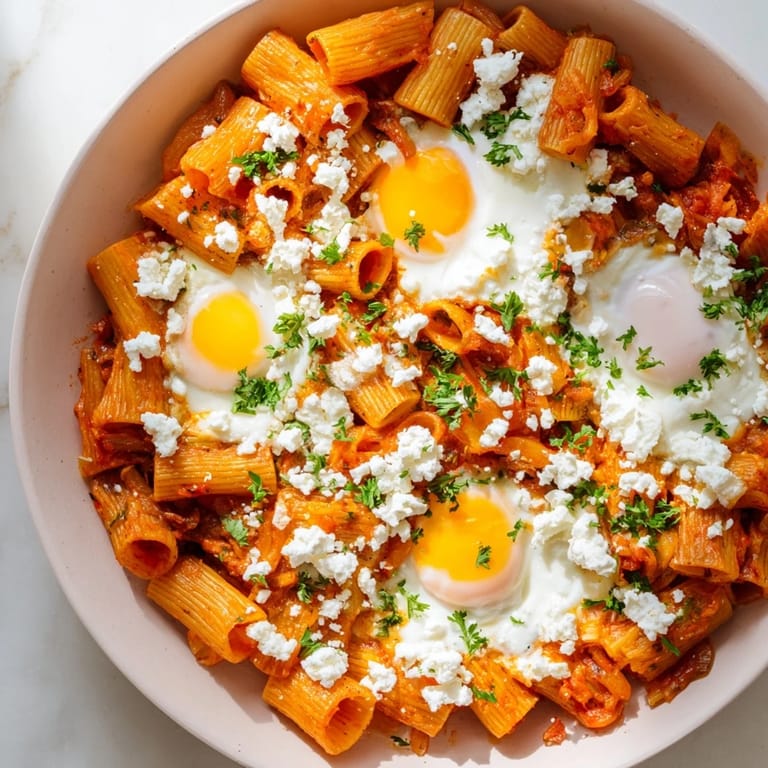
- Spread the pasta mixture evenly across your skillet or transfer it to a baking dish if needed. Using the back of a spoon, create 4 small wells or indentations in the surface, spacing them evenly. Crack one egg into each well, letting the white and yolk settle into the sauce.
- Top and bake:
- Sprinkle the remaining cheese around the eggs (not directly on them, so the yolks stay visible). Bake uncovered for 15-18 minutes, until the egg whites are set and opaque but the yolks still jiggle slightly when you gently shake the pan. You want that moment of tension between cooked and runny.
- Finish with fresh herbs:
- Remove from the oven, scatter the fresh parsley or cilantro over the top, and serve immediately while everything is hot and the eggs are still perfect.
 Save
Save The real magic of this dish hit me when I realized it wasn't about following rules—it was about the moment when everyone at the table leaned in together, caught between hunger and the knowledge that something delicious was about to happen. That's when food becomes more than sustenance; it becomes a small ceremony of togetherness.
Variations Worth Trying
This recipe welcomes creativity without falling apart. Stir a handful of baby spinach or kale into the sauce before it simmers for added earthiness and vegetables, or roast some cherry tomatoes separately and scatter them on top for bursts of concentrated flavor. Some nights I use half the pasta and add chickpeas for extra texture and protein, which turns this from a side-dish territory into something heartier. The beauty is that you're building a base that adapts to what's in your kitchen and what you're craving.
Cheese Choices That Change Everything
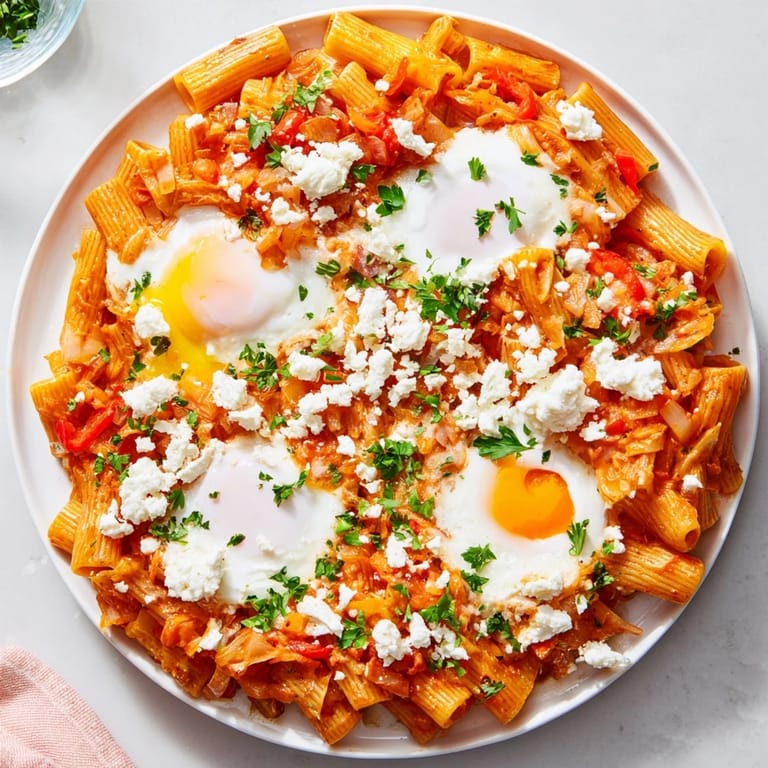
I've tested both mozzarella and feta here because they offer completely different experiences. Mozzarella melts into silky pockets of richness and lets the spices shine through, while feta adds a salty, tangy contrast that feels more authentic to shakshuka's Middle Eastern roots. Some cooks use a blend of both, and honestly, that's brilliant if you can't decide.
Serving and Storage Tips
Serve this straight from the oven with crusty bread alongside to catch every drop of that spiced tomato sauce mixed with runny egg. Leftovers can be refrigerated for a day or two, though the eggs will firm up completely—reheat gently in a low oven rather than the microwave if you want the best texture.
- Pair this with a simple green salad or roasted vegetables on the side for a balanced meal.
- If you're feeding someone vegan, simply skip the eggs and cheese, and add a can of chickpeas to the sauce for protein and heartiness.
- Serve with lemon wedges on the side so guests can brighten the richness with a squeeze if they want.
 Save
Save This dish has become my answer to the question of what to cook when you want something that feels restaurant-quality but doesn't demand your entire evening. It sits right at that perfect intersection of weeknight accessibility and genuine delight.
Recipe Q&A
- → What type of pasta works best for baking in this dish?
Short pastas like penne, rigatoni, or fusilli hold sauce well and maintain texture when baked, making them ideal choices.
- → How can I achieve runny egg yolks when baking?
Bake uncovered just until the egg whites set, about 15–18 minutes, to keep yolks soft and creamy.
- → Can I prepare the tomato sauce ahead of time?
Yes, simmer the spiced tomato sauce in advance and assemble the bake just before cooking for convenience.
- → What cheeses complement the flavors in this dish?
Mozzarella adds meltiness, while feta offers a tangy contrast; mixing both enhances the texture and taste.
- → How can I add extra greens to the bake?
Incorporate baby spinach or kale into the sauce before baking for added nutrition and color.