 Save
Save I'll never forget the holiday party where my aunt unveiled her masterpiece cheese board—twelve distinct sections, each telling its own delicious story. It was the moment I realized that a cheese board could be so much more than a simple appetizer. It became a conversation starter, a journey around the world in one elegant presentation. That night, watching guests lean in closer, discovering new flavor combinations, I knew I had to recreate that magic.
I remember my friend Sarah standing in front of this board for what felt like ten minutes, her eyes lighting up as she moved from section to section. She's someone who usually rushes through parties, but this slowed her down. She noticed the careful pairing of textures and flavors, the way the honey glistened next to creamy Brie, the contrast of sharp Roquefort with sweet pear. That's when I understood—a thoughtfully arranged cheese board isn't just food, it's an invitation to slow down and savor.
Ingredients
- Brie (50 g): Soft and buttery, it begs for something bright like apple or honey to cut through the richness. Keep it away from direct heat so it stays creamy.
- Aged Cheddar (50 g): The backbone of any board, it carries deep caramel notes that pair beautifully with fig jam and the earthiness of walnuts.
- Manchego (50 g): A Spanish treasure with a nutty, slightly sweet character—it's the cheese that deserves a moment of attention on its own.
- Roquefort or Blue Cheese (50 g): Bold and assertive, it needs something to balance its intensity, like the gentle sweetness of pear or the crunch of a good cracker.
- Goat Cheese (50 g): Tangy and bright, it's a palette cleanser that really sings when paired with fresh herbs like thyme and crisp grapes.
- Gruyère (50 g): Nutty and complex, it's magnificent with whole grain mustard and the sharp snap of a cornichon.
- Camembert (50 g): Like Brie's earthier cousin, it pairs wonderfully with crisp apple slices and the butter flavor of roasted almonds.
- Gouda (50 g): Smooth and caramel-sweet, it's the bridge between savory and sweet, especially when paired with dried apricot and a whisper of dark chocolate.
- Comté (50 g): A French classic with subtle complexity, it lets its oak and hazelnut notes shine next to grapes and walnuts.
- Pecorino (50 g): Sharp and assertive, this Italian cheese stands tall with a drizzle of honey and the delicate sweetness of fresh pear.
- Havarti (50 g): Creamy and buttery with subtle sweetness, it's a crowd pleaser that works beautifully with fig jam and toasted almonds.
- Smoked Cheese (50 g): Its depth and complexity are a revelation alongside the briny snap of cornichons and the richness of dark chocolate.
- Artisanal Bread or Assorted Crackers (12 slices): Choose varieties with different textures and flavors—some sturdy, some delicate, some with seeds or herbs.
- Honey (2 tbsp): Raw if you can find it, it brings natural floral notes that complement creamy cheeses beautifully.
- Fig Jam (2 tbsp): Look for a quality version with just figs and sugar—it's the sophistication every cheese board needs.
- Whole Grain Mustard (2 tbsp): The seeds add texture and a subtle bite that wakes up the palate between rich cheeses.
- Seedless Grapes (24): Their simplicity and sweetness are exactly what your palate needs between adventurous cheese discoveries.
- Dried Apricots (12): Chewy and naturally sweet, they provide textural contrast and pair beautifully with smoked and aged cheeses.
- Walnut Halves (12): Their earthy bitterness is the secret to balancing sharp and sweet cheeses.
- Toasted Almonds (12): Pre-toasting brings out their butter and creates a textural element that elevates every bite.
- Apple Slices (12): Fresh and crisp, they're the classic pairing that never fails with creamy, rich cheeses.
- Fresh Pear Slices (12): Slightly sweeter than apple, they're elegant and pair particularly well with blue cheeses and aged varieties.
- Dark Chocolate Pieces (12): A surprising twist that works magic with smoked cheeses and creates memorable contrasts.
- Cornichons (12): Briny and sharp, they're the palate cleanser that makes you hungry for the next cheese.
- Fresh Herbs—Thyme and Rosemary: These aren't just decoration—they add aromatic hints that tie the whole board together.
Tired of Takeout? 🥡
Get 10 meals you can make faster than delivery arrives. Seriously.
One email. No spam. Unsubscribe anytime.
Instructions
- Start with Your Canvas:
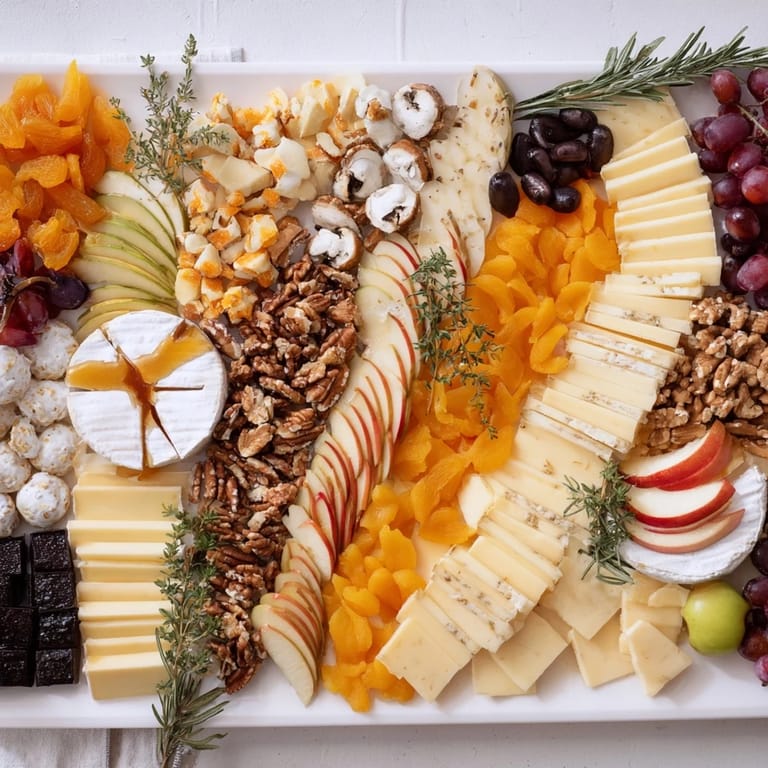
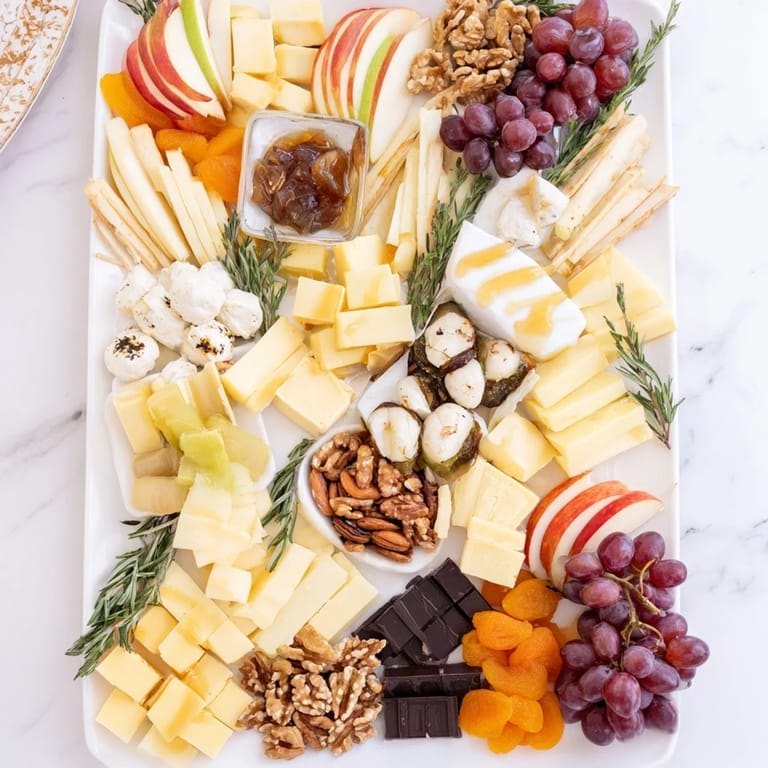
- Choose a large serving board or platter that will be the stage for your twelve cheese moments. Stand back and visualize how you'll divide it. You can use small bowls, ramekins, or simply arrange the cheeses in an imaginary grid—whatever feels natural to you. Take your time here; this is where the magic begins.
- Create Your Twelve Kingdoms:
- Mentally or visually divide your board into twelve distinct sections. Each section is its own little world, its own story. If using ramekins or bowls, arrange them thoughtfully. If dividing with garnish lines, use fresh herbs or arrange them casually—precision isn't the goal, intention is.
- Place Your Cheeses with Purpose:
- Cut each cheese into bite-sized pieces that invite tasting. For soft cheeses like Brie and Camembert, use a warm knife (dip it in hot water and dry it) to create clean cuts without dragging. Place each cheese in its section, arranging the pieces so they catch the light and look inviting.
- Pair Each Cheese with Its Perfect Partner:
- This is where your cheese board transforms from good to unforgettable. Think about what each cheese is asking for. Brie whispers for honey and apple—creamy needs brightness. Roquefort demands pear and a crunch of walnut. Goat cheese sings with thyme and grapes. Trust your instincts, and remember: you're not just feeding people, you're creating moments of discovery.
- Arrange Your Supporting Cast:
- Surround your twelve sections with crackers and bread. Arrange them in clusters, leaving enough space for guests to access each section easily. Vary the placement so the board feels organic and welcoming, not rigid.
- The Finishing Flourish:
- Scatter fresh thyme and rosemary across the board. Let sprigs fall where they may. Tuck them between sections, use them to soften the edges. These herbs aren't just pretty—they whisper hints of flavor and fragrance that guests will discover as they explore.
- Serve with Grace:
- Bring your board to room temperature for at least thirty minutes before serving. Cold cheese is tight and closed off; room temperature cheese is open, generous, and reveals all its nuances. Set it out, step back, and watch your guests' faces as they discover their favorite pairing.
 Save
Save I think of my mother's eyes when she first saw a cheese board arranged like this. She grew up in a small town where cheese meant one thing, and suddenly she was tasting twelve different stories from around the world. She closed her eyes between each section, really tasting. That moment taught me that food isn't about impressing—it's about opening doors to new experiences for people you care about.
Building Your Board Like a Storyteller
Every great cheese board has a rhythm, a narrative arc that guides your guests through the tasting journey. Think of it like telling a story—you wouldn't start with the climax. Begin with mild, approachable cheeses and progress toward bolder flavors. Soft cheeses first, then aged varieties, saving the blue cheeses and smoked options for those ready to embrace complexity. This isn't a rigid rule, but rather a gentle invitation that helps even adventurous eaters find their way. As you arrange your board, consider the visual story too. Create a flow with your colors and textures, letting white creamy cheeses contrast with golden aged varieties and deep, nutty tones.
The Pairing Philosophy That Changed Everything
I learned the secret to perfect pairings from a cheese monger in Paris who explained that every pairing works on one of three principles: contrast, complement, or conversation. Contrast happens when opposites dance together—creamy Brie with crisp apple, bold Roquefort with gentle pear. Complement means finding flavors that naturally belong together, like Gruyère and whole grain mustard or Gouda and dark chocolate. Conversation is when ingredients don't fight or meld, but rather engage in friendly debate, each one making the other taste better. As you build your board, ask yourself which principle you're exploring with each section. This mindfulness transforms your arrangement from random to intentional.
The Art of Presentation That Makes Guests Feel Welcomed
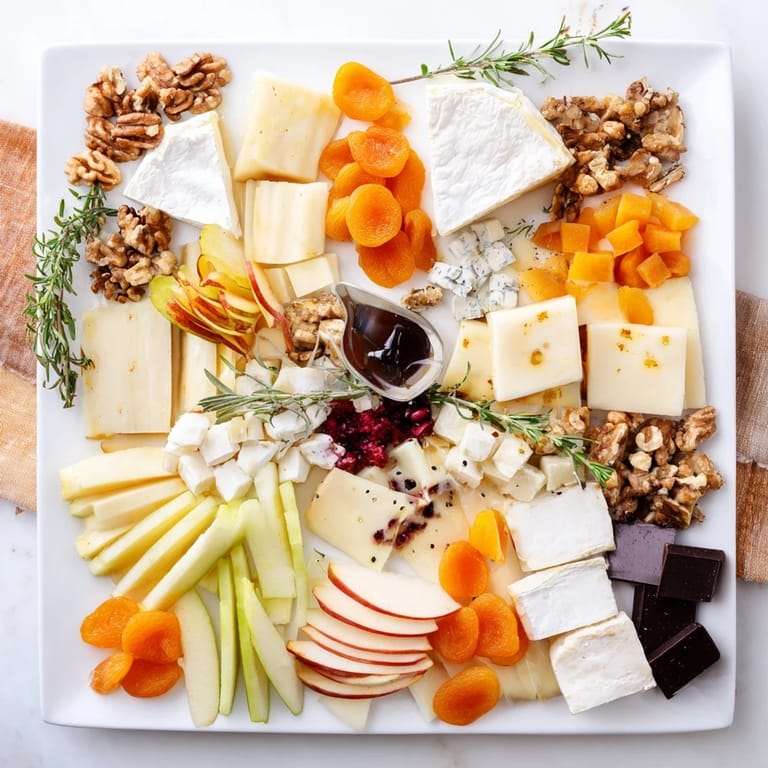
A cheese board is an invitation to slow down and connect. The way you present it sets the tone for the entire experience. Instead of cramming everything into tight rows, create breathing room. Let your board tell a story of thoughtfulness and care through white space and intentional placement. When guests see a board that feels curated rather than crowded, they understand they're being invited to an experience, not just filling their plates. The herbs aren't decorative flourishes—they're aromatics that prepare the palate and create a feast for all the senses.
- Let the natural colors of the cheeses and accompaniments create your palette—aged yellows, creamy whites, and deep blues will be more visually striking than you might expect
- Arrange similar items (like the walnuts and almonds) in small clusters rather than spreading them individually—this creates visual rhythm and makes selection easier
- Remember that negative space is your friend; a board that feels generous and unhurried is infinitely more inviting than one that's crammed full
 Save
Save Creating a twelve-day cheese board is really about creating twelve moments of joy. It's about watching someone taste something for the first time and seeing that light come to their eyes. You've got this.
Recipe Q&A
- → How should the cheeses be prepared before assembling the board?
Cut cheeses into bite-sized pieces or wedges for easy serving and arrange attractively in separate sections.
- → What types of accompaniments pair well with the cheeses?
Sweet options like honey and fig jam, fresh and dried fruits, nuts, crackers, and herbs enhance each cheese's flavor.
- → Can this board be made vegetarian or vegan?
Yes, using vegetarian-certified or plant-based cheeses allows the board to suit vegetarian or vegan preferences.
- → Is it better to serve the cheese board chilled or at room temperature?
Serving the board at room temperature allows the flavors and textures of cheeses and accompaniments to fully develop.
- → What beverages complement this cheese board?
Sparking wines, light red wines, or ciders pair nicely with the varied flavors and textures on the board.