 Save
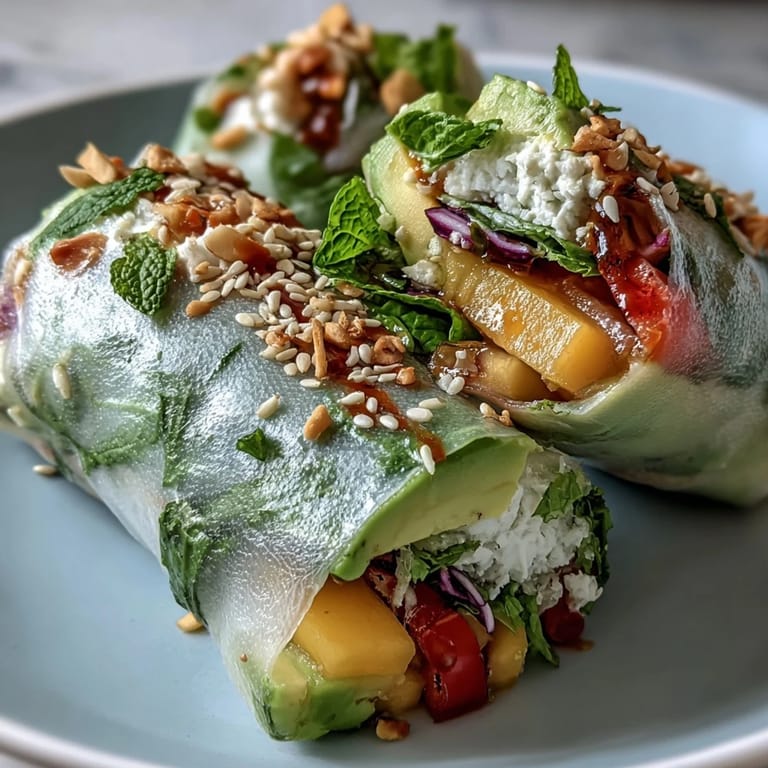
Save There's something about summer afternoons that makes you crave these spring rolls, especially when you stumble upon a perfectly ripe mango at the farmer's market and suddenly remember why you fell in love with fresh, uncooked food. I was standing in my kitchen on a humid July day, holding that golden mango, when it hit me that I hadn't made spring rolls in years, and more importantly, I'd never tried them fully vegan until that moment. What started as a simple lunch idea turned into this vibrant ritual I now repeat whenever I need to feel like I'm eating something that tastes like health feels. The colors alone justify making them, but the way that creamy avocado plays against the bright mango is what keeps me coming back.
My friend Maya came over one evening asking what I was making, and I handed her a spring roll before explaining anything—she bit into it with zero expectations and literally closed her eyes like she'd just tasted something sacred. That's when I realized these weren't just appetizers; they were conversation starters, little gifts you could hold in your hand. We ended up making three batches that night, and she kept tinkering with the herb ratios while I stuck to my guns about the balance being perfect. Watching someone discover something delicious you've made never gets old.
Ingredients
- Rice paper wrappers: These are your canvas, and they need to be submerged just right—too long and they tear, too short and they're stiff as paper, so the 10 to 15 second rule isn't a suggestion, it's the truth I learned the hard way.
- Ripe mango: This should yield slightly to pressure and smell fragrant, never mealy or hard, because unripe mango ruins the whole experience.
- Avocado: Use one that's truly ripe but still firm enough to slice without turning to mush, which honestly requires a sixth sense or good timing.
- Carrot and cucumber: Julienne them thin so they add crunch without overpowering the delicate flavors, and do it fresh the day you're rolling.
- Red bell pepper and purple cabbage: The colors matter here as much as the taste, so don't skip them just because you're in a hurry.
- Fresh mint, cilantro, and basil: These herbs are the whole point, so use the best quality you can find and don't be stingy with the amounts.
- Sweet chili sauce: Store-bought works beautifully, but if you want to make it from scratch, the homemade version has a warmth that bottled versions can't quite match.
- Lime juice and soy sauce or tamari: These brighten the sauce and give it depth, so don't skip them thinking the sweet chili sauce is enough.
Tired of Takeout? 🥡
Get 10 meals you can make faster than delivery arrives. Seriously.
One email. No spam. Unsubscribe anytime.
Instructions
- Prep your mise en place:
- Arrange every ingredient on a platter before you touch a single wrapper, because once you start rolling, your hands will be wet and you won't want to hunt for the cilantro. This small step transforms the whole process from chaotic to calm.
- Warm your water bath:
- Fill a shallow dish with warm water, not hot, because heat can make the rice paper sticky and unmanageable. Dip one wrapper at a time and count to about ten in your head, which usually works better than staring at the clock.
- Lay it down gently:
- Place the softened wrapper on a damp kitchen towel and let it relax for a moment, giving you a clean, slightly tacky surface to work on. This prevents it from sliding around while you fill it.
- Layer your filling strategically:
- Put mango and avocado first in the lower third, then arrange the harder vegetables and cabbage around them, finishing with just a whisper of each herb. The order matters because you want every bite to have balance, not just a pocket of one flavor.
- Roll with intention:
- Fold the bottom over the filling firmly, tuck in the sides like you're tucking in a child, and roll tightly without squashing the filling. It should look neat and almost professional by the time you seal it, which happens naturally if you don't overthink it.
- Make the sauce while they rest:
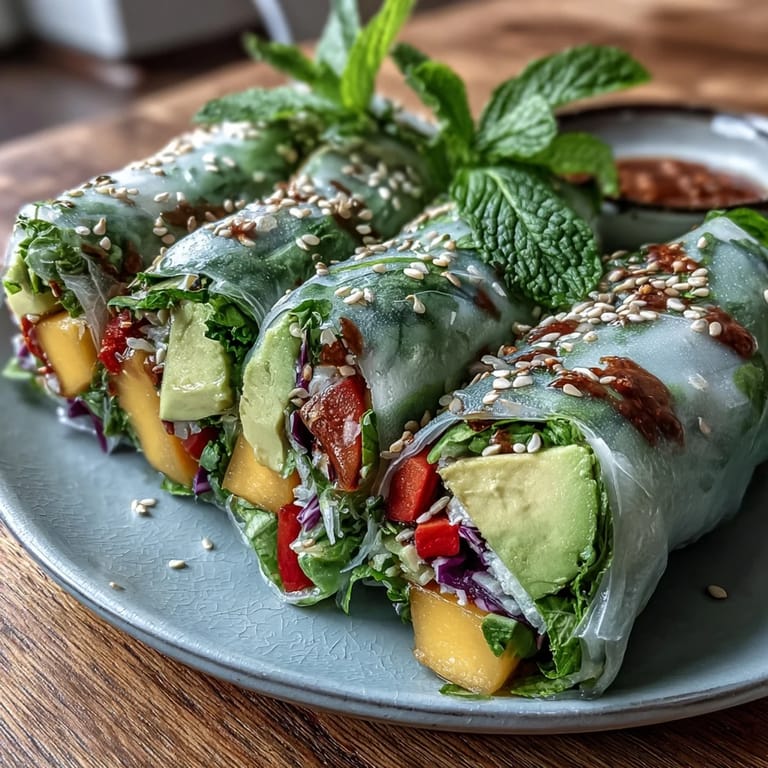
- Whisk together the sweet chili sauce, lime juice, and soy sauce in a small bowl, tasting as you go because everyone likes it a different level of spicy. A sprinkle of toasted sesame seeds adds texture and a whisper of nuttiness that makes people ask what the secret ingredient is.
- Serve immediately:
- Spring rolls taste best the moment they're rolled, when everything is still fresh and the wrapper hasn't started to tighten up on the filling. Have the sauce ready and watch people's faces light up.
 Save
Save There's a specific moment, right before you bite into one, where you realize you've made something beautiful and nourishing with your own hands, and that feeling of pride lasts longer than the roll itself. That's what keeps me making these, season after season.
Choosing Your Mango
Not all mangoes are created equal, and this dish lives or dies by the quality of the one you choose. A good mango should be slightly yielding when you hold it gently, with a fragrant aroma near the stem that makes you almost want to eat it whole. I once bought a mango that looked perfect but had no smell whatsoever, and it turned out to be one of those flavorless ones that makes you question whether it's even a mango at all.
The Wrapper Game
Rice paper wrappers feel delicate, and they are, but they're also surprisingly forgiving once you understand how they work. The key is respecting that warm water bath like it's a crucial step, not something you can rush or skip, because the difference between a smooth roll and a cracked one comes down to that ten-second dip. I keep my towel genuinely damp, not wet, so the wrapper stays pliable while I work without sliding everywhere.
When Fresh Herbs Make All the Difference
These rolls are an herb showcase, so buying the best quality herbs you can find isn't an extravagance, it's the entire point. The difference between wilted grocery store cilantro and vibrant bunch from a farmer's market is honestly startling once you pay attention to it. That said, if you have a garden or access to one, Thai basil is a revelation here, adding an anise-like depth that regular basil can't quite replicate.
- Don't chop or tear the herbs until you're ready to use them, because bruised herbs oxidize and lose their brightness.
- Mix and match your herbs based on what's freshest—if your mint is spectacular that week, use a little extra.
- The combination of three herbs creates complexity, but two will still taste delicious if that's what you have on hand.
 Save
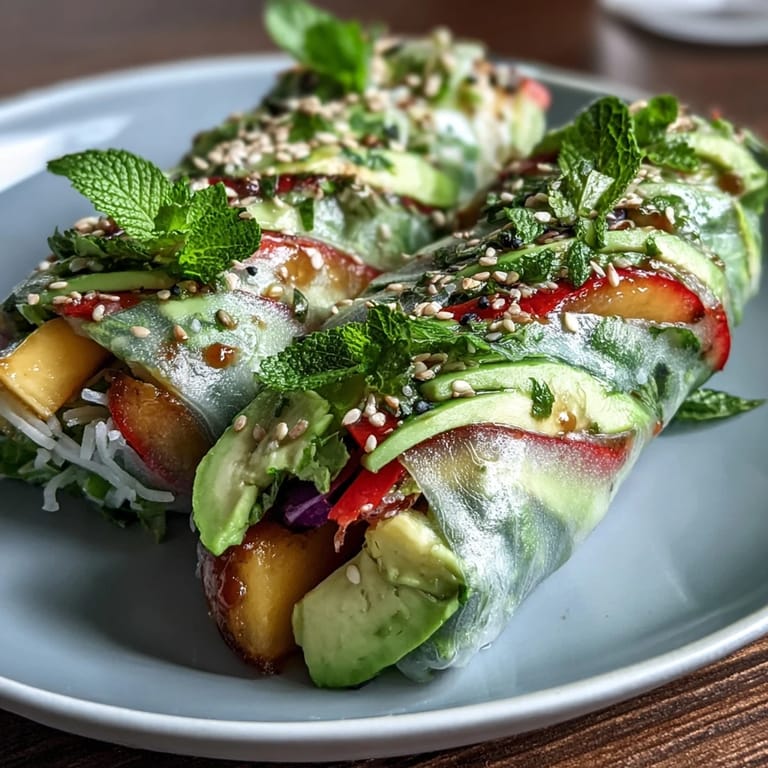
Save These spring rolls are proof that simple, fresh food doesn't need to be complicated to feel special, and once you make them a few times, you'll probably start rolling them whenever you want something that feels both light and completely satisfying. They're already becoming a summer staple in my kitchen, and I suspect they'll become one in yours too.
Recipe Q&A
- → How do I soften the rice paper wrappers properly?
Submerge each wrapper in warm water for about 10-15 seconds until pliable but not too soft to avoid tearing during rolling.
- → Can I add protein to these rolls?
Yes, thin strips of marinated tofu or tempeh can be added for extra protein and texture.
- → What herbs work best as substitutions?
Thai basil or parsley can replace mint, cilantro, or basil to vary the herbal profile.
- → Is the sweet chili sauce homemade or store-bought?
Both options work; a homemade sauce with vinegar, sugar, soy sauce, and chili flakes adds freshness, but store-bought saves time.
- → How should I store the rolls if not eating immediately?
Wrap them tightly in damp paper towels and plastic wrap, then refrigerate for up to 24 hours to maintain freshness.
- → Are these rolls gluten-free?
They can be gluten-free if rice paper wrappers and tamari soy sauce are used instead of regular soy sauce.