 Save
Save I discovered the magic of this dish at a friend's dinner party where she'd arranged cured meats into delicate roses and served them in her grandmother's teacups. The whole room gasped when she brought out the platter—something about presenting salami and pepperoni with such intention and care made everyone pause and really look at what they were about to eat. It wasn't fancy or pretentious; it felt playful and deliberate, like she'd turned a simple appetizer into conversation. That moment taught me that the way we present food can be just as important as the flavor itself.
The first time I made these roses, I fumbled through the rolling process and created what looked more like crumpled flowers than elegant buds. But my partner laughed and said they looked like dahlias, which somehow felt better than roses. We served them to our book club anyway, and everyone got what I was going for—the imperfection actually made them more charming and real.
Ingredients
- Salami: Choose high-quality, thinly sliced salami that's pliable enough to roll without tearing; the meat should feel soft and drape gently in your hand.
- Pepperoni: Go for the thinner slices if possible, as they roll more easily and create tighter, prettier roses than thicker cuts.
- Porcelain teacups: These are the real star of the show—they elevate the whole presentation from appetizer to experience.
- Fresh basil or baby arugula: A thin layer inside the cup adds color contrast and a whisper of flavor without overwhelming the delicate meat.
- Edible flowers: Pansies and violets add a touch of unexpected elegance; skip them if you can't source food-safe varieties.
- Crackers, cheeses, and grapes: These create a full grazing board that frames your roses beautifully and gives guests options.
Tired of Takeout? 🥡
Get 10 meals you can make faster than delivery arrives. Seriously.
One email. No spam. Unsubscribe anytime.
Instructions
- Arrange your first layer:
- Lay 6 salami slices in a slightly overlapping line on a clean surface, each one covering about a third of the one before it. This overlap is what creates the spiral shape.
- Roll it into a spiral:
- Starting at one end, gently and slowly roll the overlapped slices toward you, creating a tight coil. You want it snug but not so tight that the meat tears.
- Stand and fluff:
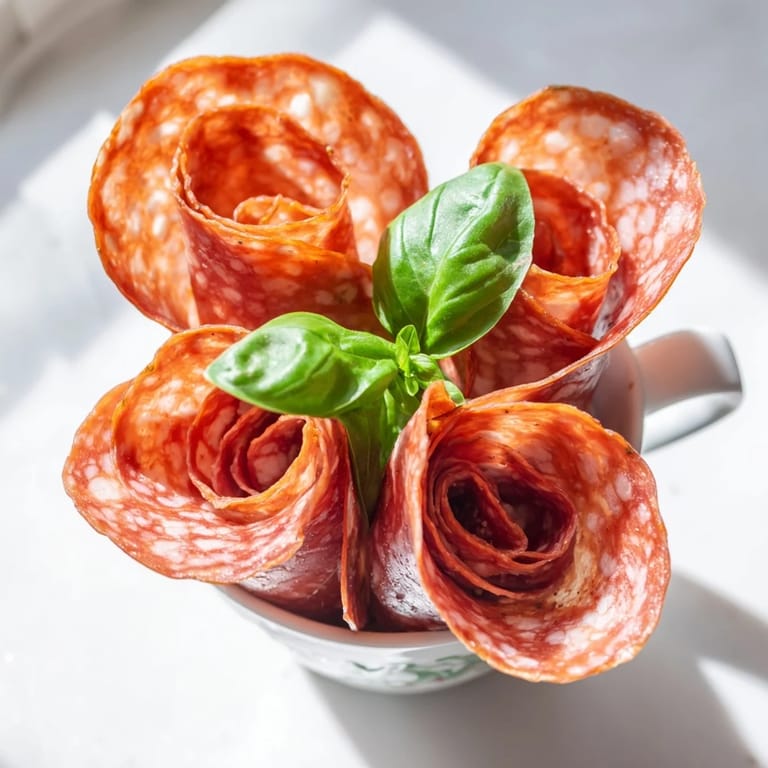
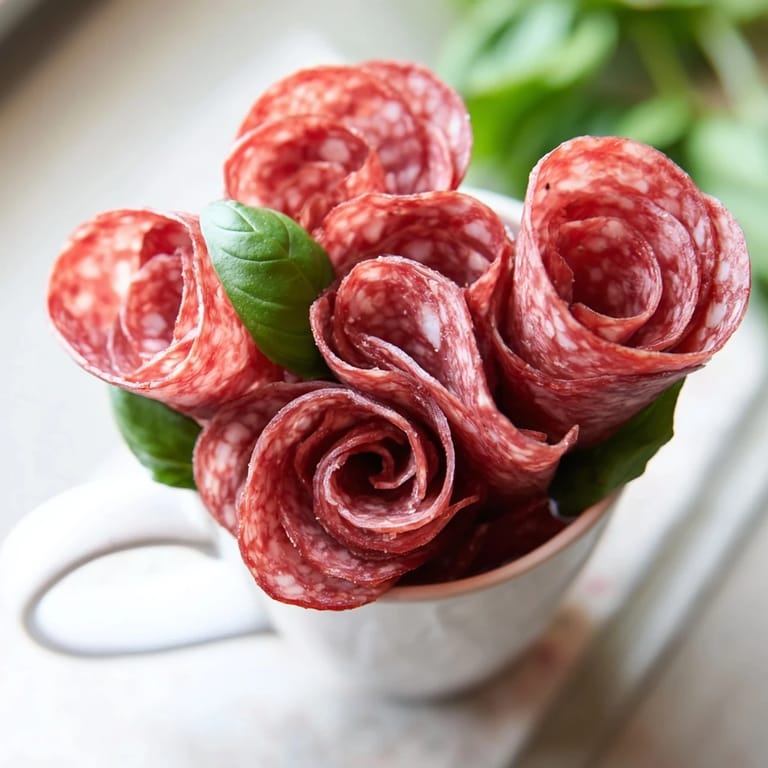
- Once rolled, carefully stand your spiral upright so it looks like a bud. Gently loosen each petal outward with your fingers until it resembles a full rose in bloom.
- Repeat with pepperoni:
- Make one pepperoni rose the same way, then create a second set of both salami and pepperoni roses so you have 6 total (3 of each type).
- Prepare the teacups:
- If using basil or arugula, place a few leaves in the bottom of each teacup for a hint of color and freshness.
- Place your roses:
- Carefully nestle each rose into a teacup, adjusting the petals so they fan out naturally and look their most beautiful.
- Add final touches:
- Tuck a small edible flower into the side of each rose if you have them, letting it peek out just slightly for visual interest.
- Arrange your board:
- Cluster the teacups together on a serving board and arrange crackers, cheeses, and fruit around them for a complete grazing experience.
 Save
Save I'll never forget the moment my young niece picked up one of these roses and asked if she was supposed to drink tea out of the cup, then laughed when she realized it was all edible. That question taught me something about the power of whimsy in food—it breaks people out of their expectations and makes them present and curious instead of just hungry.
The Secret to Pretty Petals
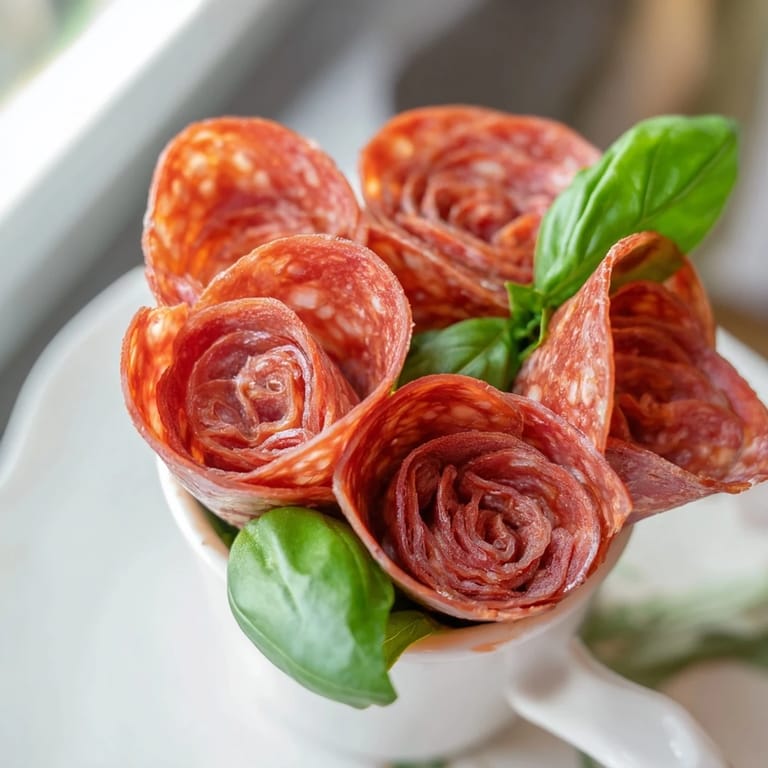
The difference between a rose that looks professionally made and one that looks homemade is all in how you loosen the petals at the end. Don't be timid—gently pull each layer outward just enough so it fans away from the center, creating depth and dimension. Think of it like coaxing a flower open rather than forcing it, and you'll naturally find the right touch.
Flavor Variations That Work
While salami and pepperoni are classic, I've experimented with prosciutto for a more delicate rose and coppa for something with deeper, meatier flavor. Each brings its own personality to the table. The beauty of this recipe is that it's adaptable, so feel free to mix types or use whatever cured meats you love—the presentation technique remains the same.
Timing and Serving Tips
These roses are best served slightly chilled, which also makes the meat firmer and easier to handle if you're assembling them ahead of time. You can prepare them up to 2 hours before guests arrive, cover them loosely with plastic wrap, and refrigerate. When you're ready to serve, give each rose a gentle touch-up to fluff the petals back into place.
- If you want to add subtle flavor, lightly brush the meat slices with a mixture of olive oil and black pepper before rolling.
- Keep your teacups and serving board at room temperature while the roses chill so the presentation feels intentional and polished.
- Serve these alongside your other appetizers or as the star of a grazing board for maximum visual impact.
 Save
Save This recipe taught me that cooking doesn't always have to be about complicated techniques or exotic ingredients—sometimes the greatest magic comes from taking something simple and presenting it with intention and care. I hope these little roses bring as much joy to your table as they've brought to mine.
Recipe Q&A
- → How do you create the rose shape with the meats?
Lay slices of salami or pepperoni overlapping in a line, then roll them tightly into a spiral. Stand the roll upright and gently loosen the edges to mimic petals.
- → Can other meats be used instead of salami and pepperoni?
Yes, cured meats like prosciutto or coppa work well for creating similar rose shapes with varied flavors.
- → Is it necessary to chill the assembled roses?
Chilling for up to two hours before serving helps the shapes hold and enhances their savory flavor.
- → What garnishes complement the presentation?
Fresh basil or baby arugula leaves line each teacup, while edible flowers add decorative flair. Serving with crackers, mild cheeses, and fruit provides balance.
- → Can the appetizer accommodate dietary restrictions?
The dish contains pork and may include dairy and gluten if accompaniments are added, so check ingredient labels for allergens.