 Save
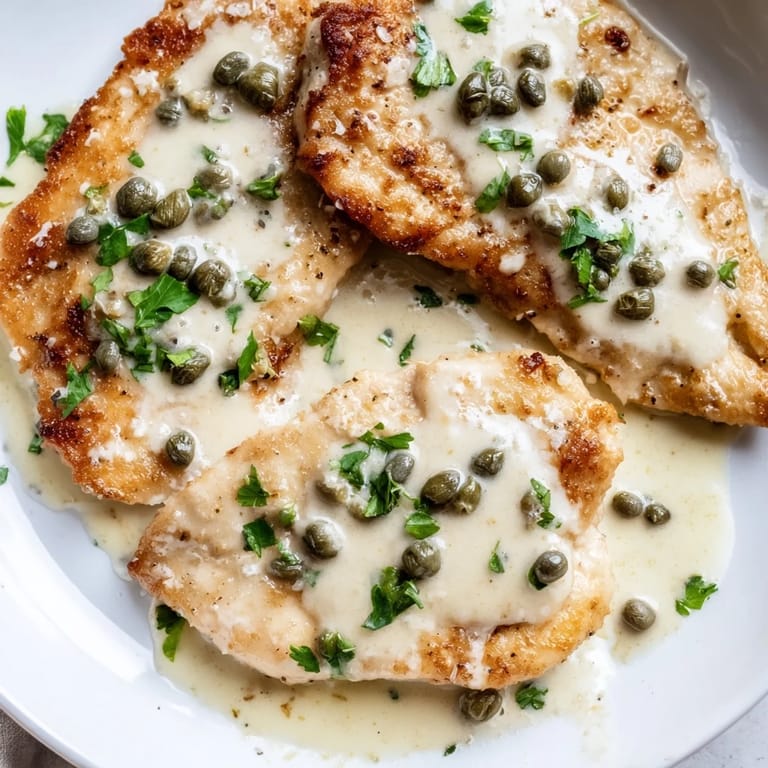
Save The first time I made Chicken Piccata, I was trying to impress my in-laws with something fancier than my usual weeknight fare. What I didn't expect was how the bright lemon aroma would fill my kitchen and transport me straight to the sunny Italian coast. I'd always assumed a sauce this silky required culinary school skills, but as I watched the butter, wine, and lemon juice transform before my eyes, I realized some of the best dishes are built on simple magic.
Last winter, I made this for a small dinner gathering during a snowstorm that had trapped us all inside. The kitchen windows steamed up as the chicken sizzled in the pan, and someone opened a bottle of crisp white wine. As we crowded around my tiny dining table, the first bite brought complete silence followed by murmurs of appreciation that made me feel like I'd orchestrated something far more complex than I actually had.
Ingredients
- Chicken breasts: Pounding them to an even thickness isn't just chef fussiness, I learned it ensures they cook evenly and quickly without drying out.
- Capers: These tiny flavor bombs add a briny pop that cuts through the richness of the cream, and I've discovered rinsing them first tempers their saltiness just enough.
- Heavy cream: After trying to substitute with lighter options and being disappointed, I can tell you the real thing creates that luxurious mouthfeel that makes this dish memorable.
- Dry white wine: The alcohol evaporates but leaves behind a complex acidity that balances the sauce perfectly, though chicken broth works in a pinch when I'm out.
- Fresh lemon juice: Please squeeze it yourself, the bottled stuff just doesn't capture that vibrant citrus note that makes piccata sing.
Tired of Takeout? 🥡
Get 10 meals you can make faster than delivery arrives. Seriously.
One email. No spam. Unsubscribe anytime.
Instructions
- Prep the chicken:
- Place those chicken breasts between parchment and give them a good pounding until they're about half an inch thick. You'll feel like you're working out some frustrations, which is a nice cooking bonus.
- Dredge with purpose:
- Give each piece a light coat of seasoned flour, making sure to shake off the excess. That thin layer will create a beautiful golden crust that seals in the juices.
- Create that golden sear:
- When the butter and oil start to shimmer in your pan, that's your signal. Lay the chicken down carefully and let it develop that gorgeous caramel color before flipping.
- Build the flavor base:
- After removing the chicken, the pan will have these beautiful browned bits that French chefs call fond. Sautéing the garlic in fresh butter releases an aroma that'll make your kitchen smell like heaven.
- Deglaze like a pro:
- When you pour in the wine, it sizzles dramatically and steam rises carrying the most incredible smell. Use your wooden spoon to scrape up all those flavor-packed bits from the pan bottom.
- Create liquid gold:
- As the cream, broth, and lemon juice simmer together, the sauce will thicken slightly and take on a velvety texture. You'll know it's right when it coats the back of a spoon.
- Reunite and finish:
- Nestling the chicken back into the bubbling sauce allows it to soak up all those flavors while staying juicy. The capers add tiny bursts of brininess that make each bite exciting.
 Save
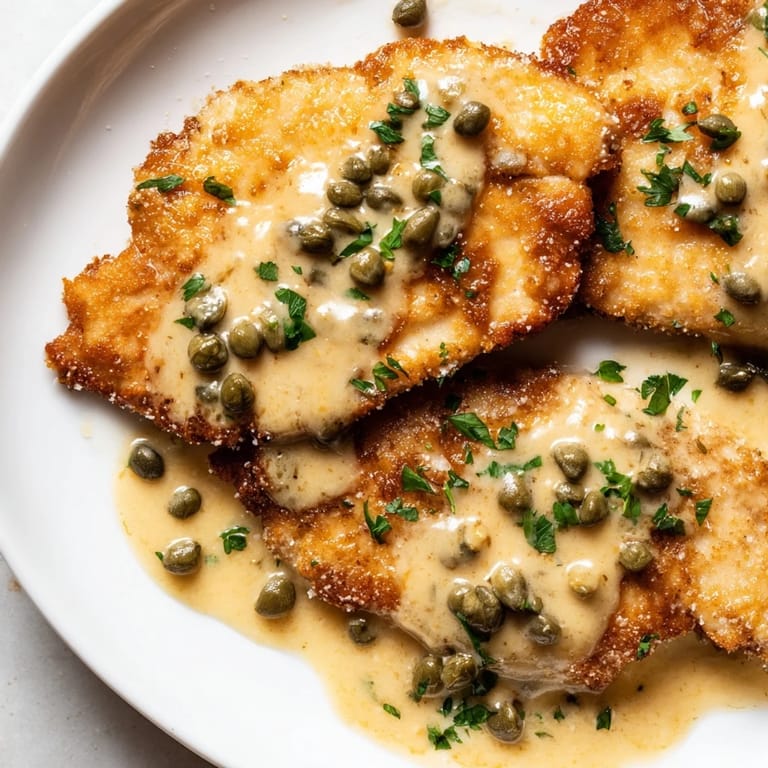
Save My daughter, who claimed to hate anything with lemon, fell completely silent when she first tried this dish at age ten. I watched her methodically sop up every drop of sauce with a piece of bread, and when she finished, she looked up and simply asked, Is there more? Now whenever she comes home from college, this is what she requests on her first night back, a tradition that means more to me than she'll ever know.
Perfect Pairings
I've served this creamy chicken piccata with everything from angel hair pasta to mashed potatoes, but my favorite companion is a simple side of roasted asparagus. Something about the way the tender-crisp spears soak up the extra sauce creates a bite that balances richness with freshness. For special occasions, I'll uncork a bottle of Pinot Grigio that mirrors the citrus notes in the dish without overpowering them.
Make-Ahead Options
One summer evening when preparing for unexpected guests, I discovered this dish actually benefits from a little rest. While I wouldn't make it days ahead, preparing the chicken and sauce separately up to 4 hours in advance, then reuniting them for a final gentle heating just before serving, results in chicken that's had time to absorb more flavor. The sauce might thicken slightly in the refrigerator, but a splash of warm broth while reheating brings it right back to that silky consistency we're after.
Troubleshooting Your Piccata
After making this dish dozens of times, I've encountered nearly every possible piccata problem. If your sauce looks too thin, resist the urge to crank up the heat, instead allow it to simmer gently for a few extra minutes, which concentrates the flavors as it thickens naturally. If the lemon flavor seems too subtle after tasting, a quick fix is adding some freshly grated lemon zest rather than more juice, which could throw off the sauce's balance.
- If your chicken is browning too quickly, your pan is likely too hot, so adjust the heat down to medium.
- Sauce splitting usually means either too much acidity or too high heat, so add a touch more cream and reduce the temperature.
- For the best flavor balance, taste before serving and adjust with tiny pinches of salt rather than more lemon juice or capers.
 Save
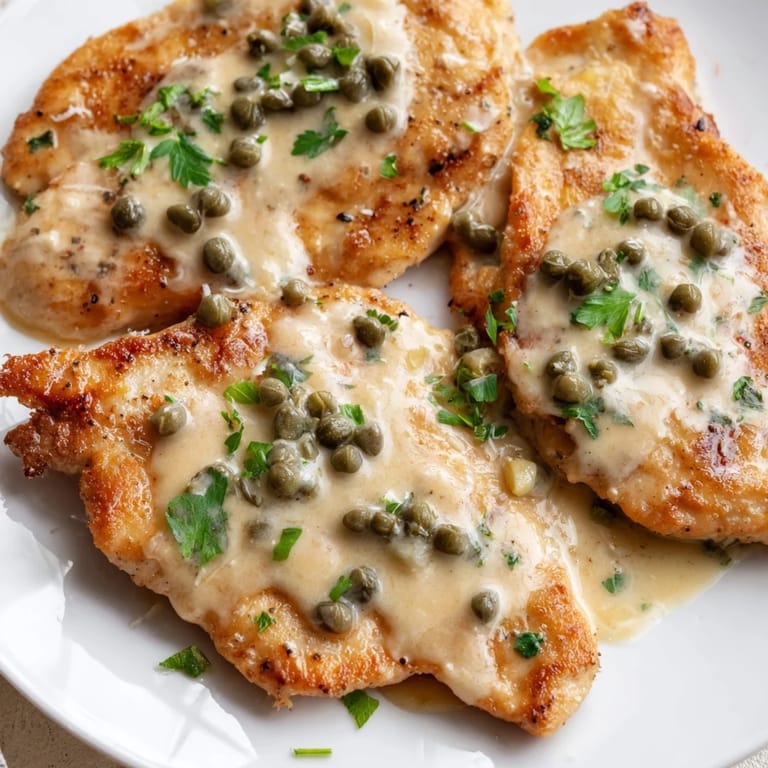
Save This creamy chicken piccata has taught me that sometimes the most memorable meals aren't about complex techniques or rare ingredients, but rather about transforming simple elements with a little attention and care. Whether it's a Tuesday night dinner or a special celebration, this dish brings a touch of effortless elegance to any table.
Recipe Q&A
- → How do I prevent the chicken from drying out?
Pound the chicken to an even ½-inch thickness to ensure uniform cooking. Don't overcook—remove from heat once golden and cooked through, about 4–5 minutes per side. If cooking ahead, cover loosely with foil to retain warmth without trapping steam.
- → Can I use bone-in chicken instead?
Yes, bone-in chicken thighs or breasts work well. Increase cooking time to 6–8 minutes per side until fully cooked. Check that the internal temperature reaches 165°F (74°C) at the thickest part before proceeding with the sauce.
- → What's a good substitute for heavy cream?
Use half-and-half or a combination of Greek yogurt and chicken broth for a lighter version. Sour cream also works, but stir it in gently after removing from heat to prevent curdling.
- → Can I make this without white wine?
Absolutely. Substitute the white wine with additional chicken broth or a splash of apple cider vinegar for acidity. The dish will be equally delicious with the same bright, tangy flavor profile.
- → How do I store leftovers?
Store the cooked chicken and sauce separately in airtight containers in the refrigerator for up to 3 days. Gently reheat over low heat on the stovetop, adding a splash of broth if the sauce thickens too much.
- → What pairs well with this dish?
Serve alongside egg noodles, fettuccine, or angel hair pasta to catch the creamy sauce. Risotto, roasted potatoes, or cauliflower rice are excellent alternatives. Pair with Pinot Grigio or Sauvignon Blanc for a classic pairing.