 Save
Save My kitchen timer went off on a Tuesday morning when I realized I'd been buying the same expensive protein bars every week, only to watch half of them go stale. That's when I started experimenting with sheet pan eggs, and this particular version emerged after discovering how cottage cheese transforms scrambled eggs into something impossibly fluffy and packed with nearly twenty grams of protein per serving. The vegetables aren't just garnish—they soften into the egg custard, turning what could be boring into something that tastes intentional. Once you nail this, you'll find yourself baking a pan every Sunday, slicing it into squares, and feeling genuinely proud of yourself all week long.
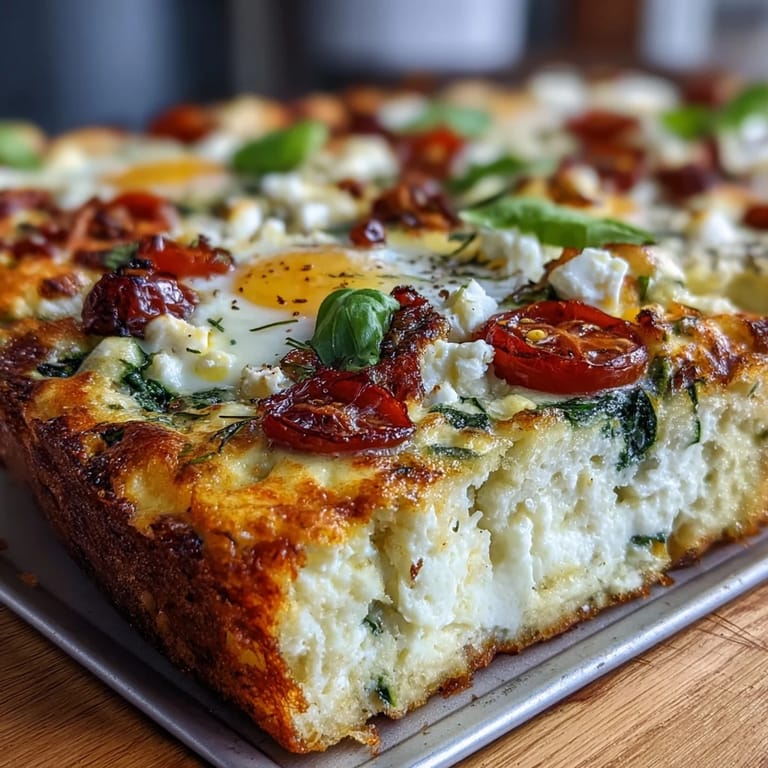
I made this for my sister's surprise visit last spring, and she stood in my kitchen watching the golden edges crisp up through the oven window, completely convinced I'd woken up at dawn just for her. When I pulled it out and cut those perfect squares, she laughed and said it looked like something from a magazine but tasted like actual comfort. We sat at my small kitchen table with plates balanced on our laps, and she asked for the recipe before she'd even finished her first bite—that's when I knew this dish had staying power.
Ingredients
- Large eggs (10): Use the freshest ones you can find because they whip up lighter and fluffier; room temperature eggs blend more smoothly with the cottage cheese.
- Low-fat cottage cheese (1 1/2 cups): This is the secret weapon that keeps everything moist and adds serious protein without heaviness; don't skip it or use Greek yogurt as a direct swap.
- Milk (1/4 cup): Either dairy or unsweetened plant-based works, but it helps loosen the mixture so it bakes evenly instead of getting dense.
- Cherry tomatoes (1 cup, halved): The juice releases into the eggs, adding brightness; regular tomatoes work but can make things watery if they're huge.
- Baby spinach (1 cup, roughly chopped): It wilts completely into the eggs, adding iron and green color without anyone tasting leafy texture.
- Red bell pepper (1/2 cup, diced): Choose one that's firm and glossy, and keep the pieces small so they soften evenly during baking.
- Zucchini (1/2 cup, diced): Pat it dry before adding or it'll release excess moisture; yellow zucchini looks prettier but green works just as well.
- Red onion (1/4 cup, finely chopped): The sharpness mellows during baking and adds sweetness if you let it sit in the mixture for a couple minutes before pouring.
- Salt and black pepper: Taste as you go because cottage cheese already carries some saltiness.
- Dried oregano or Italian seasoning (1/2 teaspoon): These herbs bloom in the oven's heat and tie everything together without overwhelming the eggs.
- Fresh chives or parsley (2 tablespoons, chopped): Add these after baking so they stay bright and add a fresh finishing note.
Tired of Takeout? 🥡
Get 10 meals you can make faster than delivery arrives. Seriously.
One email. No spam. Unsubscribe anytime.
Instructions
- Set up your stage:
- Heat your oven to 375°F and grease a 13x9 inch baking sheet generously with nonstick spray or line it with parchment paper so nothing sticks and cleanup stays easy. If you're using parchment, let the corners come up slightly so the eggs don't escape at the edges.
- Blend the base:
- Crack your eggs into a large bowl and whisk them together with the cottage cheese and milk until the mixture turns pale and smooth, almost frothy on top. This takes about two minutes of actual whisking, and you'll feel the cottage cheese break down and incorporate completely.
- Season with intention:
- Stir in salt, pepper, and your dried herbs, tasting a tiny bit of the raw mixture to make sure the seasoning feels right. Remember that cottage cheese has its own subtle saltiness, so hold back slightly if you're uncertain.
- Fold in the vegetables:
- Add all your chopped vegetables and gently fold them in using a spatula, making sure nothing gets crushed and everything distributes evenly throughout. This step takes just thirty seconds and ensures every bite has tomatoes, peppers, and spinach.
- Pour and settle:
- Transfer the entire mixture onto your prepared baking sheet in one smooth pour, then tap the pan gently on the counter a few times so the egg fills all the corners and settles into an even layer. It won't look perfectly flat, and that's actually fine.
- Bake until set:
- Slide the pan into the oven and set a timer for 22 to 25 minutes, watching for the edges to turn lightly golden while the center still jiggles just slightly when you give the pan a gentle shake. The carry-over heat will set it completely while it cools.
- Cool and slice:
- Let the baked eggs rest on the counter for five minutes so they firm up just enough to cut cleanly without falling apart. Use a sharp knife and wipe it clean between cuts if you want Instagram-perfect squares, but honestly, rustic chunks taste just as good.
 Save
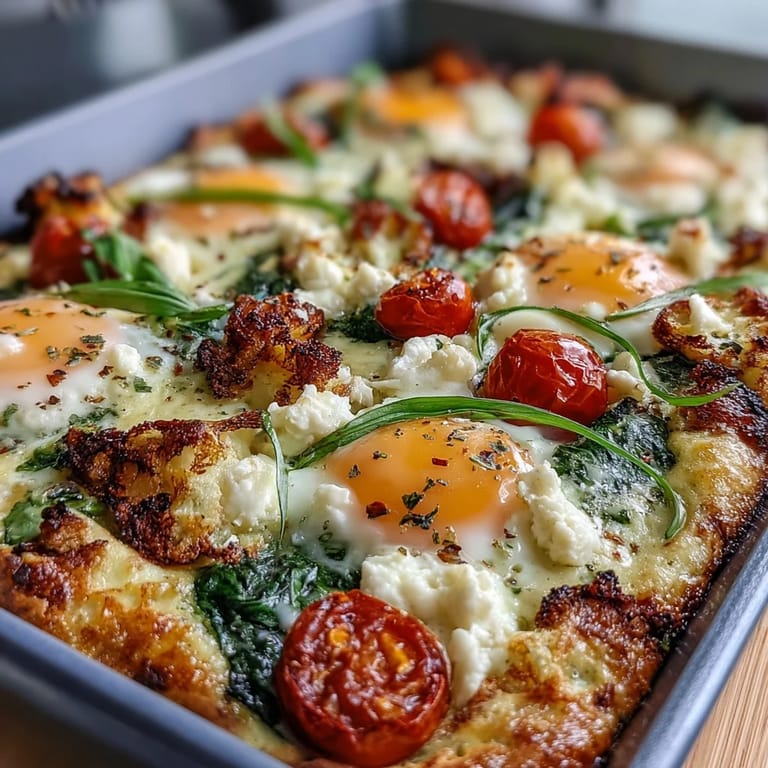
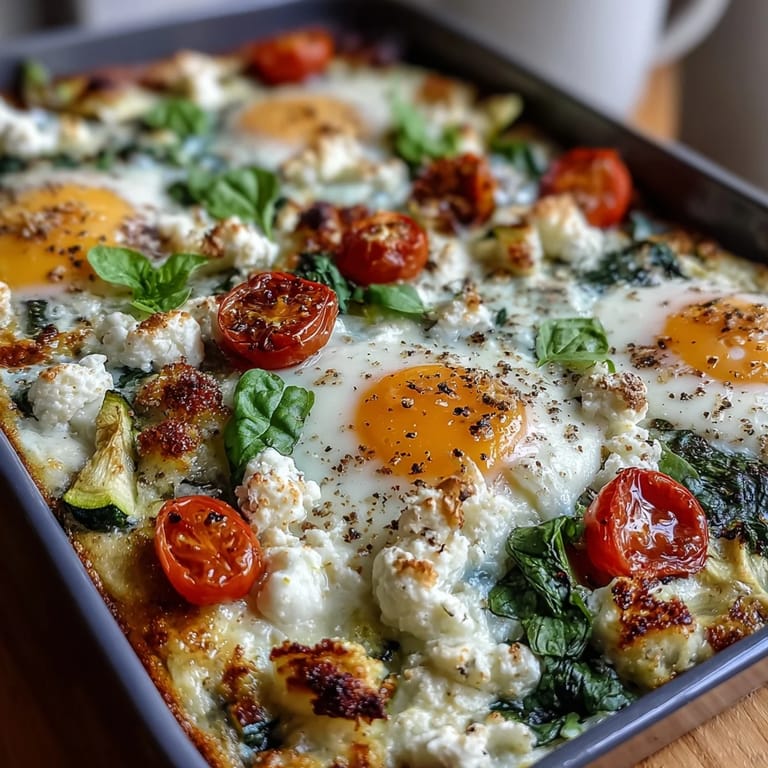
Save There's something deeply satisfying about cutting into a baked sheet of eggs and seeing all those vegetables suspended perfectly, each piece where you intended it to be. It's the kind of breakfast that stops feeling like a chore and starts feeling like self-care.
Storage and Meal Prep Magic
This dish was practically designed for busy weeks because it actually tastes better on day two or three when all the flavors have melded together. Store your cut squares in an airtight container, and they'll keep for up to four days in the refrigerator without any weird texture changes. Reheat a slice in the microwave for about ninety seconds and it wakes right back up, still soft and comforting, never rubbery or dried out.
Variations and Swaps
Once you understand how this formula works, you start seeing endless possibilities in your vegetable drawer. Mushrooms add an earthy depth, asparagus tips turn tender and almost buttery, and broccoli florets create little pockets of texture. Try adding shredded cheese in the last two minutes of baking, or stir in fresh dill before pouring for a completely different flavor direction.
Serving Suggestions and Final Thoughts
Serve these warm from the oven with a slice of whole grain toast and a small bowl of avocado on the side, or eat them cold straight from the container on your way out the door. A simple green salad or some fresh fruit rounds out the meal beautifully, but honestly these squares are substantial enough to stand alone.
- Pair with strong coffee or herbal tea for a complete breakfast experience.
- Cut into smaller rectangles if you're meal prepping for snacks instead of full meals.
- Freeze individual squares for up to two months and thaw overnight for ready-made breakfasts.
 Save
Save This recipe became my answer to those mornings when I'm too tired to think but too hungry to skip breakfast. Make it once and you'll understand why it lives in rotation at my house year-round.
Recipe Q&A
- → Can I freeze these baked egg slices?
Yes, these freeze well for up to 2 months. Wrap individual slices tightly in plastic wrap and foil, then thaw in the refrigerator before reheating.
- → What other vegetables work in this dish?
Mushrooms, broccoli, asparagus, diced bell peppers, or green onions all work beautifully. Just avoid watery vegetables like cucumber that release too much moisture during baking.
- → Can I make this dairy-free?
Substitute the cottage cheese with a dairy-free alternative or silken tofu. Use your favorite plant-based milk and the result will still be delicious and protein-rich.
- → How do I know when the eggs are fully cooked?
The edges should be lightly golden and the center set with no jiggle. A knife inserted in the middle should come out clean, not wet with uncooked egg mixture.
- → What size pan works best?
A 13x9 inch rimmed baking sheet creates the ideal thickness—about 1 inch. Smaller pans will take longer to cook, while larger ones produce thinner slices that may overcook.
- → Can I prepare this the night before?
You can whisk the eggs and chop vegetables ahead, then store them separately in the refrigerator. Combine and bake fresh in the morning for best texture and flavor.