 Save
Save There's something about a mango that catches you off guard—that moment when you bite into one and remember why summer tastes the way it does. I discovered this pudding on a sticky afternoon when I was standing in my kitchen, hands sticky with mango juice, wondering if I could make something feel tropical without turning on the oven. Chia seeds were just sitting in my pantry, and coconut milk was calling from the shelf. The combination felt almost too simple, but that's exactly what made it work.
I made this for my sister's unexpected visit last summer, and she stood there with a spoon in her hand, not saying anything, just making those small happy sounds people make when something tastes exactly like what they needed. That's when I knew this recipe was a keeper—it turned a ordinary Tuesday into something memorable, without any fuss.
Ingredients
- Coconut milk (400 ml, full-fat preferred): Full-fat gives you that luxurious mouthfeel, though light works in a pinch—I've learned that the richness here is what makes every spoonful feel indulgent.
- Chia seeds (6 tbsp): These tiny seeds do the magic work, absorbing liquid and creating that pudding texture while staying nearly invisible—no gritty surprises, I promise.
- Maple syrup or honey (3 tbsp, plus 1–2 tbsp more for the mango): The sweetness should echo the mango's natural sugars, so taste as you go and adjust like you're tuning an instrument.
- Vanilla extract (1 tsp, optional): A whisper of vanilla deepens the tropical feel without announcing itself loudly.
- Fresh mango (2 large ripe ones, about 400 g flesh): Look for mangoes that smell sweet and give slightly when you squeeze them gently—overripe is actually your friend here.
- Lime juice (1 tbsp): This cuts through the richness and wakes everything up, turning flat flavors into something bright.
- Toasted coconut flakes (2 tbsp, for topping): Toasting them yourself changes everything—buy unsweetened and give them 3 minutes in a dry pan until they smell like vacation.
- Nuts for garnish (1 tbsp chopped pistachios or almonds): The crunch is your texture contrast, your little surprise in each spoonful.
Tired of Takeout? 🥡
Get 10 meals you can make faster than delivery arrives. Seriously.
One email. No spam. Unsubscribe anytime.
Instructions
- Whisk the base:
- Pour the coconut milk into a bowl and whisk in the maple syrup and vanilla until everything is smooth and the sweetness dissolves completely. This takes maybe two minutes, and it sets the tone for everything that follows.
- Stir in the chia seeds:
- Add the seeds slowly while stirring, making sure each one gets coated and distributed evenly so you don't end up with pockets of dry seeds settling at the bottom. A gentle, patient hand here prevents clumping later.
- Chill with intention:
- Prepare the mango:
- While the pudding works its magic in the fridge, blend your mango chunks with lime juice until it's completely smooth and silky. Taste it and decide if it needs more sweetness—this is where your palate leads the way.
- Assemble with care:
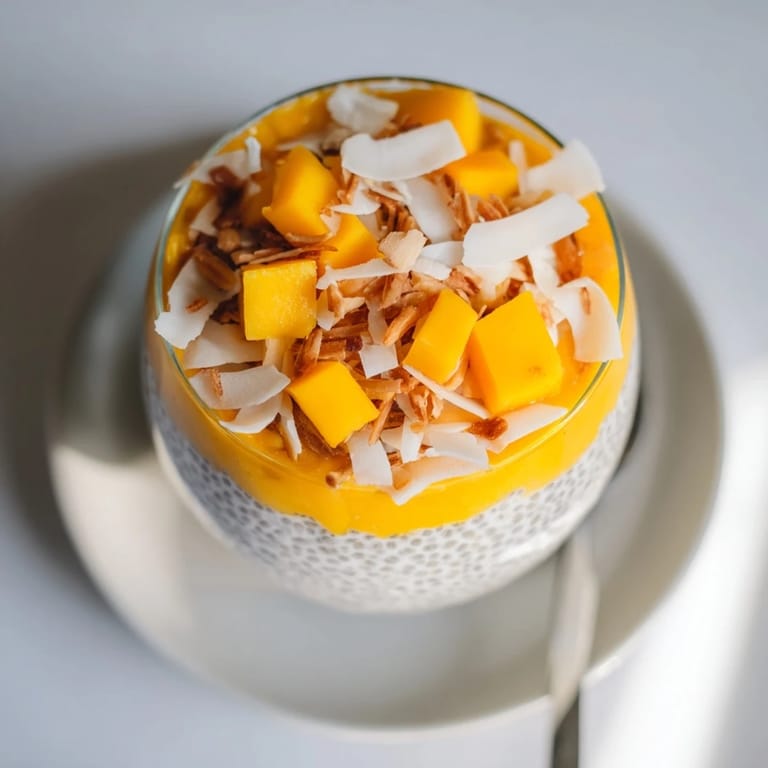
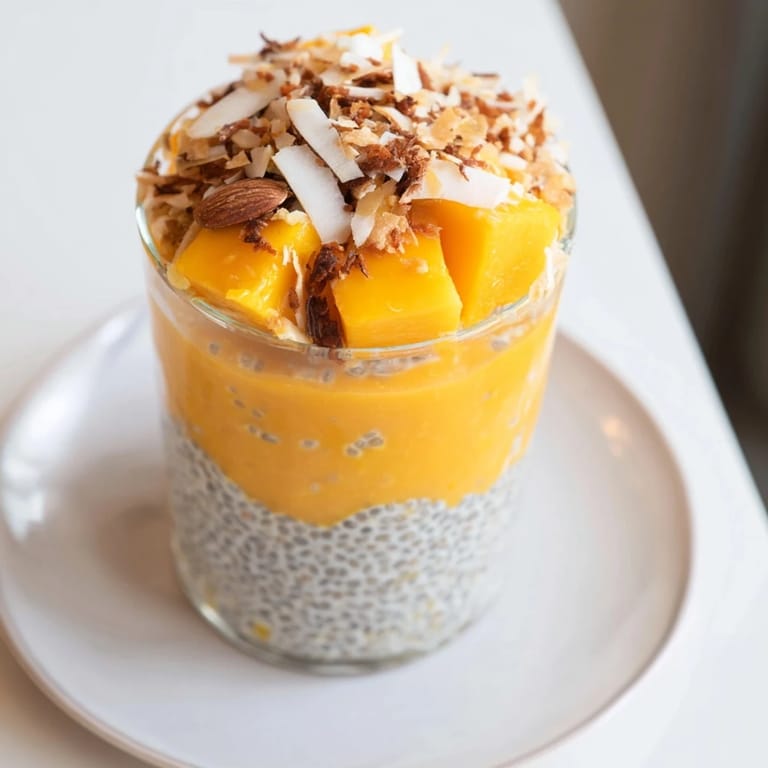
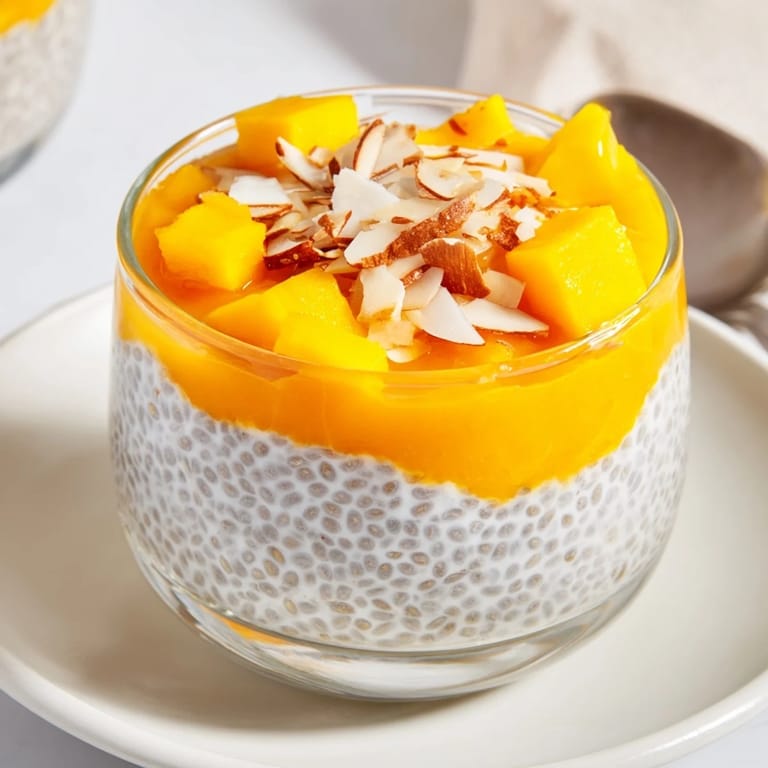
- Spoon the thickened pudding into glasses, filling them about halfway, then top with a generous pour of mango puree. If you're feeling fancy, layer them—pudding, mango, pudding, mango—for a look that photographs well and tastes even better.
- Finish and serve:
- Scatter your toasted coconut flakes and nuts on top, add fresh mango cubes or a mint leaf if you have it, and serve everything cold. The moment you hand someone this bowl is the moment they'll understand why you love it.
 Save
Save There's a quiet satisfaction in making something this effortless look so elegant, and in watching someone taste it for the first time and see their eyes light up. This pudding became my answer to those moments when I wanted to give someone something nourishing that didn't feel like responsibility.
Layering for Beauty and Flavor
The magic isn't just in the taste—it's in how the layers look when you hold the glass up to the light. Alternating the creamy white pudding with the golden-orange mango creates something visually striking, like a sunset in a glass. I learned to spoon carefully, taking my time with the layering, because rushing through it defeats the purpose. The separation also means that each spoonful hits your palate differently depending on how much of each layer you catch, making the experience feel more dynamic and interesting.
Customizing Your Tropical Dream
This recipe is flexible in ways I appreciate—it's more of a framework than a rigid set of rules. I've made it with almond milk when coconut felt too heavy, and it was lighter and still delicious. Some mornings I'll skip the mango puree entirely and just layer diced mango chunks between the pudding for texture. Other times I'll add a tablespoon of cardamom or a pinch of turmeric to the base for an unexpected warmth. The sweetness level should always reflect the actual ripeness of your mango and your personal preference—start conservatively and taste your way to happiness.
Timing and Storage Wisdom
The beauty of this dish is that you can make it the night before and wake up to breakfast that feels like an indulgence. I often prepare the pudding base before bed, let it thicken overnight, and blend the mango in the morning for freshness. If you do make both components ahead, store them separately in airtight containers—the pudding keeps for up to three days, and the mango puree for about two. Assemble only when you're ready to eat, because the pudding absorbs moisture from the mango over time and changes texture, though not in a bad way, just in a softer, more integrated way.
- Toast your own coconut flakes rather than buying pre-toasted ones—the flavor difference is remarkable and takes only minutes.
- If your pudding seems too thick after chilling, a quick stir or a splash of milk brings it back to creamy rather than gelatinous.
- Freeze leftover mango puree in ice cube trays for smoothies or to blend into yogurt later in the week.
 Save
Save This pudding became the dish I make for people I want to impress without seeming like I've tried too hard. It sits at that perfect intersection of simple and sophisticated, nourishing and indulgent.
Recipe Q&A
- → Can I use a different milk instead of coconut milk?
Yes, almond or oat milk are great alternatives that create a lighter texture while maintaining creaminess.
- → How long should the mixture chill for best results?
Chilling for at least 2 hours allows chia seeds to absorb liquid fully and develop a smooth, pudding-like consistency.
- → What are good options for sweetening the layers?
Maple syrup or honey can be adjusted to taste, enhancing natural mango sweetness without overpowering.
- → Is it necessary to stir the chia mixture while cooling?
Stirring once after 30 minutes helps prevent clumps and ensures even hydration for a uniform texture.
- → What toppings complement this tropical dish?
Toasted coconut flakes, chopped pistachios or almonds, fresh mango cubes, and mint leaves add texture and freshness.