 Save
Save I still remember the first time I created a Snowy Pinecone Centerpiece for my winter holiday table. My sister had just come home from abroad, and I wanted something that felt magical but wasn't fussy—something that would make everyone pause when they walked into the dining room. I'd been flipping through old entertaining books when I spotted a pinecone image and thought, why not make it edible? That evening, as I pressed those first almond scales into soft cheese, dusted with powdered sugar like fresh snow, I realized I'd stumbled onto something special. It became our family's signature centerpiece, and now whenever winter rolls around, someone always asks, "Are you making the snowy pinecone this year?"
The real magic happened when I served this at a neighbor's holiday potluck. A little girl who usually picks at cheese platters stood there mesmerized, watching the powdered sugar catch the candlelight. She asked if she could have a piece, and when she did, she declared it tasted like a Christmas dream. That moment taught me that food isn't just about flavor—it's about wonder, and somehow this humble cheese and almond creation delivered exactly that.
Ingredients
- Soft cheese wedge (cream cheese or goat cheese, about 250 g): This is your foundation, and it needs to be soft enough to mold but structured enough to hold shape. Cream cheese gives you a neutral canvas, while goat cheese adds a subtle tang that pairs beautifully with the crisp almonds. I learned the hard way that cold cheese won't cooperate—let it sit at room temperature for 20 minutes first.
- Sour cream or Greek yogurt (1 tablespoon): This loosens the cheese just enough to make it pliable without losing its structure. It's the secret to getting that perfect moldable consistency.
- Fresh herbs, finely chopped (1 teaspoon, optional): Chives, dill, or parsley add a whisper of flavor and visual interest. I prefer dill for its delicate appearance and garden-fresh taste.
- Garlic powder (½ teaspoon): A gentle warmth that makes people ask, 'What is that flavor?' without being able to pinpoint it exactly.
- Salt and black pepper to taste: Your seasoning compass—taste as you go and trust your palate.
- Sliced almonds or thin crisp crackers (1½ cups): These are your pinecone scales, and they need to have structure. Sliced almonds give an elegant, natural look, while melba toasts add a satisfying crunch. I prefer almonds for their subtle sweetness and how they catch the light when the powdered sugar settles on them.
- Seedless red and green grapes (1 cup each): These create the festive base and add pops of color that make the whole arrangement sing.
- Assorted crackers (1 cup): Variety is your friend here—mix textures and flavors so guests have options for how they want to enjoy the cheese.
- Fresh rosemary sprigs (½ cup): These aren't just decoration; they're edible aromatics that scent your table and add an herbaceous note to each bite.
- Powdered sugar (2 tablespoons): This is what transforms your centerpiece from pretty to absolutely snowy and magical. Don't skip it, even if you think it seems like overkill.
Tired of Takeout? 🥡
Get 10 meals you can make faster than delivery arrives. Seriously.
One email. No spam. Unsubscribe anytime.
Instructions
- Blend your cheese into submission:
- In a medium bowl, combine your soft cheese, sour cream, herbs, garlic powder, salt, and pepper. Stir gently at first, then use a rubber spatula to really work it together until it's completely smooth and creamy. This should take about a minute. You're looking for something that feels like soft clay—moldable but cohesive.
- Shape your pinecone form:
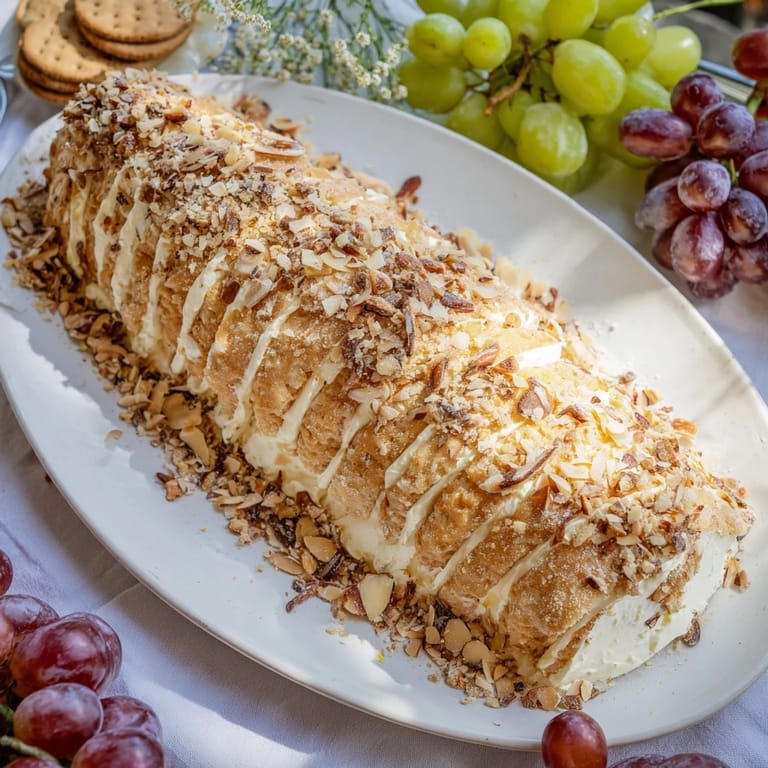
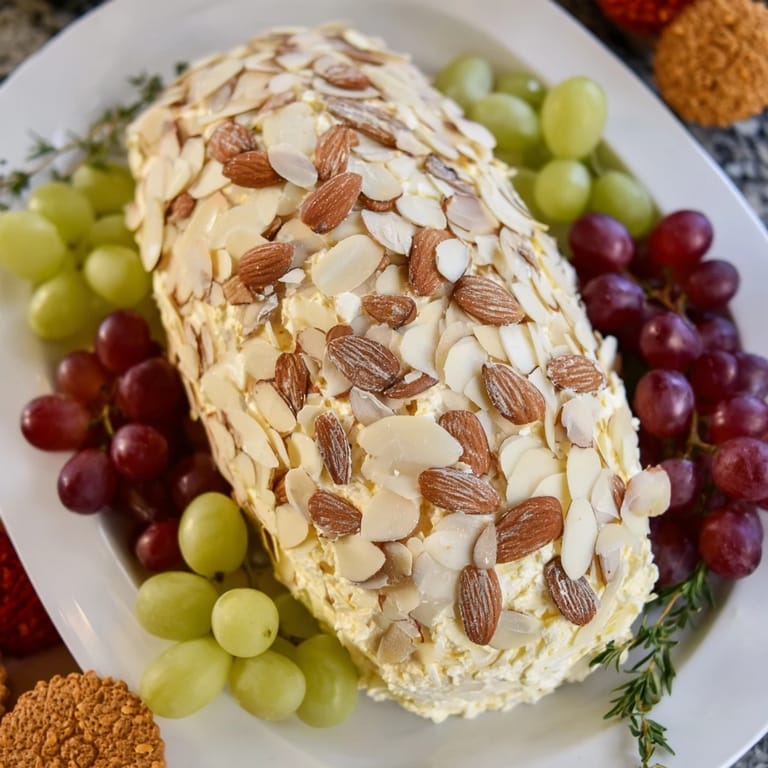
- Transfer the cheese mixture onto your serving platter and, using your hands or the spatula, shape it into a large, elongated oval that tapers slightly at the top. Think less perfect cone, more gentle suggestion of pinecone shape. It doesn't have to be architectural perfection; rustic is actually more charming here. This is where you get to play.
- Layer your scales with intention:
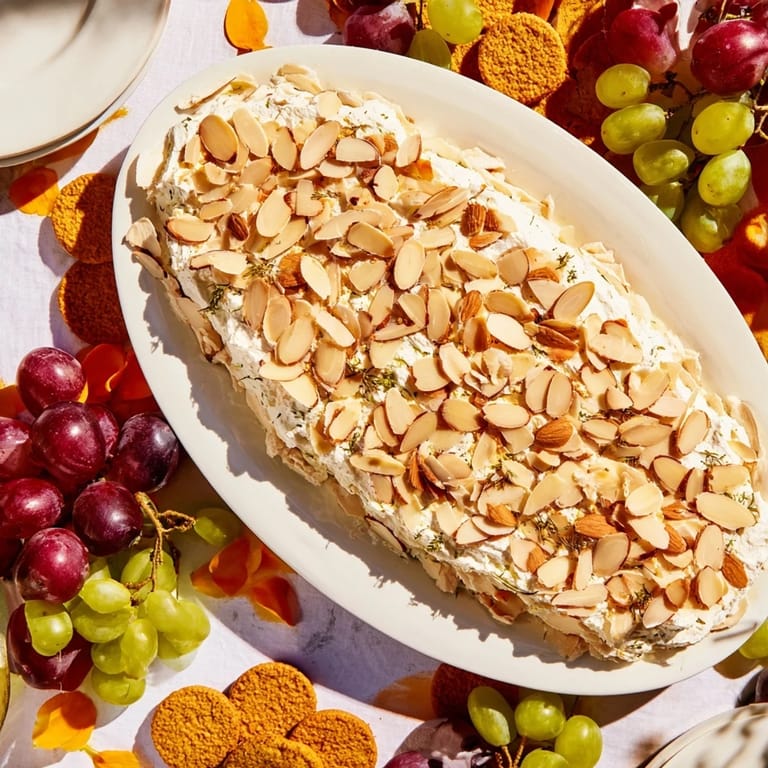
- Starting at the very base of your cheese form, begin pressing almond slices or cracker shards into the surface, overlapping them slightly as you go upward, like you're building roof shingles. Work in gentle rows, and don't worry if they're not perfectly aligned—the slight imperfection is what makes it look naturally gathered from a forest floor. Each scale should be pressed in firmly enough to stay put but gently enough that you're not compressing the cheese beneath. This meditative part takes about 10 minutes, and it's oddly satisfying.
- Build your festive landscape:
- Around your pinecone base, arrange the grapes, crackers, and rosemary sprigs to create a little seasonal tablescape. Imagine you're building a small forest floor—grapes nestled in little clusters, sprigs of rosemary standing like tiny trees, crackers scattered as if they've fallen naturally.
- Add the snow just before serving:
- Using a sifter or fine mesh sieve, lightly dust the powdered sugar over your entire creation just before guests arrive. This is the moment where everything transforms. Watch the sugar catch whatever light is in your room, and suddenly you have a winter wonderland on your table. This step is timing-critical because powdered sugar will start to absorb moisture from the cheese, so do it as close to serving as you can manage.
- Invite everyone to break off pieces:
- Present it as a centerpiece first, let people admire it, then explain that it's meant to be eaten. Watching their reactions when they realize their food was also decor is a gift that keeps giving.
 Save
Save I'll never forget my mother's face when she walked into the kitchen and saw the finished pinecone sitting on the table, dusted with snow and surrounded by those deep red grapes. She just stood there for a moment, and then she said, 'This is too pretty to eat.' But of course it was eaten, piece by piece, and somehow that made it even more special—the beauty served a purpose.
A Word on Cheese Selection
The personality of your pinecone lives or dies by your cheese choice. Cream cheese is the reliable friend—neutral, creamy, and mild. Goat cheese is the adventurous choice, bringing a subtle tang and earthy sophistication. I've also experimented with mascarpone mixed with fresh ricotta, which creates an almost cloud-like texture and a sweetness that surprises people in the best way. The cheese should be soft enough to spread but structured enough to hold the weight of those almond scales without collapsing into itself. Think of it like finding the right partner for a dance—you need someone who's flexible but knows how to hold their ground.
The Flavor Bridges
What makes this centerpiece work as both a visual and culinary experience is how deliberately each element speaks to the others. The garlic powder in the cheese base doesn't announce itself; instead, it creates a savory foundation that makes the naturally sweet almonds sing. The rosemary isn't just for show—when you tear off a piece and include a little sprig, the piney, herbaceous note connects you to the forest-floor concept of the whole arrangement. The grapes add juiciness and burst of sweetness that keeps your palate interested. This is instinctive cooking, where every component has been chosen because it actually wants to be there.
Making It Your Own
Here's what I've discovered through trial and joyful error: this recipe is genuinely flexible. For a sweeter version, blend mascarpone with a touch of honey and dust it with cinnamon instead of powdered sugar, then surround it with dried apricots and candied ginger. If you want earthier notes, stir in finely chopped dried cranberries or toasted walnuts into the cheese base itself. One holiday season, I mixed in some finely minced sun-dried tomato for a savory twist, and my friend who doesn't eat sweets became a devoted fan. The template stays the same, but your instincts and your pantry get to lead.
- If you're working with younger guests or picky eaters, simplify the herb situation—sometimes less is more when you're trying to win hearts
- Make this the morning of and store it in the fridge covered loosely with plastic wrap; it actually holds together better when it's been chilled
- Always keep extra powdered sugar nearby for a quick refresh if some of it gets absorbed before serving
 Save
Save This snowy pinecone isn't just a recipe; it's become a small ritual in my kitchen, a way of saying that holidays are about creating moments where beauty and deliciousness intersect. Every time I make it, I'm reminded that the most impressive dishes are often the simplest ones, executed with genuine care and a little bit of storytelling.
Recipe Q&A
- → What type of cheese works best for the base?
Soft cheeses like cream cheese or goat cheese provide a creamy, moldable base that holds the pinecone shape well.
- → Can I substitute almonds with other ingredients?
Yes, thin crisp crackers such as melba toasts can be used to mimic pinecone scales for a different texture.
- → How do I achieve the snowy effect on the centerpiece?
Lightly sift powdered sugar over the finished pinecone and surrounding garnishes just before serving for a delicate snowfall appearance.
- → What garnishes complement the centerpiece?
Seedless red and green grapes, assorted crackers, and fresh rosemary sprigs create a natural and festive base enhancing flavor and presentation.
- → Is this suitable for vegetarian diets?
Yes, this centerpiece uses vegetarian-friendly ingredients like cheese, nuts, fruits, and herbs.
- → How long does preparation usually take?
Preparing the cheese mixture and assembling the pinecone, including garnishing, takes approximately 30 minutes.