 Save
Save The first time I made focaccia, I thought I was being fancy. I'd watched someone fold herbs into dough and figured zaatar—that earthy, tangy spice blend—would do the same trick. What I didn't expect was how the smell would fill my entire apartment, toasted and herbaceous, making my neighbor knock on the door asking what I was baking. That's when I realized this bread wasn't just food; it was an invitation.
I made this for a small gathering once, and someone tore off a piece while it was still warm, closed their eyes, and said it tasted like a market in Istanbul. I'd never been there, but the way they described it—the bustle, the vendors, the smell of spices hanging in the air—made me understand why focaccia matters. It's not just bread; it's a moment shared.
Ingredients
- Bread flour (500 g): The high protein content gives the dough structure and those beautiful air pockets that make focaccia so irresistible when you tear into it.
- Active dry yeast (7 g): This is your magic ingredient—it's what transforms a flat dough into something airy and alive, but you need to activate it in warm water first so it wakes up.
- Fine sea salt (1½ tsp): Added to the dough, it strengthens the gluten and deepens the flavor in a way table salt never could.
- Warm water (325 ml): The temperature matters more than you'd think; too hot and you'll kill the yeast, too cold and nothing happens, so aim for about 40°C if you have a thermometer.
- Extra virgin olive oil (60 ml plus 2 tbsp for topping): This is where half the flavor lives—use something you'd actually want to taste on its own, because you will.
- Zaatar spice blend (2 tbsp): This is the heart of the recipe, a dusty green mixture of dried herbs, sesame, and sumac that tastes a little salty, a little tangy, completely addictive.
- Kalamata olives (100 g): Halve them so they nestle into the dough and release their brine; whole olives just roll around like marbles.
- Flaky sea salt (1 tsp): Sprinkle this on top just before baking so it stays crunchy and doesn't dissolve into the dough.
Tired of Takeout? 🥡
Get 10 meals you can make faster than delivery arrives. Seriously.
One email. No spam. Unsubscribe anytime.
Instructions
- Wake up the yeast:
- In a separate bowl, dissolve the yeast in 325 ml of warm water and let it sit for 5 minutes—you'll see it get foamy and bubbly, which means it's alive and ready to work. While you wait, combine your bread flour and fine sea salt in a large bowl.
- Bring it together:
- Pour the yeast mixture and 60 ml of olive oil into the flour, then mix with your hands or a wooden spoon until everything comes together into a shaggy, slightly sticky dough. Don't worry if it looks rough; that's exactly what you want.
- Knead until it sings:
- Transfer the dough to a lightly floured surface and knead for 8 to 10 minutes, using the heel of your hand to push it away, then fold it back. If you have a stand mixer with a dough hook, let it do the work while you rest—either way, you're done when the dough is smooth, elastic, and springs back when you poke it.
- First rise:
- Place the dough in a lightly oiled bowl, cover it with a damp kitchen towel or plastic wrap, and leave it in a warm spot for about 1 hour. You're looking for it to roughly double in size—if your kitchen is cool, this might take longer, and that's okay.
- Shape and rest again:
- Oil a large baking sheet or a 9x13 cm pan, then turn out your puffy dough and gently press it into the pan with your fingertips, stretching it to fill the corners. Cover it again and let it rise for another 30 minutes—this second rise is quick but important.
- Get dimply:
- Preheat your oven to 220°C while you work, then use your fingertips to press deep dimples all over the dough's surface, like you're making little pockets for the oil and toppings to settle into. This is oddly satisfying and actually changes the texture of the finished bread.
- Top it beautifully:
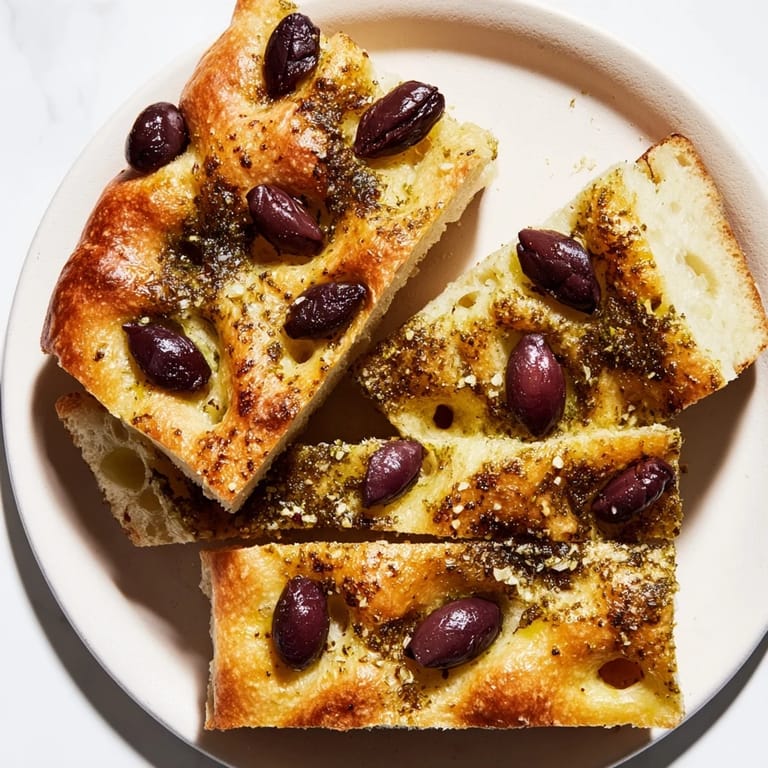
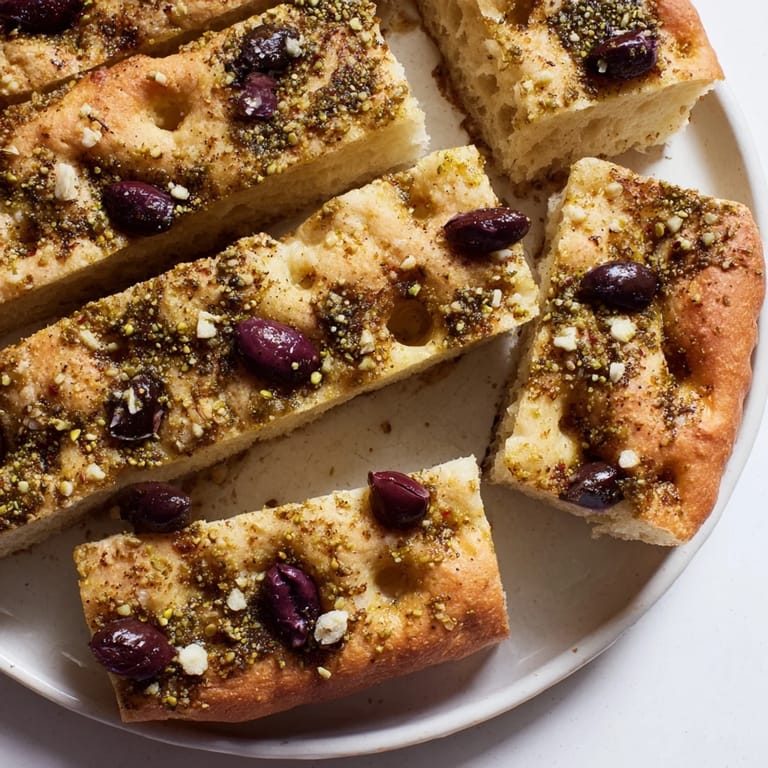
- Drizzle the 2 tbsp of olive oil across the top, then scatter the zaatar evenly over the surface—use your fingers to make sure it's distributed so you get some in every bite. Scatter the halved olives into the dimples and finish with a sprinkle of flaky sea salt.
- Bake until golden:
- Slide the pan into your preheated oven and bake for 20 to 25 minutes, until the edges are deep golden brown and crispy and the top smells like a spice market. The focaccia should be firm to the touch but still slightly yielding.
- Cool and serve:
- Let it cool on the pan for a few minutes—it'll firm up and be easier to handle—then slice and serve warm or at room temperature. The flavor actually deepens as it cools, so don't rush.
 Save
Save My favorite moment with this bread came when a friend who usually doesn't eat much suddenly reached for a third slice and realized it was gone before she could take another bite. She looked almost embarrassed, then laughed and asked if I'd make it again next week. That's when I knew the recipe was worth keeping.
Why Zaatar Is the Secret
Zaatar isn't one ingredient; it's a blend of dried herbs like thyme, oregano, and marjoram, mixed with sesame seeds and sumac, which gives it that distinctive tangy, almost lemony note. When you toast it on top of olive oil and warm dough, the oils release and the flavors bloom in a way that makes people stop and really taste what they're eating. It's what transforms a simple focaccia into something that feels intentional and special, like you've traveled to make it.
The Olive Oil Question
I learned this the hard way when I tried to save money and used cooking oil instead of extra virgin olive oil. The focaccia was fine, technically, but it was just fine—it tasted like bread. The moment I switched to a good olive oil, something clicked; the bread suddenly had a voice, a personality. Since then, I treat the olive oil as a main ingredient, not a supporting player, and I buy something I'd be happy to drizzle on a salad or dip with bread.
Serving and Storage
Focaccia is best eaten the day it's made when it's still warm and the crust is crispy, but it also keeps well for a couple of days if you store it in an airtight container or wrapped tightly in foil. If it starts to dry out, pop it in a warm oven for a few minutes and it'll come back to life, tasting almost as good as it did fresh.
- Serve it alongside hummus, labneh, or a simple olive oil for dipping and watch people's faces light up.
- It works as an appetizer, a snack with coffee, or a side to almost any meal with a Mediterranean feel.
- If you want to experiment, try mixing sun-dried tomatoes or roasted garlic into the dough, or swapping the Kalamata olives for green ones if you prefer something milder.
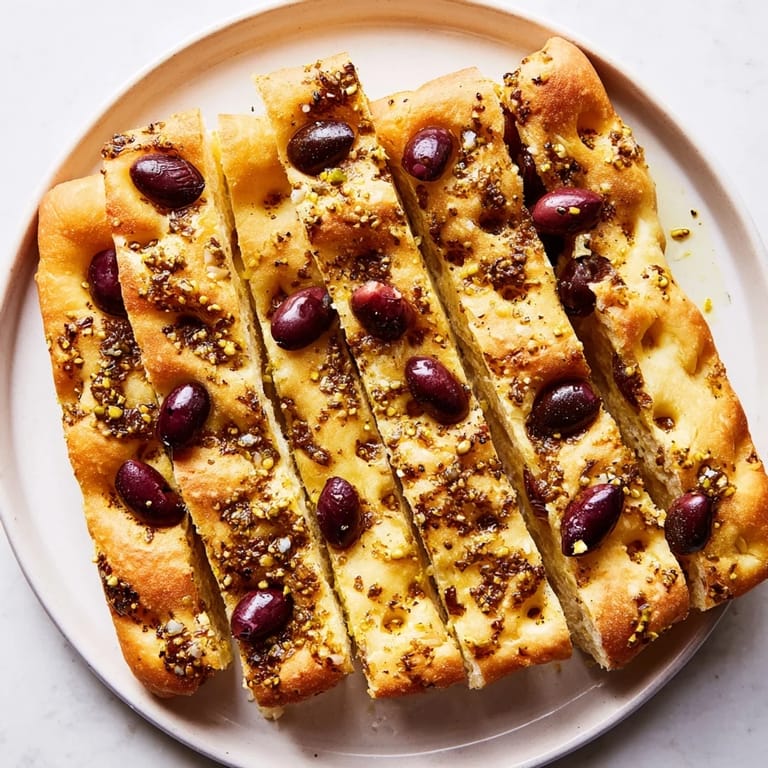 Save
Save Making focaccia feels like a small act of generosity, the kind where you're giving someone more than just food—you're giving them a moment of pleasure and the smell of something beautiful baking in your kitchen. Once you've made this once, you'll understand why people ask for the recipe.
Recipe Q&A
- → What role does zaatar play in this dish?
Zaatar adds a unique herbaceous and tangy flavor, enhancing the bread’s aroma and depth with its blend of thyme, sumac, and sesame.
- → Can I substitute Kalamata olives?
Yes, green olives offer a milder, less briny taste, which can slightly change the flavor profile but still complement the focaccia well.
- → How do I ensure the dough rises properly?
Using warm water and letting the dough rest in a cozy environment encourages yeast activity, resulting in a light and fluffy texture.
- → Is olive oil essential in this preparation?
Olive oil contributes moisture and richness to the dough and topping, supporting the focaccia’s tender crumb and crispy crust.
- → What variations can enhance flavor?
Mixing in sun-dried tomatoes or roasted garlic before baking adds sweetness and depth, complementing the earthy zaatar and olives.